 lumiya.com.tr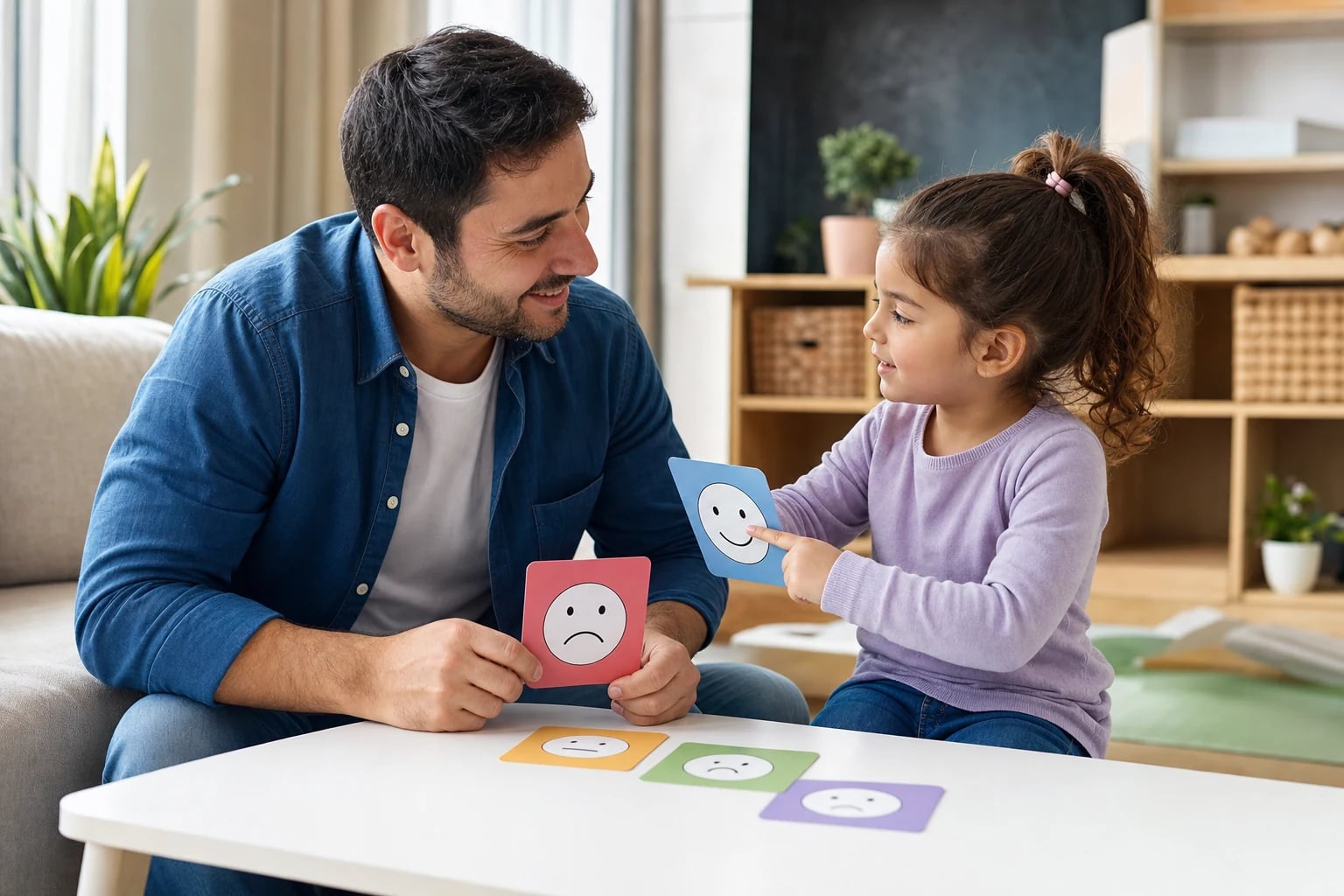
Every child grows at their own pace
Emotional Development in 3- to 6-Year-Olds
Learn how to support your preschooler’s emotional growth through play, routines, and co-regulation. Discover practical strategies for big feelings, sibling conflicts, and preschool transitions.
General Information: General information only; it may vary from child to child. Talk to your doctor or a specialist before making decisions.
In short
- Emotional development in early childhood is a dynamic process, not a checklist, shaped by temperament, experiences, and relationships.
- Caregivers can observe emotional cues in play, daily routines, and conflicts, then respond with co-regulation and simple emotion vocabulary.
- Strategies like predictable routines, pretend play, and limited choices help preschoolers learn to tolerate frustration and seek help.
- When emotions overwhelm, repair after conflict and reconnection build trust and long-term emotional skills.
Lumiya Editorial TeamBased on 4 sourcesOur editorial standards

A safe adaptation that fits family circumstances is more practical than searching for one correct method.
Why Emotional Development Looks Different for Every Preschooler
Emotional development in the 3- to 6-year-old years isn’t a straight line—it’s a winding path shaped by temperament, experiences, and relationships. Some days your child might name their feelings with ease; other days, a dropped cookie can feel like the end of the world. That’s normal.
Temperament plays a big role. A child who is highly sensitive may react strongly to noise or change, while another might breeze through transitions with little effort. Culture and family values also shape how emotions are expressed. Some families encourage open expression of frustration, while others emphasize quiet resilience.

A child’s emotional world is still forming. They’re learning to recognize their own signals—racing heart, clenched fists, hot cheeks—and connect them to words like “mad,” “sad,” or “scared.” This process takes years, not months. Your patience and presence are the most reliable tools you have.
What to Watch for in Daily Life
Emotions show up everywhere: in play, during meals, at bedtime, and in conflicts with siblings or friends. A child who builds a tower only to knock it down repeatedly may be practicing frustration tolerance, not just mischief.
Sleep, hunger, and sensory overload can amplify big feelings. A child who usually handles transitions well might dissolve into tears after a late nap or a crowded playground. Sensory sensitivities—like tags on clothes or loud noises—can turn ordinary moments into triggers. Pay attention to patterns.
Common Triggers and Responses
| Context | Possible Trigger | Support Tried | Recovery Observed |
|---|---|---|---|
| Morning rush to preschool | Rushing, hunger, or tiredness | Offer a 5-minute warning + choice of breakfast | Child calms enough to leave without a fight |
| Sibling conflict over toys | Sharing frustration, unmet need | Name feelings: “You both want the truck” | Children take turns with guidance |
| Bedtime refusal to sleep | Fear of missing out or overstimulation | Read a short story + dim lights | Child falls asleep within 20 minutes |
| Preschool drop-off | Separation anxiety or change in routine | Give a goodbye ritual + reassurance | Child engages in play after 5–10 minutes |
Co-Regulation: Your Calm Anchor
When emotions run high, children look to caregivers for cues on how to respond. If you stay calm and speak softly, your child is more likely to mirror that energy. Co-regulation doesn’t mean fixing the problem immediately—it means being present while the child works through their feelings.
Avoid shaming or dismissing feelings during escalation. Saying “Stop crying, it’s not a big deal” can make a child feel unseen. Instead, acknowledge the emotion: “I see you’re really upset about the broken crayon.” This doesn’t mean giving in to demands—it means validating the feeling while setting clear boundaries.
Building Emotional Vocabulary Through Play and Stories
Pretend play is a safe space to explore emotions. A child who acts out “the doctor’s office” might practice empathy by taking care of a stuffed animal’s “owies.” Use this time to name feelings: “The teddy looks scared. How can we help?” Stories and books are another powerful tool.
Simple emotion words—mad, sad, scared, happy, surprised—help children label their internal state. Expand vocabulary gradually with words like frustrated, disappointed, or proud. Pair words with facial expressions or drawings to reinforce meaning. Over time, this builds emotional literacy, which is foundational for empathy and problem-solving.
Routines, Choices, and Boundaries: The Backbone of Emotional Growth
Predictable routines create a sense of safety. Children thrive when they know what to expect, whether it’s a morning routine, mealtime order, or bedtime sequence. Use visual schedules or simple charts to make transitions smoother.
Boundaries are not punishments—they’re safety nets. Clear, consistent limits help children understand what’s acceptable. For example, “We use gentle hands with our friends” paired with gentle guidance if hands become rough. Avoid threats like “If you don’t stop, you’re going to time-out,” which can escalate fear.
Handling Conflict with Siblings and Peers
Sibling and peer conflicts are inevitable, but they’re also opportunities to practice emotional skills. Stay nearby to guide, not to referee. Use phrases like, “I see two friends who both want the same toy.
After the conflict, help children repair. This might look like a simple apology once emotions have settled, but it’s more important to reconnect. Say, “I know you’re still mad, but I love you. Let’s hug it out.” Over time, this teaches children that mistakes don’t define relationships—they’re part of learning.
When to Seek Extra Support
Most emotional challenges in preschoolers resolve with time, patience, and consistent guidance. But some signs warrant extra attention. If your child’s emotions feel unmanageable across settings—home, preschool, playdates—or if they lose skills they once had, it may be time to reach out.
Talk to your pediatrician or preschool team about your observations. They can offer strategies tailored to your child’s temperament and needs. Early support—whether through parenting groups, occupational therapy, or counseling—can make a meaningful difference. Remember, asking for help is a sign of strength, not failure.
Repair After Conflict: The Heart of Emotional Learning
Repair is the process of reconnecting after a rupture. It might start with a hug, a shared activity, or simply sitting quietly together. The goal isn’t to force an apology during the heat of the moment, but to rebuild trust once emotions have cooled.
Repair isn’t about perfection—it’s about showing up consistently. A child who experiences repair learns that relationships can heal, even after mistakes. This builds resilience and emotional security, which are the foundation for lifelong well-being.
Simple Strategies for Everyday Moments
- Name the feeling: “You’re feeling disappointed because the park is closed today.”
- Offer comfort: A hug, a lap to sit on, or a quiet moment together can help regulate emotions.
- Use visuals: Emotion cards or a feelings chart can help children identify and communicate their emotions.
Respecting Differences: Culture, Disability, and Neurodiversity
Every child’s emotional journey is unique. Cultural norms shape how emotions are expressed and managed. Some families encourage expressive outbursts, while others value quiet composure. Both can be healthy when paired with supportive guidance. Disability and neurodiversity also influence emotional development.
Avoid comparing your child to others. Instead, focus on their individual progress. Celebrate small wins, like a child who uses a new emotion word or asks for help when overwhelmed. Progress isn’t linear, and that’s okay.
Final Thoughts: Patience and Presence Matter Most
Emotional development in the preschool years is less about achieving milestones and more about building a foundation of trust, safety, and connection. Your calm presence, consistent routines, and willingness to repair after conflict are the most powerful tools you have.
Big feelings are a normal part of growing up. With your support, your child will gradually learn to navigate them—not by avoiding emotions, but by understanding and managing them with confidence.
General Information: This content offers general information based on expert sources. Every child, family and situation is different, so what is described here may vary from person to person. Talk to your doctor or a qualified specialist before making decisions about your child.
Was this article helpful?
This topic at other agesGrowth & Development
Tools for this Age
- Baby percentile calculatorWhere does your child's weight and height sit among children the same age? See it in seconds on the WHO growth curves.
- Baby and child sleep scheduleHow much should your child sleep in 24 hours, and when should bedtime be? Calculate it from official guidance and compare it with your own log.
- Potty training chartWhen to start and how to prepare? A roadmap by age, a daily routine and a printable reward chart.
- Baby milestones by monthCheck off what most children your child's age can do, and talk about the rest with your doctor.
- Baby vaccine schedulePick your country, enter the birth date, and see the official schedule as your own dates.
- Screen time by ageSee how much screen time a day your country's official body recommends at your child's age; add daily use to compare it with the advice.
Checklist
Popular Topics
Frequently Asked Questions
- 1
- 2
- 3
- 4
Editorial Note
Emotional development varies widely. If you notice persistent regression, extreme distress, or concerns across settings, reach out to your child’s pediatrician, preschool, or local early childhood support team for guidance. Immediate help is needed for any situation involving safety concerns.