 lumiya.com.tr
Understanding feelings builds trust
Moving with children: a plan for a new home and school
Make room in your moving plan for the things your child can keep: familiar belongings, everyday connections and a clear picture of the next school day.
General Information: General information only; it may vary from child to child. Talk to your doctor or a specialist before making decisions.
In short
- Explain what is changing and what you already know, without promising uncertain details.
- Offer a manageable choice while keeping responsibility for the move with adults.
- Keep everyday care items and a familiar possession accessible throughout moving day.
- Plan realistic contact with old friends and a clear introduction to the new school.
Lumiya Editorial TeamBased on 3 sourcesOur editorial standards
Moving with children calls for a plan for familiar things as well as boxes: explain what will change, keep everyday belongings close, and make realistic plans for old friendships.
If school changes too, find out who your child can ask for help, how they will get there and what the day will look like. They can take part without being responsible for the move.
What should your child know before the boxes appear?
Separate confirmed plans from unanswered questions. “We are moving to this apartment. We do not have the date yet, and I will tell you when we do” gives a child something solid without creating a promise you may have to undo.
Ask what they want to know first. An adult may be thinking about the lease while a child is wondering whether the dog is coming. Name things that can stay familiar, such as a bedtime book or time with a trusted relative.
A family guide hosted by France's CAF recommends talking with children about changes such as moving and helping them prepare where possible. The examples below put that principle into practice; the age bands guide the conversation, not an ability test.
| Age | Make the news concrete | Offer a real choice | Keep a connection |
|---|---|---|---|
| 1–3 | Short words and familiar objects | Which small toy comes along | Caregiver and everyday sequence |
| 3–6 | Photos or a simple pretend move | A book or a small box | Reading together at bedtime |
| 6–12 | Explain home, route and school separately | A room corner or goodbye plan | Friends and activities |
| 12–18 | Reasons and open questions | Personal space and contact plans | Friendships and their own interests |
Do not ask for a deciding vote when adults have already decided. Try: “The move is our responsibility. You can help choose what we set up in your space first.” Let a teenager identify what they need to discuss privately rather than treating every concern as a family debate.
Which belongings should travel with the caregiver?
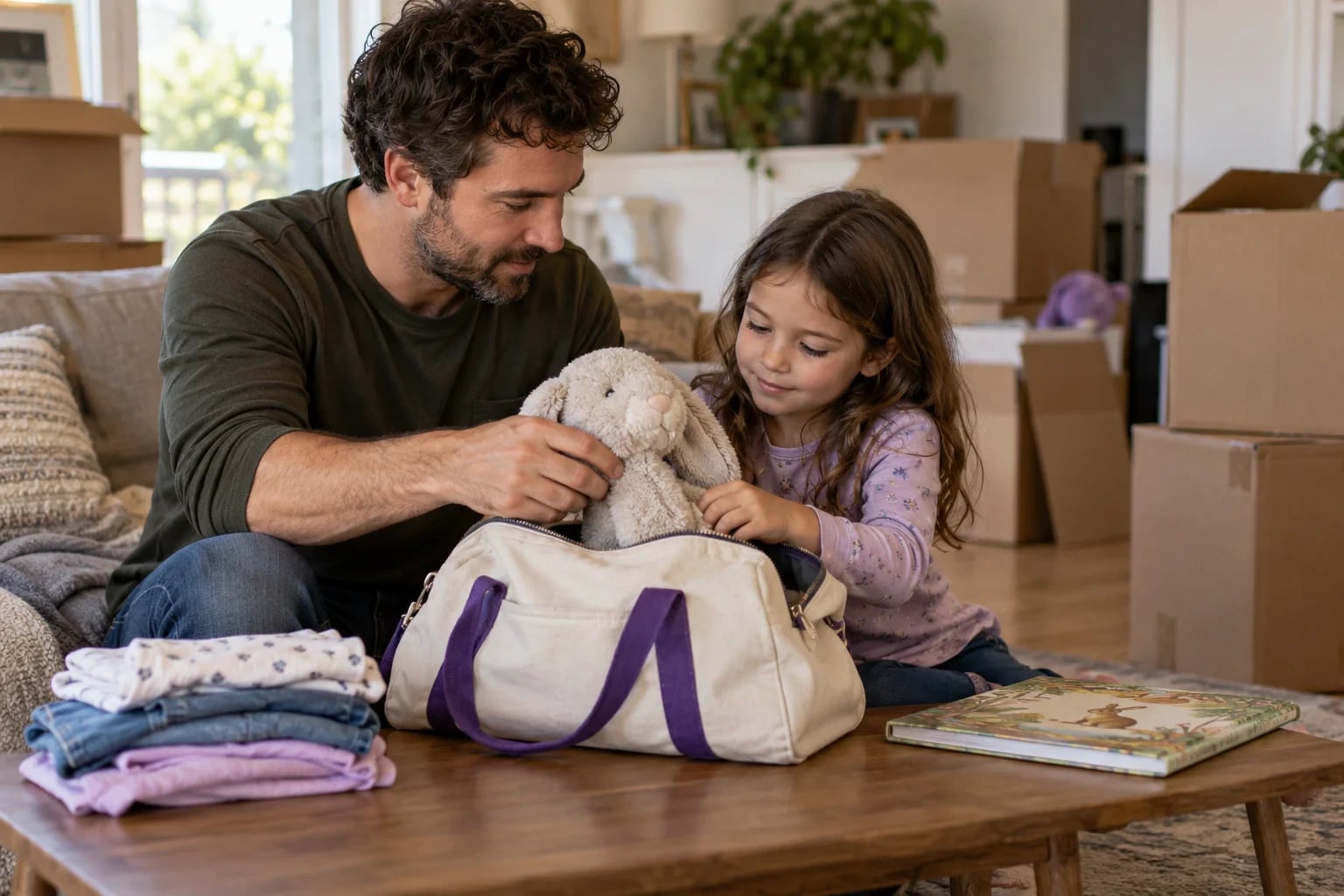
Pack a small, accessible bag apart from the moving boxes. Include a familiar possession, clothing and the everyday care items you will actually need. Decide who will keep the bag; a child should not have to track essential supplies.

- Let the child choose a familiar toy or book from a manageable selection.
- Have an adult check clothing and everyday care supplies.
- Choose an easy-to-find place for the bag when you arrive.
“This bag stays with us, even while the other things are being unpacked” is a useful explanation. Keep a child's optional preparation task small; age-appropriate household responsibilities should not become an expectation to carry moving boxes.
Plan who is available for the child while someone else handles the movers or phone calls. A trusted helper may be useful when one parent is managing the move alone. Treat this as a practical care arrangement, not another standard a family must meet perfectly.
How can saying goodbye lead to a workable contact plan?
Before promising that friends will visit, check with the other family. A drawing, a call at a mutually convenient time or a later visit may be possible. Choose what you can support rather than promising that nothing about the friendship will change.
Taking a picture of an old room or leaving a note can be a goodbye activity. Offer it without insisting. Older children may prefer to arrange their own messages, with help only where they want it.

“You are going to miss hanging out after school. What part feels hardest to leave?” gives the child an opening. Listen before trying to make the new neighborhood sound wonderful.
Keeping friendships also leaves room for new connections. A child does not need to prove that they have settled in by quickly replacing old friends or giving up an activity they care about.
What can feel familiar on the first evenings?
The CDC explains how predictable routines help young children know what to expect. For a family moving with children, a useful application is to choose one recognizable part of the day you can keep: eating together, a book, or a quiet conversation.
A practical order for settling into the home
-
Keep the first bag accessible
Show your child where the bag is, where they will sleep and where to find the bathroom.
-
Keep one familiar moment
Choose a shared meal, a book or another manageable part of your usual routine.
-
Explore a small part of the neighborhood
Get to know a nearby route or play space together without trying to do everything at once.
Say what you can do that evening: “After dinner we can read our usual book.” Familiar routines do not require identical rooms or a finished house. The preschool age guide offers other everyday topics when a specific routine needs more attention.
Can your child picture the first day at the new school?
Ask the school about an introduction, a visit or an orientation. Where a visit is not possible, see what photos or information staff can share. Learn how your child will arrive, who can help, and how the day ends.

Practice a question the child can use: “Who should I ask if I do not know where to go at lunch?”
Tell the teacher a useful detail, such as which part of arriving feels uncertain. Changing schools for a teenager can also mean new clubs, travel arrangements and ways to keep in touch with friends; ask which part they want to plan themselves.
When should difficulties after a move prompt professional support?
Avoid setting a deadline for liking the new home. Listen to what your child says and notice how everyday life is going. Difficulties that persist, increase or clearly interfere with participation at home or school are a reason to discuss support with the teacher and an appropriate professional.
The American Academy of Pediatrics recommends visiting a new school or classroom, attending orientations and discussing what worries a child. Ask the school which introduction and support options it can provide.
A teacher or school counselor can help you understand what happens during the school day. For concerns about your child's overall well-being, contact their pediatrician or family doctor; describe what you have noticed and what you have already tried. Our emotions and behavior guide provides routes to other specific concerns.
General Information: This content offers general information based on expert sources. Every child, family and situation is different, so what is described here may vary from person to person. Talk to your doctor or a qualified specialist before making decisions about your child.
Was this article helpful?
This topic at other agesEmotions & Behavior
Tools for this Age
- Baby percentile calculatorWhere does your child's weight and height sit among children the same age? See it in seconds on the WHO growth curves.
- Baby and child sleep scheduleHow much should your child sleep in 24 hours, and when should bedtime be? Calculate it from official guidance and compare it with your own log.
- Potty training chartWhen to start and how to prepare? A roadmap by age, a daily routine and a printable reward chart.
- Baby milestones by monthCheck off what most children your child's age can do, and talk about the rest with your doctor.
- Baby vaccine schedulePick your country, enter the birth date, and see the official schedule as your own dates.
- Baby teething chart: order and timelineEnter the date of birth to see the typical eruption window of all 20 baby teeth, the next tooth and the teeth already through — on one screen.
Checklist
Popular Topics
Frequently Asked Questions
- 1
- 2
- 3
- 4
Editorial Note
This article offers general preparation ideas, not a diagnosis or treatment plan. Discuss concerns specific to your child with their teacher and an appropriate health professional.