 lumiya.com.tr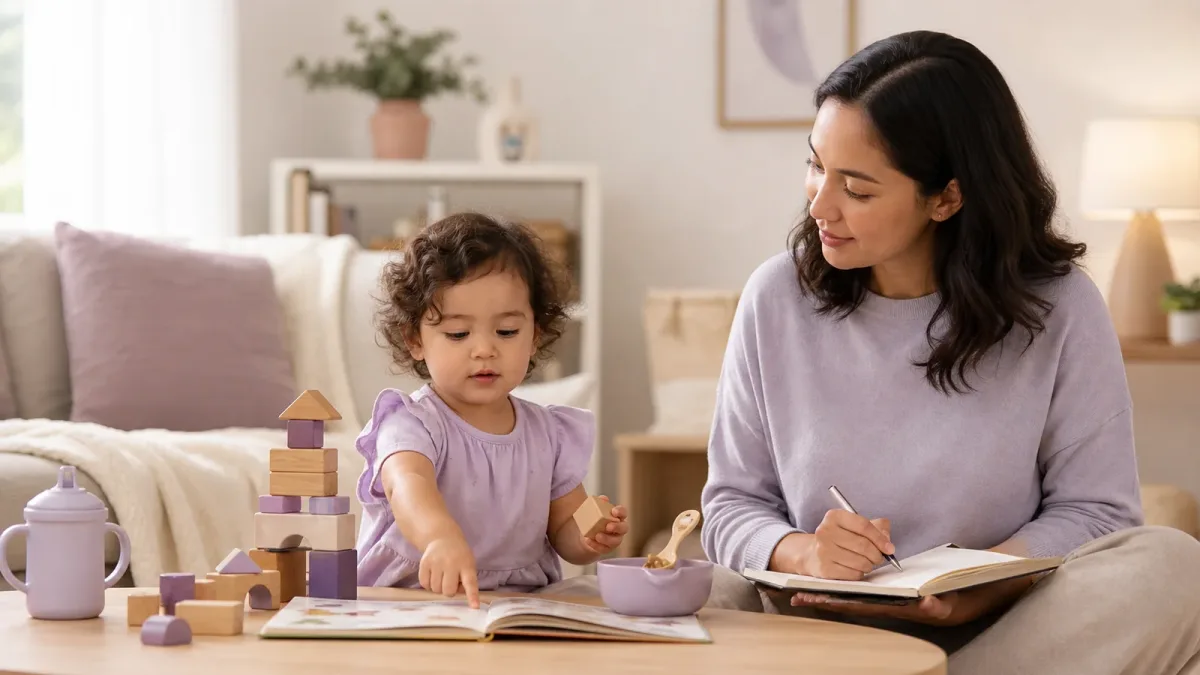
Every child grows at their own pace
Development Checks from Birth to Age 6
From babyhood to preschool (ages 0–6), learn the difference between everyday monitoring, screening and assessment, and record useful observations without turning childhood into a test.
General Information: General information only; it may vary from child to child. Talk to your doctor or a specialist before making decisions.
In short
- Monitoring follows a child's development over time in ordinary routines.
- Screening is a brief structured risk check; it does not make a diagnosis.
- A two-week record of concrete examples makes a health review more useful.
- Seek prompt assessment for lost skills or persistent concerns across several areas.
Lumiya Editorial TeamBased on 4 sourcesOur editorial standards
Our tool for this topic
This guide covers ages 0 to 6. It explains monitoring using ages 1–3, with a separate section on what changes in babyhood (0–12 months) and the preschool years (3–6).
Between one and three, development rarely looks like a neat upward line. A toddler may add several words in one month and spend the next concentrating on climbing, feeding themselves, or pretend play. Illness, a new nursery, more than one home language, premature birth, hearing or vision difficulty, and major family changes can all affect what adults see on a particular day. A single snapshot—or a score found online—cannot describe the whole child.
First step: developmental monitoring is not a test or a diagnosis. Noting examples of your child’s play, communication and daily routines is a practical way to share a concern with a health professional if needed.
Use everyday observations alongside the broader development guide and the approach of observing in everyday life.
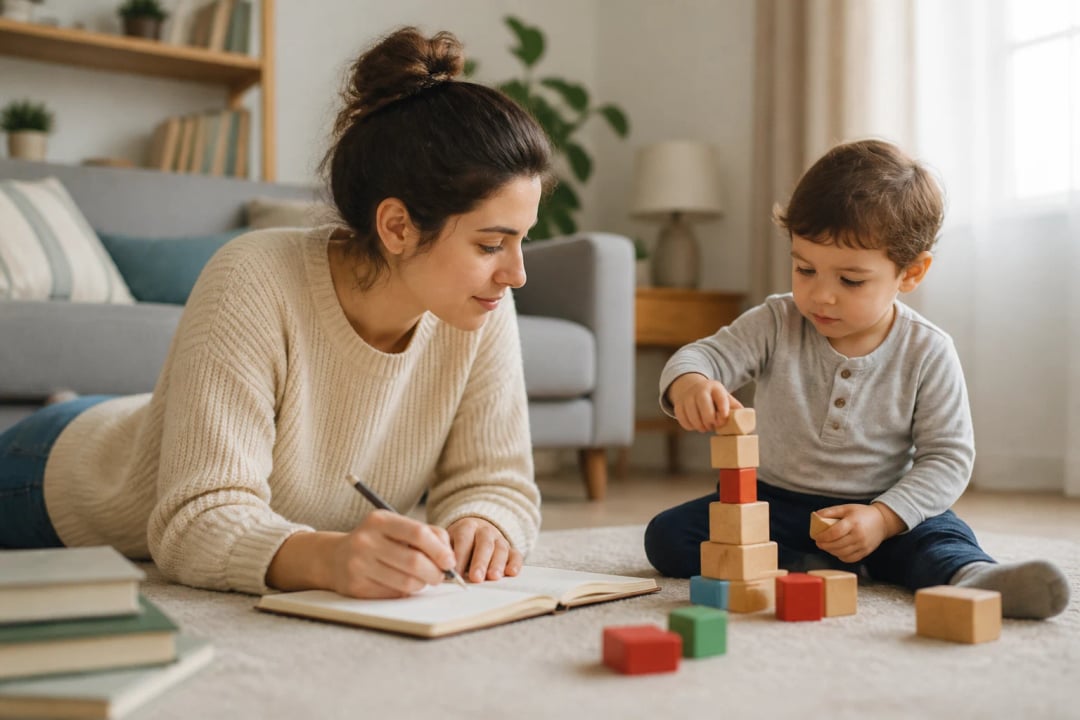
Noticing development in everyday life
Evidence context
Developmental monitoring helps identify children’s developmental needs within everyday care and supports planning when support is needed.
Everyday observation in three steps
The goal is not comparison; it is noticing real-life examples and sharing them when needed.
-
Observe
Choose one concrete example from play, meals or communication.
-
Note
Record the date, context and what your child did in a short sentence.
-
Share
Bring changes that concern you to a routine health visit with examples.
The parent's role is not to reproduce a clinic in the living room. It is to notice change in ordinary routines, keep clear examples when something feels uncertain, and share them at child health reviews. In the UK, health visiting and GP pathways use scheduled contacts to discuss health, growth, learning and development; the exact service and timing can vary by nation and local area. A professional combines the family's account with observation, health history, examination and an appropriate tool when one is needed.
Monitoring, screening and diagnosis answer different questions
Developmental monitoring is the continuing process of following how a child changes over time. Conversation with caregivers, observation in familiar activities, previous records and the child's strengths all contribute. Developmental screening is a brief, structured check designed to identify whether closer assessment may be useful. A screen does not establish a condition. Diagnostic assessment is a clinical process that may include history, examination, hearing or vision information and input from more than one profession.
Knowing the difference prevents two common mistakes: panic because one box is unticked, and indefinite delay because “all children are different.” Do not download a professional questionnaire, calculate a score and treat it as a diagnosis. Standardised tools have age ranges, administration rules and thresholds; interpretation depends on health, language and context. If a review raises a concern, ask what the result means, what it does not mean, and what happens next.

A screening result is a signpost for the next conversation, not a label for the child.
Watch connected skills in ordinary routines
Developmental areas overlap. For communication, notice how the child uses gaze, gesture, sounds and words to share an interest or request help, and how they respond to simple language in different settings. For gross movement, watch changing ways of getting around, standing, walking, climbing and playing with a ball. For fine movement, examples include turning pages, placing blocks, making marks, and gradually managing a spoon or cup.
In relationships and play, notice shared attention, imitation, turn-taking, seeking comfort, curiosity and emerging pretend play. In self-help, look at participation in dressing, washing hands, mealtimes and transitions. These are not tasks to drill in one sitting. A hungry, tired, unwell or wary child may show far less than they can usually do. A pattern across play, books, meals, outdoors and childcare is more useful than a performance on request.
Compare the child with their own earlier pattern, not with a cousin or a nursery friend. Replace “doesn't talk” with a usable description: “For two weeks she has pointed to ask for a drink, uses three familiar words at home and none yet at nursery.” If the child hears or uses more than one language, describe communication across all of them. Word counts from one language alone do not capture gestures, understanding or the child's total language experience.
Build a short two-week observation record
Choose two or three behaviours related to your concern and note them briefly on different days. Include the date, setting, what happened before, what the child did without help, and what support changed the outcome. If a short video would show movement or interaction more clearly, protect the child's privacy and share it only through a route agreed with the relevant professional—not in family groups or social media.
| Everyday situation | Useful detail to record | Conclusion not supported by one event |
|---|---|---|
| Sharing a book | Looks, points, brings a picture to your attention, uses gesture/sound/word | “Left the page, so has an attention disorder.” |
| Free play | Explores, copies an action, combines toys, begins pretend play | “Did not build a tower, so is delayed.” |
| Mealtime | Uses cup or spoon with what help; chewing and swallowing are safe | “Spilled food, so fine motor skills are poor.” |
| Park or stairs | Balance, use of both sides, falls, fatigue and confidence | “Would not climb today, so has a motor problem.” |
| Separation or change | Trigger, duration, recovery and support that helps | “Cried at drop-off, so has an emotional disorder.” |
At the end of two weeks ask: Is there new learning? Does the behaviour appear in more than one setting? Can the child do it with a small cue? The aim is not to produce a pass/fail chart, but to give the health professional a clearer timeline than “always” or “never.”
Use the child health review to agree a next step
Take the child's health and birth history, languages, care arrangements, recent changes and observation notes. Ask a specific question: “He has not added a new word for two months, but points and follows familiar instructions. Should hearing be checked, and what should we monitor before the next contact?” Hearing, vision, sleep, pain, nutrition and physical health can influence developmental behaviour, so a review should not focus on one milestone in isolation.
Ask for a plan you can repeat back: What exactly are we watching? Who will review it? By what date? Is a validated screen or referral appropriate? What change should make us return sooner? If the decision is to monitor, “wait and see” should still have a timeframe. Information from a nursery key person or another regular caregiver can help, with appropriate consent and limited sharing of the child's personal information.

A sound monitoring plan names the behaviour, the responsible person, and the review date.
Babies and ages 3–6: what changes in developmental monitoring?
Developmental monitoring works the same way at every age: notice concrete examples in daily life, write them down and share them at routine health visits. What changes is what you look at.
What to watch at each age:
- 0–12 months: Movement, reactions to sounds and faces, eye contact and smiling, sucking and feeding show up in everyday care. Routine baby checks include development too. For babies born early, use their corrected age rather than their birth date.
- Ages 3–6: Language and clear speech, cooperation in play and with other children, movement skills and independence in self-care such as eating, dressing and using the toilet come to the fore. A nursery or preschool teacher's observations add to your own.
- Hearing and vision: Not reacting to sounds, watching TV very loudly or squinting often are signs to mention at any age.
- Online tests: Online checklists can help you start a conversation, but they don't replace professional screening.
If your child loses a skill they already had (words, eye contact, walking), contact a health professional without waiting for the next check.
Treat red flags as a request for support, not a verdict
Loss of a previously acquired skill deserves prompt attention. Seek advice if a child stops using words or gestures they used before, loses movement or hand skills, or shows a marked reduction in social response or self-help. Repeated choking, breathing safety concerns, pronounced one-sided use, persistent mobility difficulty or concerns across several areas should not wait for a routine appointment. If you are worried, you do not need to prove a diagnosis before asking for an assessment.
Early support is not about attaching a label. It can identify a hearing or vision barrier, help the family adapt daily interactions, or connect the child with the right service while learning is highly active. Keep strengths in the record too: what captures the child's interest, how they initiate contact, and which cue helps. Developmental monitoring is most useful when it respects the child's pace without ignoring loss or persistent difficulty, treats parents as partners, and ends with a concrete next action.
General Information: This content offers general information based on expert sources. Every child, family and situation is different, so what is described here may vary from person to person. Talk to your doctor or a qualified specialist before making decisions about your child.
Was this article helpful?
This topic at other agesGrowth & Development
Tools for this Age
- Baby milestones by monthCheck off what most children your child's age can do, and talk about the rest with your doctor.
- Baby percentile calculatorWhere does your child's weight and height sit among children the same age? See it in seconds on the WHO growth curves.
- Baby and child sleep scheduleHow much should your child sleep in 24 hours, and when should bedtime be? Calculate it from official guidance and compare it with your own log.
- Potty training chartWhen to start and how to prepare? A roadmap by age, a daily routine and a printable reward chart.
- Baby vaccine schedulePick your country, enter the birth date, and see the official schedule as your own dates.
- Baby teething chart: order and timelineEnter the date of birth to see the typical eruption window of all 20 baby teeth, the next tooth and the teeth already through — on one screen.
Checklist
Popular Topics
Frequently Asked Questions
- 1
- 2
- 3
- 4
- 5
Editorial Note
This guide organises parental observations; a home score or online checklist cannot diagnose a child. Seek prompt advice from a GP, health visitor, paediatrician, or qualified child-development professional if your child loses a previously acquired skill, has feeding or breathing safety problems, marked movement difficulty, or persistent concerns across several developmental areas.
Other situations in this topic
Dealing with a different side of the same topic? Each situation has its own guide.
- Developmental milestones: what can my child do at this age?Learn what to expect as your child grows from 1 to 3 years, with everyday ways to support movement, communication, play, and emotional growth—without pressure or checklists.2 items
- How to support your child's development every dayUnderstand child development as a variable, interconnected process shaped by context, opportunity, and individual differences. Learn how to observe, support, and nurture growth through everyday routines without rigid timelines or comparisons.1 items