
 lumiya.com.tr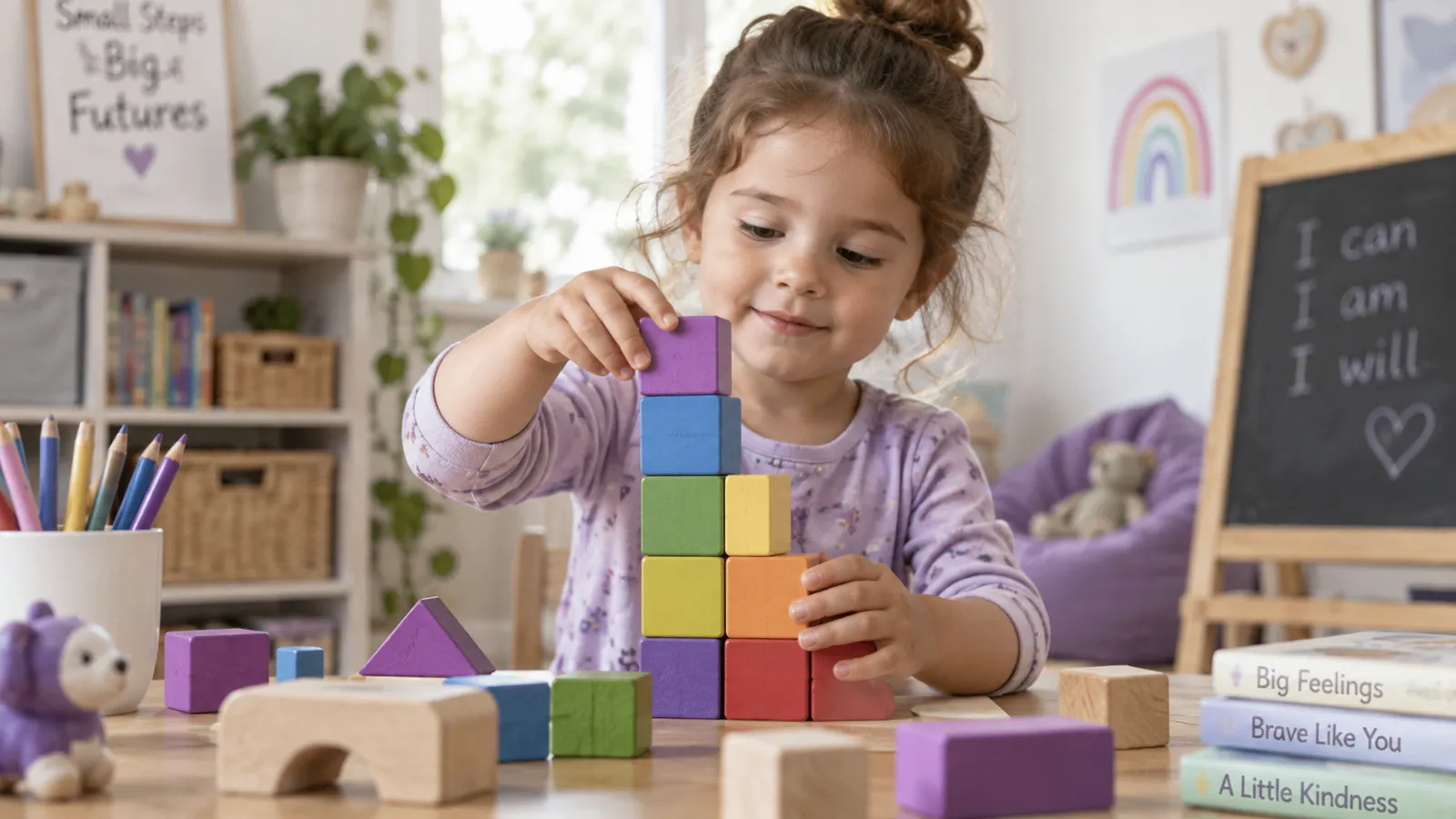
Every child grows at their own pace
Developmental Milestones for Ages 3–6
Understanding typical developmental milestones between ages 3 and 6 can help parents support their child’s growth through play, routines, and responsive interactions. Learn what to expect and how to encourage progress without pressure.

Neşe Arslan
Child Development Expert
Expert review: 28/09/2026
General Information: General information only; it may vary from child to child. Talk to your doctor or a specialist before making decisions.
In short
- Developmental milestones are broad guides, not strict deadlines—children grow at their own pace.
- Everyday activities like play, conversation, and routines can naturally support progress across movement, language, thinking, and social skills.
- One missed milestone isn’t cause for concern, but persistent challenges or loss of skills may warrant professional guidance.
- Responsive interactions, shared reading, and predictable routines build a strong foundation for lifelong learning.
Lumiya Editorial TeamBased on 4 sourcesOur editorial standards
Our tool for this topic
Between ages 3 and 6, children grow in leaps and bounds across movement, language, thinking, and social-emotional skills. These years are full of curiosity, exploration, and new abilities, but they’re also a time when parents may wonder, Is this typical? The answer isn’t always straightforward. Developmental milestones offer a general roadmap, not a rulebook, and every child’s journey is unique.
Movement and Physical Skills: Building Strength and Coordination
By age 3, many children can run, climb stairs with alternating feet, and draw simple shapes like circles. They’re also starting to use scissors (with supervision) and may even attempt buttons or zippers. At age 4, you might see them hop on one foot, catch a bounced ball, or pedal a tricycle. By age 5, many children can skip, jump rope, or draw recognizable pictures with more detail.

These skills develop through practice and play. Outdoor time, dance, or simple games like "Simon Says" can build strength and coordination without feeling like a lesson.
Supporting movement doesn’t require expensive equipment. A backyard, park, or even a living room can become a playground. Encourage climbing, balancing, and running to help your child feel confident in their body. If your child struggles with balance or seems unusually clumsy, it’s worth mentioning to your pediatrician—but remember, some variation is normal.
Language and Communication: From Words to Stories
Language explodes during these years. At age 3, many children speak in short sentences (3–4 words) and can follow simple directions like "Put your shoes on." By age 4, their sentences grow longer (4–5 words), and they start asking questions like "Why?" or "How?" By age 5, storytelling becomes more detailed, and they can describe events in order.
Shared reading is one of the most powerful tools for language development. Choose books with bright pictures and simple text, and ask open-ended questions like "What do you think will happen next?" Even if your child isn’t reading yet, they’re absorbing vocabulary, rhythm, and structure. Multilingual children may mix languages at first—that’s normal and shows they’re building strong foundations in both.

If your child isn’t speaking in sentences by age 4 or struggles to follow directions, it’s worth discussing with your pediatrician. However, late talkers often catch up with extra support, so avoid jumping to conclusions too quickly.
Thinking and Play: Curiosity in Action
Between ages 3 and 6, children’s thinking shifts from concrete to slightly more abstract. At age 3, they enjoy sorting objects by color or size and may play simple pretend games (like feeding a doll). By age 4, they start understanding basic rules in games and can count to 10 or higher. At age 5, many children recognize letters, write their name, and solve simple puzzles.
Play is how children learn to think. Building with blocks, sorting toys, or creating stories with action figures all build problem-solving and creativity. Avoid correcting mistakes during play—instead, ask questions like "What could we try next?" to encourage exploration. If your child struggles with puzzles or seems frustrated by simple tasks, it’s okay to offer help, but give them space to try first.
Social-Emotional Growth: Learning to Connect
These years are also about understanding emotions—both their own and others’. At age 3, children may start sharing toys (sometimes) and show excitement about playing with friends. By age 4, they’re more aware of rules and may insist on fairness. At age 5, many children show empathy, like comforting a friend who’s sad, and can follow multi-step directions in group settings.
Social skills develop through interaction. Playdates, family gatherings, and even errands can be opportunities to practice sharing, taking turns, and resolving small conflicts. If your child struggles with separation anxiety or seems overly aggressive, it’s worth talking with a professional—but remember, emotions are complex, and growth isn’t linear.
Self-Care and Independence: Small Steps, Big Confidence
Between ages 3 and 6, children start taking more responsibility for daily tasks. At age 3, they may attempt to dress themselves (though buttons and zippers are tricky). By age 4, many can brush their teeth with help and use the toilet independently. At age 5, they might tie their shoes, set the table, or pack their backpack for school.
Routines make these skills easier to master. Create a simple morning or bedtime routine with clear steps, like "Pajamas on, brush teeth, storytime." Use visual charts if it helps, and celebrate small wins. If your child resists self-care tasks, stay patient—mastery takes time.
Supporting Development Through Everyday Moments
You don’t need special tools or programs to support your child’s growth. The most effective strategies are woven into daily life:
- Play together: Whether it’s building a fort, playing tag, or pretending to be chefs, play builds all areas of development.
- Talk and listen: Narrate your day, ask open-ended questions, and give your child time to respond. Even if their answers are silly, they’re practicing.
When to Seek Guidance
Milestones are guides, not guarantees. One missed skill isn’t cause for concern, but persistent challenges—or a loss of skills—may warrant professional support. For example:
- Your 4-year-old isn’t speaking in sentences and struggles to follow simple directions.
- Your 5-year-old can’t hop on one foot or seems unusually clumsy in most activities.
- Your child has lost skills they once had, like no longer responding to their name.
If any of these resonate, talk with your pediatrician. Early support can make a meaningful difference, and professionals can offer personalized guidance tailored to your child’s needs.
A Note on Culture and Individuality
Developmental milestones are based on broad observations, and cultural practices, multilingual upbringing, and individual differences all shape a child’s growth. For example, a child learning two languages may mix words at first, or a child in a culture that values quiet play may develop social skills differently. What matters most is that your child is making progress in their own way.
Table: Everyday Examples of Developmental Milestones (Ages 3–6)
| Age | Movement | Language | Thinking | Social-Emotional | Self-Care |
|---|---|---|---|---|---|
| 3 | Runs, climbs stairs with alternating feet, draws circles | Speaks in 3–4 word sentences, follows simple directions | Sorts objects by color/size, plays pretend | Shares toys sometimes, shows excitement about friends | Attempts to dress self, uses toilet with reminders |
| 4 | Hops on one foot, catches a bounced ball, pedals a tricycle | Speaks in 4–5 word sentences, asks "why" and "how" | Counts to 10, follows simple game rules | Shows awareness of fairness, enjoys group play | Brushes teeth with help, uses toilet independently |
| 5 | Skips, jumps rope, draws detailed pictures | Tells stories with beginning, middle, and end | Recognizes letters, writes name, solves simple puzzles | Shows empathy, follows multi-step directions | Ties shoes, sets the table, packs backpack |
Developmental milestones are tools for understanding, not tests for your child. If you’re ever unsure, your pediatrician is the best resource for personalized advice tailored to your child’s unique journey.
Health Information: The content and guidance in this article are prepared solely to inform parents, based on current medical literature and scientific research. The information provided here does not, in any way, replace direct medical diagnosis, treatment, or professional medical advice. If you have any concerns or doubts about your baby's health or development, please consult a pediatrician or your healthcare provider without delay.
Was this article helpful?
This topic at other agesGrowth & Development
Tools for this Age
- Baby milestones by monthCheck off what most children your child's age can do, and talk about the rest with your doctor.
- Baby percentile calculatorWhere does your child's weight and height sit among children the same age? See it in seconds on the WHO growth curves.
- Baby and child sleep scheduleHow much should your child sleep in 24 hours, and when should bedtime be? Calculate it from official guidance and compare it with your own log.
- Potty training chartWhen to start and how to prepare? A roadmap by age, a daily routine and a printable reward chart.
- Baby vaccine schedulePick your country, enter the birth date, and see the official schedule as your own dates.
- Screen time by ageSee how much screen time a day your country's official body recommends at your child's age; add daily use to compare it with the advice.
Checklist
Popular Topics
Frequently Asked Questions
- 1
- 2
- 3
- 4
Expert Note
Developmental milestones describe typical patterns, not rigid rules. If you notice a loss of skills, persistent difficulties across multiple areas, or concerns about daily participation, talk with your child’s pediatrician or a developmental specialist. Early support can make a meaningful difference.
Neşe Arslan
Child Development Expert
Other situations in this topic
Dealing with a different side of the same topic? Each situation has its own guide.
- Developmental screening: when and whyFrom babyhood to preschool (ages 0–6), learn the difference between everyday monitoring, screening and assessment, and record useful observations without turning childhood into a test.1 items
- How to support your child's development every dayUnderstand child development as a variable, interconnected process shaped by context, opportunity, and individual differences. Learn how to observe, support, and nurture growth through everyday routines without rigid timelines or comparisons.1 items