
 lumiya.com.tr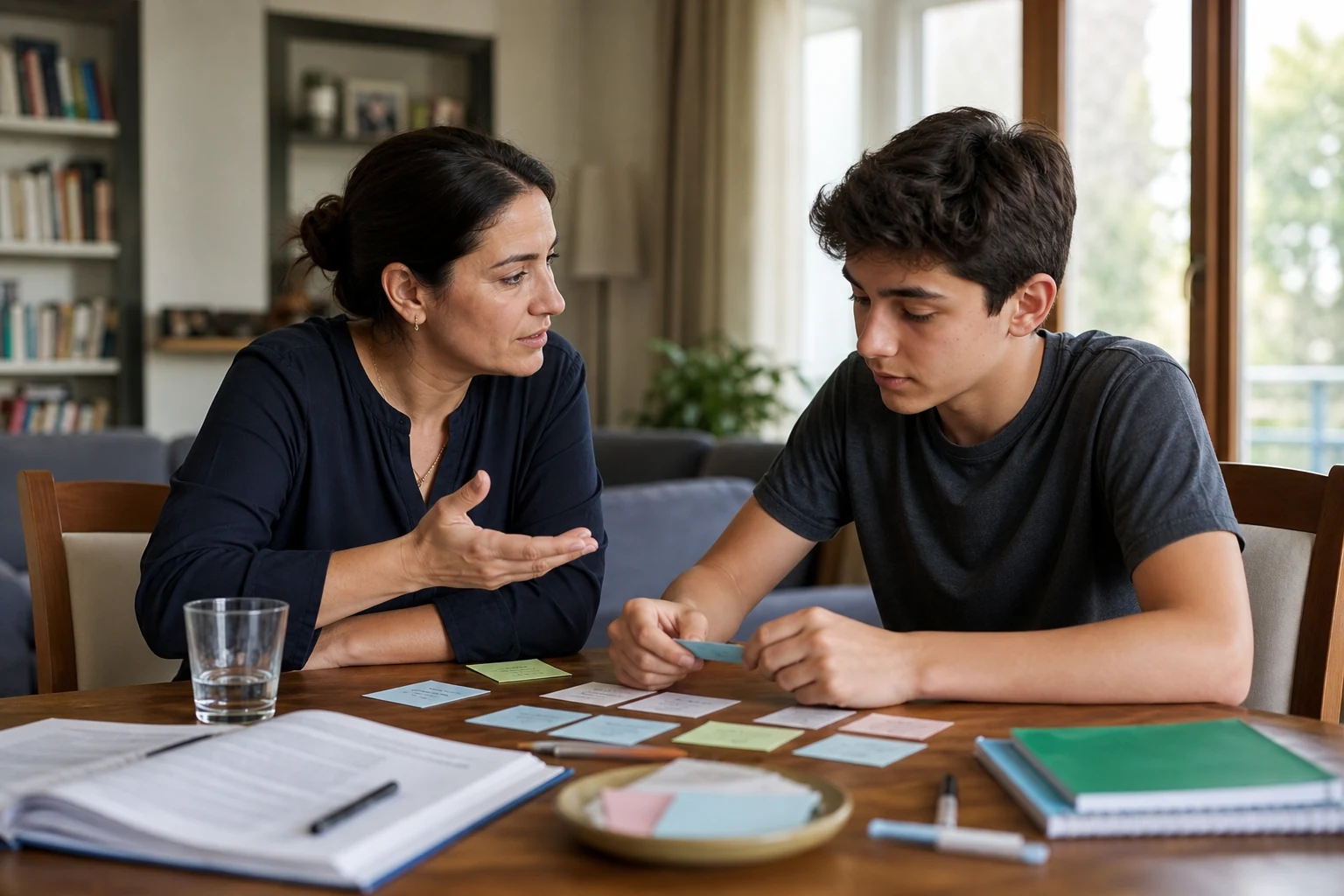
Every child grows at their own pace
Cognitive Development in Teens (12–18 Years)
Understand how teens’ thinking evolves unevenly and how to support their planning, reasoning, and decision-making without overstepping their growing autonomy.
General Information: General information only; it may vary from child to child. Talk to your doctor or a specialist before making decisions.
In short
- Teens’ cognitive skills develop unevenly, not all at once, and are shaped by sleep, stress, peers, and digital environments.
- Break long-term goals into visible next steps and use shared calendars or reminders to build planning skills without taking over.
- Compare strategies rather than intelligence, allow safe practice with decisions, and review consequences together to foster flexible thinking.
- Protect sleep and discuss online claims collaboratively to balance autonomy with guidance during this uneven growth period.
Lumiya Editorial TeamBased on 4 sourcesOur editorial standards
What’s really happening in your teen’s brain (and why it looks uneven)
Between 12 and 18, cognitive skills expand unevenly—planning, flexible thinking, reasoning, learning strategies, impulse control, and perspective-taking don’t all improve at the same pace or in the same order. A teen might excel at creative problem-solving one week and struggle to follow through on a simple homework plan the next. This isn’t laziness or inconsistency; it’s how the brain builds new connections while pruning old ones.
School demands, sleep, stress, emotions, peers, digital environments, disability, neurodiversity, language, and opportunity all shape these changes. For example, a teen juggling part-time work, advanced classes, and family responsibilities may show stronger time-management skills in one context but weaker impulse control in another. Recognizing these differences helps families respond with support rather than frustration.

Teens’ thinking evolves in fits and starts, not in neat stages. What looks like inconsistency may simply be the brain practicing new skills in different settings.
Everyday supports that build skills without taking over
Instead of stepping in to fix every plan, ask how your teen approaches a task. Their answer reveals their current strategy, which you can then build on. For long-term goals, break them into visible next steps—shared calendars, checklists, or reminders work better than nagging. This approach teaches planning without eroding autonomy.
Compare strategies rather than intelligence. For example, if your teen struggles with a science project, discuss different ways to organize research or draft ideas instead of praising their “smartness.” This fosters flexible thinking and resilience. When reviewing decisions, focus on consequences together, not blame. Ask, “What did you learn?” rather than “Why didn’t you think ahead?”
| Support type | Example | Why it works |
|---|---|---|
| Shared tools | Family calendar with color-coded deadlines | Makes abstract plans visible and collaborative |
| Strategy talk | “How did you decide to study for the test?” | Reveals their current approach and gaps |
| Safe practice | Allowing choices in extracurriculars or chores | Builds decision-making in low-stakes settings |
| Consequence review | “What happened when you waited until the last minute?” | Encourages reflection without humiliation |
Sleep, stress, and digital life: the invisible influencers
Sleep loss can mimic or worsen cognitive struggles, making it harder to plan, control impulses, or take others’ perspectives. Teens need 8–10 hours nightly, but school start times, social pressures, and screens often interfere. Work together to set routines—like a shared bedtime alarm or screen-free wind-down—that protect sleep without constant conflict.
Stress, whether from academics, family changes, or social dynamics, can shrink working memory and slow reasoning. Help your teen name their stressors and brainstorm small, manageable steps to address them. Digital environments add another layer: multitasking between apps can fragment attention, while online misinformation can distort reasoning. Discuss how to evaluate sources, set app limits, and balance screen time with offline activities.

Protecting sleep and discussing online claims together can turn daily challenges into opportunities for growth, not just sources of friction.
When to seek extra support
Most cognitive changes in the teen years are uneven but not alarming. However, persistent patterns deserve attention: a decline in skills, severe confusion, loss of previously mastered abilities, school avoidance, substance concerns, head injury symptoms, or signs of distress may signal a need for professional support. Trust your instincts—if something feels “off,” it’s worth checking in with a healthcare provider or school counselor.
Families can also benefit from evidence-based parenting interventions that focus on non-violent, supportive caregiving. These programs emphasize collaboration, clear communication, and problem-solving—tools that align with the uneven growth teens are experiencing. Resources like those from the American Academy of Pediatrics and the World Health Organization offer guidance for fostering healthy development at home and school.
Putting it all together: small steps, big impact
Start by picking one area to focus on—sleep routines, shared planning tools, or strategy discussions—and build from there. The goal isn’t to “fix” your teen’s thinking but to create a home environment where their growing skills can flourish. Celebrate progress, even if it’s incremental, and remember that setbacks are part of the process.
As teens navigate this uneven growth, your role is to guide without overstepping, support without rescuing, and listen without judging. The skills they build now—planning, reasoning, and resilience—will serve them long after adolescence ends.
## Handling homework pushback without power struggles
When your teen resists homework, pause before reacting. Instead of insisting they start immediately, ask open questions like, “What part feels hardest right now?” or “Would it help to break this into smaller pieces?” This shifts focus from compliance to problem-solving, letting them own the process while you stay nearby. If they’re stuck, suggest a five-minute timer to tackle the first step together—often the hardest part is starting, not the work itself. Avoid taking over; your role is to listen and offer tools, not fixes. If frustration builds, suggest a short break to stretch or hydrate; movement can reset focus better than a lecture. Remember, their resistance isn’t personal—it’s a sign their brain is still learning to manage frustration and priorities. Stay calm, and they’re more likely to return to the task without a fight.
Teens often delay homework because their planning skills are still developing, not because they’re avoiding effort. Try creating a shared digital checklist where they mark off tasks as they go—this makes progress visible and reduces last-minute panic. If they’re overwhelmed, help them identify the most urgent task first, then the next, rather than demanding they finish everything at once. Praise effort over results, like, “I noticed you stuck with that math problem even when it was tough,” to reinforce persistence. If pushback persists, check in about sleep, stress, or social pressures; sometimes the real issue isn’t the homework at all. Your goal isn’t to eliminate resistance but to teach them how to work through it independently.
General Information: This content offers general information based on expert sources. Every child, family and situation is different, so what is described here may vary from person to person. Talk to your doctor or a qualified specialist before making decisions about your child.
Was this article helpful?
This topic at other agesGrowth & Development
Tools for this Age
- Baby and child sleep scheduleHow much should your child sleep in 24 hours, and when should bedtime be? Calculate it from official guidance and compare it with your own log.
- Screen time by ageSee how much screen time a day your country's official body recommends at your child's age; add daily use to compare it with the advice.
- Child Height Predictor & Genetic Target Height CalculatorHow tall will your child be as an adult? Enter both parents' heights to calculate the pediatric mid-parental target height and expected adult height range using the Tanner and AAP formulas.
Checklist
Popular Topics
Frequently Asked Questions
- 1
- 2
- 3
- 4
References & Further Reading
Editorial Note
If you notice persistent decline in skills, severe confusion, loss of previously mastered abilities, school avoidance, substance concerns, head injury symptoms, or signs of distress, seek timely professional support. Immediate safety concerns require local emergency help.