
 lumiya.com.tr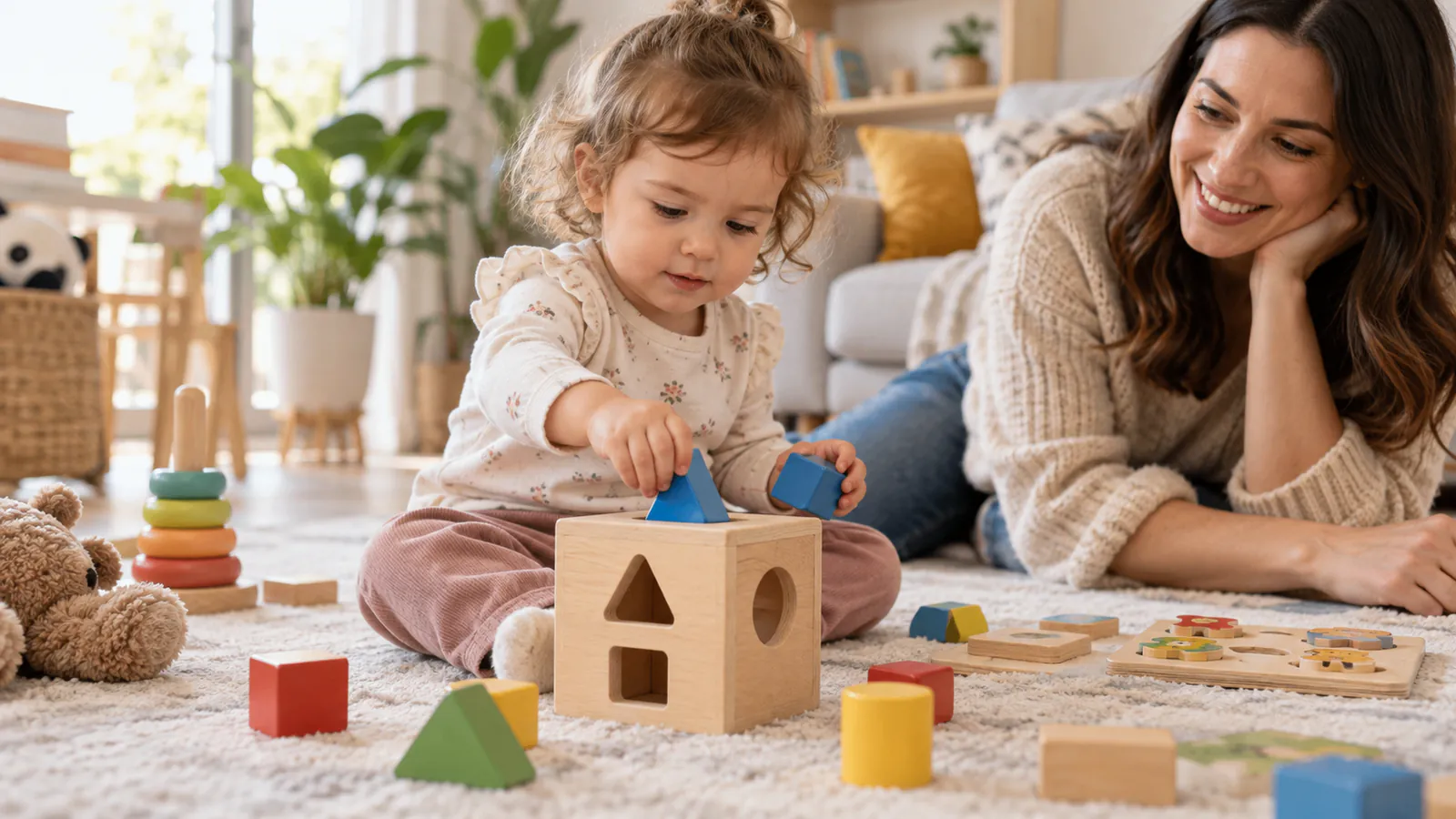
Every child grows at their own pace
Cognitive Development for 1–3 Year Olds
Learn how to support your toddler’s thinking, problem-solving, and language skills through everyday play and routines. Discover low-cost, science-backed strategies to nurture cognitive growth without pressure or expensive tools.

Neşe Arslan
Child Development Expert
Expert review: 28/09/2026
General Information: General information only; it may vary from child to child. Talk to your doctor or a specialist before making decisions.
In short
- Cognitive development in toddlers grows through play, conversation, and exploration—not flashcards or screens.
- Focus on attention, memory, cause-and-effect, and problem-solving in everyday moments.
- Use low-cost, everyday activities like sorting, pretend play, and shared books to support learning.
- Trust your child’s pace; seek guidance only if you notice persistent delays or loss of skills.
Lumiya Editorial TeamBased on 4 sourcesOur editorial standards
What cognitive development looks like in 1–3 year olds
Between ages one and three, your child’s brain is building the foundations for thinking, learning, and problem-solving. This isn’t about scoring high on tests or racing through milestones.
During this period, you may notice your child:
- Paying closer attention to people and objects for longer stretches
- Remembering where they left a favorite toy or recognizing familiar faces
These skills grow unevenly. One week your toddler might focus on sorting blocks by color; the next, they’re obsessed with climbing. That’s normal. What matters most is that they’re actively exploring and connecting with you and their surroundings.

A child who stacks two blocks today may knock them down tomorrow—not because they’ve forgotten, but because they’re testing what happens when they change their approach.
Cognitive growth isn’t a race. Sleep, health, relationships, and daily opportunities all shape how these skills develop. Some toddlers talk early; others solve puzzles first. The key is to provide a rich, responsive environment where curiosity can flourish.
Everyday ways to nurture thinking skills
You don’t need expensive toys or apps to support cognitive development. The best tools are already in your home and daily routines. The goal isn’t to teach facts, but to encourage exploration, problem-solving, and connection.
Follow your child’s lead. If they’re fascinated by cars, build a ramp with a cardboard tube and talk about how fast they go. If they love stacking, hand them soft blocks and narrate what they’re doing: *“You.
Use simple, open-ended play. Containers, spoons, and empty boxes invite creativity. A toddler might fill a cup with water, dump it out, and repeat—learning about volume and cause and effect without a single instruction.
Name what they notice. When your toddler points to a dog, say “Dog! Woof woof!” instead of asking “What’s that?” This builds vocabulary and links words to their world.
Read together daily. Board books with bright pictures and few words let your toddler point, name, and predict what comes next. Ask simple questions: “Where’s the cat?” or *“What sound does.
Allow manageable mistakes. If your toddler struggles to stack three blocks, resist the urge to fix it immediately. Wait a moment, offer encouragement, and let them try again. This builds persistence and problem-solving.
Keep it short and joyful. Toddlers learn best in bursts of 5–10 minutes. If they lose interest, switch activities or take a break. Connection and fun matter more than the task itself.
Low-cost activity ideas
| Activity | What it builds | How to do it | Toddler-friendly twist |
|---|---|---|---|
| Sorting socks | Color recognition, categorization, fine motor skills | Lay out clean socks and ask your toddler to match pairs | Use socks with fun patterns or let them sort by size first |
| Grocery store pretend play | Language, planning, social skills | Set up empty food boxes and a basket; take turns being the shopper and cashier | Add a toy scale or pretend scanner for extra fun |
| Water play with cups | Cause and effect, measurement, hand-eye coordination | Fill a shallow bin with water and offer cups, spoons, and funnels | Add food coloring for color mixing experiments |
| Shape hunt | Shape recognition, observation, movement | Cut out simple shapes from colored paper and hide them around the room | Have your toddler carry a basket to collect them |
| Storytelling with pictures | Language, imagination, sequencing | Take photos of your toddler’s day and print them; ask them to tell you what happened | Let them arrange the photos in order |
When to seek guidance
Most toddlers develop at their own pace, and small differences are usually nothing to worry about. But there are times when extra support can make a big difference. Trust your instincts as a parent.
Talk with your pediatrician or a child development specialist if you notice:
- Losing skills they once had, like no longer saying words they used before
- Showing little interest in people, toys, or exploring their surroundings

Early support is more effective than waiting. If you’re unsure, share your observations with your child’s doctor. They can help determine if further evaluation is needed.
Developmental screening is a quick way to check how your toddler is doing. It’s not a test—it’s a conversation with your pediatrician about your child’s strengths and any areas where extra help might be useful.
Building a brain-friendly home
Your home environment shapes how your toddler learns. Small changes can make a big difference without adding stress or cost.
Create safe spaces for exploration. Toddlers learn by moving and touching. Block off stairs, cover outlets, and keep small objects out of reach. A childproofed corner with soft mats, cushions, and a few toys lets them climb, crawl, and experiment freely.
Limit distractions. Screens, loud noises, and too many toys can overwhelm a toddler’s growing attention span. Rotate a few simple toys every few weeks to keep things fresh without overstimulation.
Prioritize sleep and routines. Well-rested toddlers learn better. Stick to a consistent bedtime and nap schedule. Predictable routines—like bath time followed by a book—help them feel secure and ready to explore.
Connect through play. The most powerful learning happens in moments of joy and connection. When you play alongside your toddler, narrate what you’re doing, ask open-ended questions, and respond to their cues. This builds language, thinking, and trust all at once.
Embrace repetition. Toddlers love doing the same thing over and over. That’s how they learn. If your child wants to read the same book 20 times or build the same tower, lean into it. Each repetition strengthens their memory and confidence.
Red flags and realistic expectations
It’s natural to compare your toddler to others, but remember that development isn’t a competition. Some toddlers walk early but talk late; others talk early but take longer to solve puzzles.
Common concerns that often resolve with time:
- A toddler who isn’t talking as much as peers but understands well
- A child who prefers to play alone rather than with others
When to dig deeper:
- If your toddler isn’t responding to their name by 12 months
- If they aren’t using gestures like pointing or waving by 18 months
If any of these concerns apply, share them with your pediatrician. They can guide you to local resources, early intervention programs, or further evaluation if needed.
Trusting your instincts
You know your child best. If something feels off, it’s okay to ask questions. Developmental professionals are there to support you, not to judge. Early support can make a lifelong difference in how your child learns and grows.
Cognitive development in the toddler years isn’t about pushing ahead—it’s about creating a home where curiosity can thrive. Through play, conversation, and connection, you’re giving your child the tools they need to explore the world with confidence.
The goal isn’t to raise a child who excels at every milestone, but one who feels safe to try, fail, and try again.
Health Information: The content and guidance in this article are prepared solely to inform parents, based on current medical literature and scientific research. The information provided here does not, in any way, replace direct medical diagnosis, treatment, or professional medical advice. If you have any concerns or doubts about your baby's health or development, please consult a pediatrician or your healthcare provider without delay.
Was this article helpful?
This topic at other agesGrowth & Development
Tools for this Age
- Baby percentile calculatorWhere does your child's weight and height sit among children the same age? See it in seconds on the WHO growth curves.
- Baby and child sleep scheduleHow much should your child sleep in 24 hours, and when should bedtime be? Calculate it from official guidance and compare it with your own log.
- Potty training chartWhen to start and how to prepare? A roadmap by age, a daily routine and a printable reward chart.
- Baby milestones by monthCheck off what most children your child's age can do, and talk about the rest with your doctor.
- Baby vaccine schedulePick your country, enter the birth date, and see the official schedule as your own dates.
- Baby teething chart: order and timelineEnter the date of birth to see the typical eruption window of all 20 baby teeth, the next tooth and the teeth already through — on one screen.
Checklist
Popular Topics
Frequently Asked Questions
- 1
- 2
- 3
- 4
Expert Note
If your child loses skills they once had, shows little interest in people or objects, or struggles to use their senses or movements to explore, talk with your pediatrician or a child development specialist. Early support makes a difference.
Neşe Arslan
Child Development Expert