 lumiya.com.tr
3–6 Years Development: A Parent’s Guide to Developmental Screening
Learn how to observe your child’s growth from ages 3 to 6 without turning everyday moments into tests. Understand the difference between developmental monitoring and professional screening, and when to seek support.

Neşe Arslan
Child Development Expert
What to Watch for in Daily Life
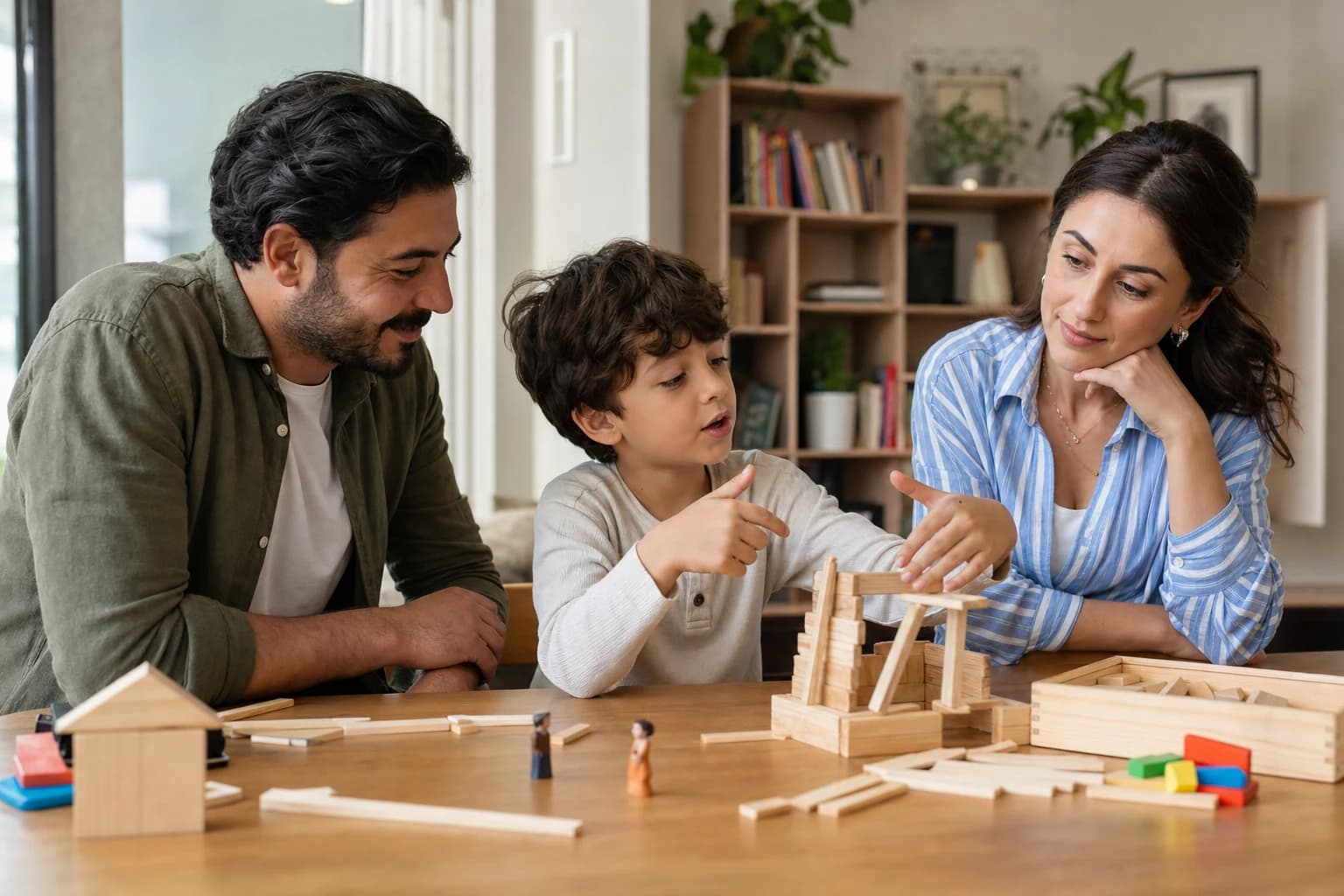
Between ages 3 and 6, children grow in leaps and bounds. They start to form sentences, play cooperatively, and explore the world with curiosity. Developmental monitoring is about noticing these changes in everyday moments—not turning them into a test. For example, you might jot down a quick note when your child first uses a full sentence or when they struggle to follow a simple two-step direction like “pick up the book and put it on the shelf.” These dated observations help you and your child’s care team see patterns over time.

A 4-year-old who recently started preschool might mix up sounds in words, like saying “wabbit” instead of “rabbit.” While this is common, if the pattern persists for months or is accompanied by frustration when communicating, it’s worth mentioning to your pediatrician.
Developmental monitoring isn’t about scoring your child. It’s about understanding their unique pace. Some children excel in movement but take more time with language. Others may dive deep into pretend play but need support with sharing. The goal is to celebrate progress while keeping an eye on areas that might need extra attention.
When Professional Screening Makes Sense
Screening is a snapshot taken by a trained professional using tools designed to measure skills like language, problem-solving, and social-emotional growth. These tools are different from the casual observations you make at home. For instance, a screening might include asking your child to name colors, follow simple instructions, or engage in a short conversation about a picture book.
Screening is most helpful when it happens in more than one setting. Your child’s preschool teacher might notice that they rarely join group activities, while you’ve observed that your child struggles to take turns during playdates. Bringing these observations together with a professional’s perspective gives a clearer picture of your child’s strengths and needs.
Areas Screenings Usually Cover
- Language and Communication: Can your child speak in sentences? Do they understand simple questions?
- Movement and Physical Development: Can they hop on one foot, catch a ball, or use scissors?
- Cognitive Skills: Can they sort objects by color, count to five, or solve simple puzzles?
- Social-Emotional Growth: Do they show empathy, manage frustration, or play well with others?
- Hearing and Vision: Are there signs your child isn’t responding to sounds or squinting at the board?
A screening isn’t a one-time event. If your child’s skills seem to plateau or regress, or if you notice a loss of previously acquired abilities, it’s important to act quickly. For example, a child who once spoke in short sentences but now rarely talks may need further evaluation.
How to Talk to Your Pediatrician
Bringing up concerns about development can feel overwhelming, but your pediatrician is there to listen. Start by sharing specific examples from your observations. Instead of saying “My child isn’t talking much,” try: “Over the past month, I’ve noticed my child mostly points to what they want and rarely uses words, even though they used to say a few words like ‘mama’ and ‘ball.’”
If your child’s doctor suggests screening, ask what the process will look like and how the results will be used. Screening tools are designed to be child-friendly, but some children may feel shy or overwhelmed. A good provider will adapt the session to your child’s comfort level.
What Happens After Screening
Screening results are shared as observations, not diagnoses. If the results suggest your child might benefit from extra support, your pediatrician may recommend:
- Early Intervention Services: Free or low-cost programs for children under 3 that focus on speech, motor skills, or other areas of need.
- Preschool Special Education Services: For children ages 3–5, these services are provided through your local school district and tailored to your child’s needs.
- Follow-Up Monitoring: Sometimes, a child just needs a little more time. Your doctor may suggest re-screening in a few months to see if progress continues.
It’s natural to feel uncertain about next steps. Ask your pediatrician for clear explanations about what the results mean and what options are available in your community.
Red Flags That Warrant Action
While every child develops at their own pace, certain signs suggest it’s time to seek guidance. These include:
- Language Delays: Not saying single words by 16 months, not using two-word phrases by 24 months, or not speaking in sentences by age 3.
- Social Challenges: Little interest in playing with other children, avoiding eye contact, or showing no response when their name is called.
- Movement Difficulties: Trouble walking, frequent falls, or difficulty holding a crayon or utensil.
- Hearing or Vision Concerns: Not reacting to sounds, squinting often, or rubbing eyes excessively.
- Skill Loss: Forgetting words they once knew or losing skills they had previously mastered.
| Age | What to Notice | Example Observation |
|---|---|---|
| 3 years | Speaks in short sentences, follows simple instructions | “Can you put the toy in the box?” |
| 4 years | Tells stories, plays cooperatively with peers | “Let’s build a tower together!” |
| 5 years | Counts to 10, draws recognizable shapes | “I made a house with a triangle roof!” |
| 6 years | Reads simple words, ties shoes, understands time concepts | “The clock says 3:00, time for snack!” |

If your child’s preschool teacher mentions concerns about their ability to sit still during circle time or follow multi-step directions, don’t wait to see if it improves. Share these observations with your pediatrician to explore next steps.
Building Confidence in Your Role
You don’t need to be an expert to support your child’s development. Small, everyday interactions make a difference. Narrate your actions during play (“I’m stacking the blue block on top!”), read together daily, and give your child space to try things on their own. When challenges arise, respond with patience and curiosity rather than pressure.
If you’re unsure whether your child’s development is on track, remember that screening is a tool—not a judgment. It’s there to help you and your child get the support they need, when they need it. Trust your instincts, keep observing, and reach out when something feels off. Early support can open doors to new opportunities for your child.
"Health Disclaimer: This content is provided for general informational purposes only and does not constitute personal medical advice, diagnosis, or treatment. Always seek the advice of a qualified health professional with any questions you may have regarding your health or your child's health."
Was this article helpful?
Fast Summary
- Developmental monitoring is an ongoing process of observing your child’s skills in daily life, not a formal test.
- Professional screening uses validated tools to assess development in areas like language, movement, and social skills.
- Screening is most helpful when done in multiple settings, such as home, childcare, and with your pediatrician.
- Trust your instincts—if something feels off, it’s okay to ask for guidance.
Tools for this Age
Checklist
Popular Topics
This topic at other ages· Development
Frequently Asked Questions
- 1
Show 3 moreCollapse
- 2
- 3
- 4
References & Further Reading
Expert Note
This guide is for informational purposes only. Always consult a healthcare professional for personalized advice about your child’s development.
Neşe Arslan
Child Development Expert
Health Information
The content and guidance in this article are prepared solely to inform parents, based on current medical literature and scientific research. The information provided here does not, in any way, replace direct medical diagnosis, treatment, or professional medical advice. If you have any concerns or doubts about your baby's health or development, please consult a pediatrician or your healthcare provider without delay.