 lumiya.com.tr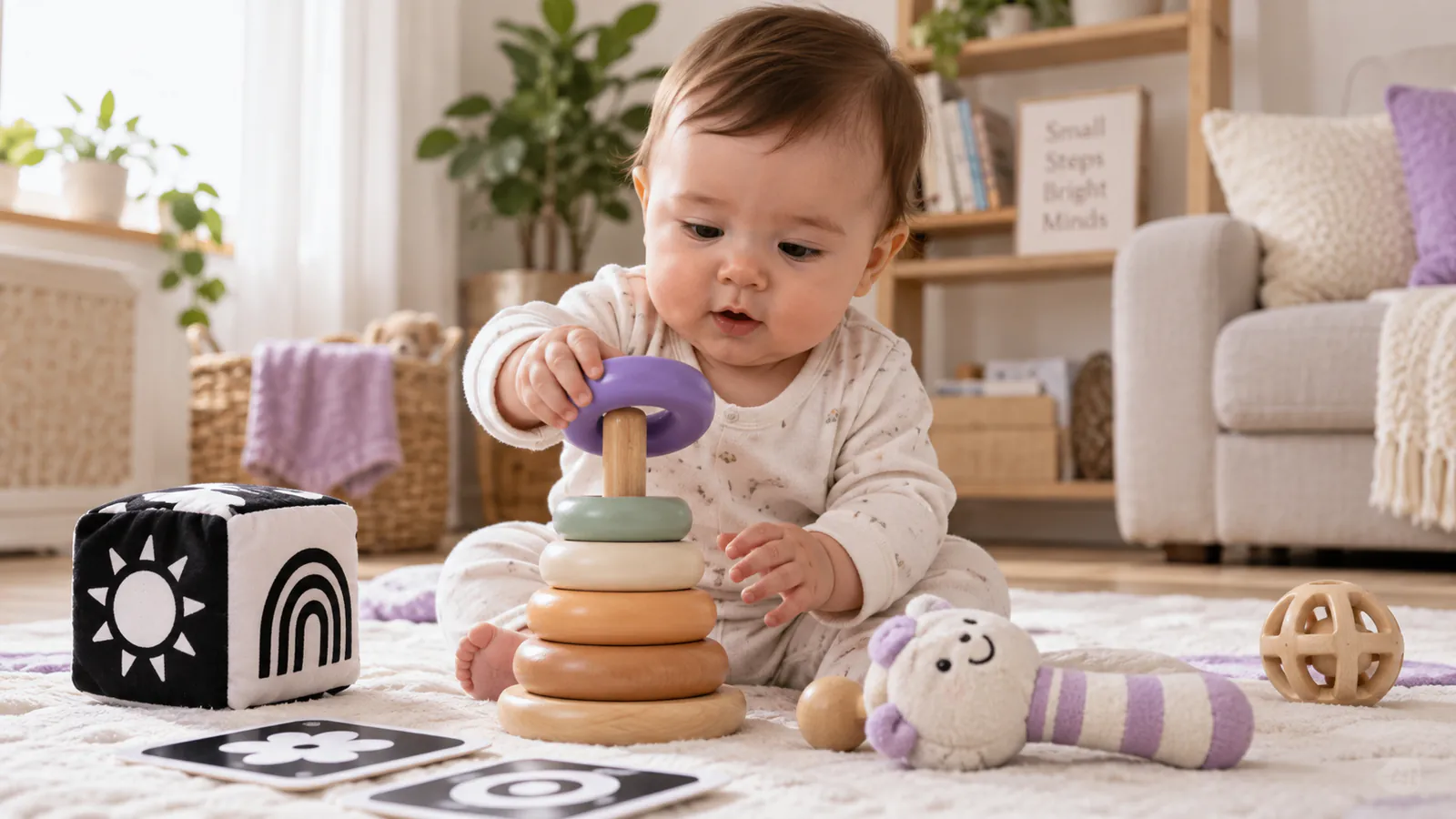
Every child grows at their own pace
Baby Cognitive Development: 0–12 Months
Learn how cognitive development unfolds in the first year through attention, memory, and problem-solving—all within everyday interactions. Discover responsive ways to support your baby’s growth without relying on screens or products.

Neşe Arslan
Child Development Expert
Expert review: 28/09/2026
General Information: General information only; it may vary from child to child. Talk to your doctor or a specialist before making decisions.
In short
- Cognitive growth in the first year is built through responsive relationships, not test scores.
- Everyday moments—like talking, playing, and reading—strengthen attention, memory, and early problem-solving.
- Screens are not needed for development; face-to-face interaction and safe play are the best tools.
- Trust your instincts—if you notice a loss of skills or reduced responsiveness, talk with your pediatrician.
Lumiya Editorial TeamBased on 4 sourcesOur editorial standards
How your baby’s thinking grows in the first year
From the moment they arrive, babies are learning how the world works—not by memorizing facts, but by noticing, remembering, and testing ideas through their senses and movements. In the first 12 months, cognitive development isn’t measured by a score or a test.
Every baby grows at their own pace. Some may show early curiosity with quick movements and bright eyes, while others take more time to explore. What matters most is the quality of the interactions around them. Responsive care—where you notice your baby’s cues and respond with warmth—builds the foundation for thinking, learning, and problem-solving long before school begins.
The building blocks of early thinking
During the first year, several key skills emerge as part of cognitive growth. These aren’t separate stages, but overlapping parts of how your baby learns to make sense of their world.
Attention and focus
In the early weeks, newborns may only focus on faces or bright lights for a few seconds. By 3–4 months, many babies can follow moving objects with their eyes and turn toward sounds. Around 6 months, they may spend longer looking at interesting toys or pictures.
Recognition and memory
By 2–3 months, many babies smile or become more alert when they see a familiar face or hear a familiar voice. By 6–9 months, they may recognize their name or anticipate routines, like reaching for their bottle when they see you prepare it. These small moments show that your baby is storing information and using it to guide their actions.
Cause and effect
Around 4–6 months, babies start to understand that their actions have consequences. Dropping a spoon may make a noise; shaking a rattle produces sound; pushing a button lights up a toy. These early experiments teach them that they can influence their environment, which builds confidence and curiosity.
Object permanence
Between 6 and 9 months, many babies begin to grasp that objects still exist even when they can’t see them. This is why a toy hidden under a blanket may prompt them to search for it. This understanding is a major step in thinking beyond the here-and-now.
Imitation and social learning
From early on, babies watch and copy facial expressions, sounds, and gestures. By 9–12 months, they may clap when you clap, wave when you wave, or try to mimic words. These actions show they’re learning how people communicate and connect.
Early problem-solving
By the end of the first year, some babies start to use simple strategies to reach a goal. They might move a pillow to get to a toy, or try different ways to make a sound from a new toy. These early attempts at problem-solving are the seeds of logical thinking.
| Step | Family question | Check |
|---|---|---|
| Plan | What do we need today? | Review time, supplies and safety |
| Do | How will we share the task? | Give age-appropriate responsibility |
| Review | What should change next time? | Make a short note without blame |
Everyday moments that build thinking
You don’t need special tools or programs to support your baby’s cognitive growth. The most powerful learning happens in the ordinary interactions of daily life. What matters is how you respond, what you say, and how you play together.
Talk, read, and respond
Babies learn language best when they hear real voices in real time. Narrate what you’re doing as you change a diaper, prepare a bottle, or fold laundry. Share picture books with bright, simple images and point to them as you name objects.

Talk to your baby as you move through the day. Even if they don’t understand the words, they’re learning about rhythm, tone, and connection. These moments lay the groundwork for language and thinking long before they speak their first word.
Safe play on the floor
Once your baby can roll, sit, or crawl, offer plenty of safe floor time. Place toys just out of reach to encourage movement and reaching. Choose objects that are easy to grasp, like soft blocks, rings, or crinkly books.
Simple games that spark curiosity
Games like peek-a-boo, hide-and-find, and stacking cups help your baby practice attention, memory, and cause-and-effect. Hide a toy under a light cloth and let your baby discover it. Build a small tower with soft blocks and show your baby how to knock it down.
Responding to your baby’s cues
Watch how your baby reacts to sights, sounds, and people. If they turn away, fuss, or seem overwhelmed, give them a moment to regroup. If they lean in, smile, or reach out, respond with warmth and engagement. This back-and-forth teaches your baby that their signals are understood and that the world is a safe place to explore.
When development doesn’t follow a straight line
Every baby develops at their own pace, and prematurity or health conditions can influence timing. If your baby was born early, their milestones may come later than expected. A pediatrician familiar with your baby’s history can help you understand what’s typical for them.
Trust your instincts
You know your baby best. If you notice that your baby has lost skills they once had, shows less interest in people or sounds, or seems much quieter or less responsive than before, it’s worth discussing with your pediatrician. Early support can make a big difference, especially when concerns are addressed promptly.
Avoid shortcuts and screens
There’s no evidence that apps, videos, or electronic toys accelerate cognitive development in babies. In fact, screen time can reduce the face-to-face interaction that builds language, attention, and social skills. Focus instead on real moments—talking, playing, and responding—to give your baby the best start.
A year of discovery
The first 12 months are a time of rapid learning, even if it doesn’t always look like progress on a checklist. Your baby is building the foundations of attention, memory, problem-solving, and communication through the love and responsiveness you provide. There’s no need to rush or compare—just be present, play often, and enjoy the small discoveries along the way.
Milestones aren’t the whole story
Instead of tracking whether your baby meets a certain milestone by a certain date, focus on the quality of their engagement. Are they curious? Do they respond to you? Do they show joy in simple interactions? These signs of connection and exploration are the true markers of healthy cognitive growth.
Keep it simple and joyful
You don’t need expensive toys or structured activities. A blanket on the floor, a few safe objects, and your voice are enough to spark learning. The most important ingredient is your presence—your attention, your warmth, and your willingness to respond to your baby’s unique way of exploring the world.

If you ever feel unsure about your baby’s development, reach out to your pediatrician. They can offer guidance tailored to your baby’s needs and help you feel confident in the choices you’re making every day.
Health Information: The content and guidance in this article are prepared solely to inform parents, based on current medical literature and scientific research. The information provided here does not, in any way, replace direct medical diagnosis, treatment, or professional medical advice. If you have any concerns or doubts about your baby's health or development, please consult a pediatrician or your healthcare provider without delay.
Was this article helpful?
This topic at other agesGrowth & Development
Tools for this Age
- Baby percentile calculatorWhere does your child's weight and height sit among children the same age? See it in seconds on the WHO growth curves.
- Baby and child sleep scheduleHow much should your child sleep in 24 hours, and when should bedtime be? Calculate it from official guidance and compare it with your own log.
- Baby milestones by monthCheck off what most children your child's age can do, and talk about the rest with your doctor.
- Baby vaccine schedulePick your country, enter the birth date, and see the official schedule as your own dates.
- Baby teething chart: order and timelineEnter the date of birth to see the typical eruption window of all 20 baby teeth, the next tooth and the teeth already through — on one screen.
- Baby feeding schedule: weaning chart by monthEnter your country and the date of birth: when to start solids, meals and textures by age, and until when to avoid certain foods — with dates.
Popular Topics
Frequently Asked Questions
- 1
- 2
- 3
- 4
Expert Note
If your baby loses skills they once had, shows less interest in people or sounds, or you feel concerned about their development, reach out to your pediatrician or a developmental specialist. Early support makes a difference.
Neşe Arslan
Child Development Expert