 lumiya.com.tr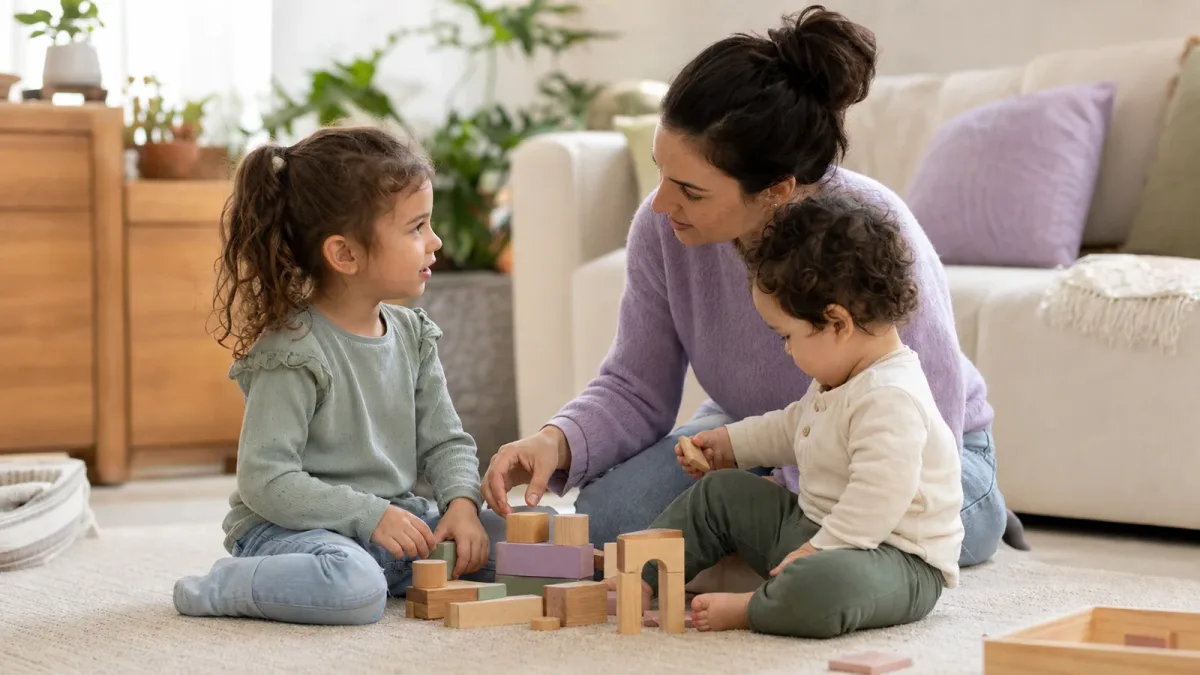
Listening is the best start
Sibling Jealousy at Ages 3-6: A Family Plan for Connection and Safety
Treat jealousy as a signal rather than a character flaw; protect one-to-one connection, set a firm safety boundary and stop comparing siblings.
General Information: General information only; it may vary from child to child. Talk to your doctor or a specialist before making decisions.
In short
- Sibling jealousy is not bad character; it can signal a need for attention, security and belonging.
- Feelings are allowed, while hitting, biting, threatening and humiliating are stopped every time.
- Brief predictable one-to-one time is more useful than trying to make every moment exactly equal.
- Seek support when aggression escalates, a child is persistently afraid or family functioning stays disrupted.
Lumiya Editorial TeamBased on 4 sourcesOur editorial standards
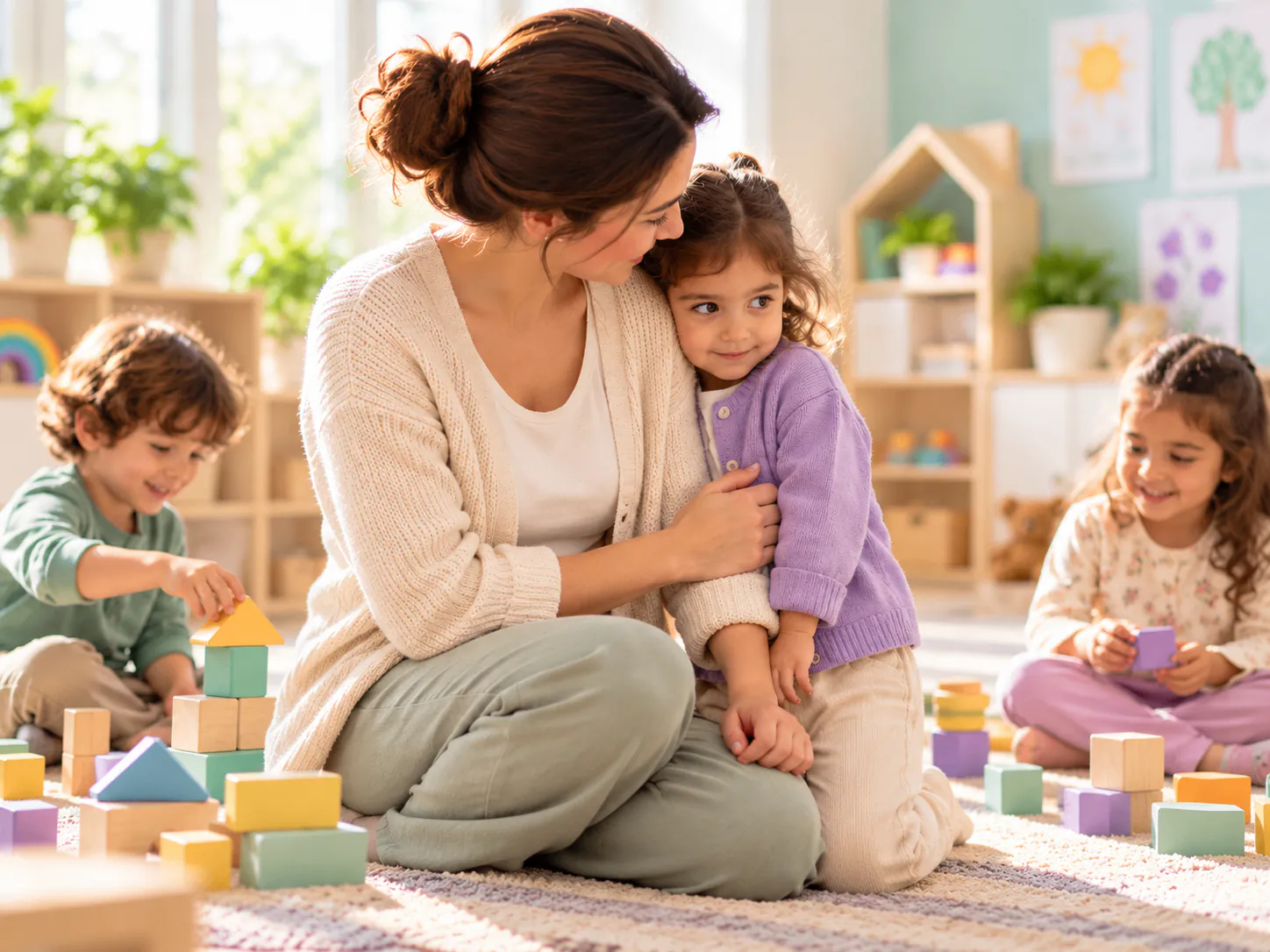
Between ages three and six, a child may climb onto a parent's lap as soon as a baby is picked up, guard a favorite toy, use baby talk again, or announce that the family loves the other child more. These moments do not prove that the child lacks empathy or love. Preschoolers are still learning how relationships remain secure when attention moves. They often show the question through behavior before they can say, “Do I still matter when my sibling needs you?”
The goal is not a home in which jealousy never appears. It is a home where any feeling can be named, physical and emotional safety is protected, and repair is possible after conflict. Adults can hold two truths at once: “It makes sense that you wanted me,” and “I will not let you push.” Children learn security from repeated routines and calm limits, not from being required to perform affection or from hearing that good siblings never fight.
Observe the need before deciding what the behavior means
For one week, make brief notes about what happened before, during and after difficult moments. Did conflict begin during feeding, a work call, the school pickup rush or the bedtime routine? Was the child hungry, tired, overstimulated or facing a new family change? Record observable actions instead of judgments: “grabbed the truck and shoved” is useful; “acted jealous and manipulative” is not. Note how the adult responded and how long recovery took.
Offer emotion words as a hypothesis, not a verdict. “You wanted that turn with me,” “You were worried your tower would be broken,” or “You may wish you were the baby today” gives the child something to accept or correct. If the child says the real problem was a broken promise, listen. Jealousy can overlap with ordinary frustration, ownership, fatigue or a need for predictability. Accurate observation prevents every disagreement from becoming a story about rivalry.

A label describes who a child supposedly is. A specific observation describes what happened and leaves room for a different choice next time.
Protect brief, dependable one-to-one connection
Aim for ten or fifteen minutes of child-led, distraction-free time with each child on most days. It does not need to be an outing or a reward. Reading after the baby settles, walking the dog, mixing pancake batter or building one small block structure can work. Name the routine and keep promises realistic: “After I change the diaper, we have our book time.” If another caregiver is available, connection should be distributed rather than resting on one exhausted parent.
Avoid turning the older child into a junior parent. Invite age-appropriate help, but allow “no” without withdrawing warmth. Do not repeatedly say, “You're the big one, you should understand.” A three- or four-year-old may be older than the baby and still need comfort, help dressing or a lap. When a new sibling arrives, keep preschool, room and bedtime routines stable where possible. If a change is necessary, explain it in advance so it is not experienced as displacement.
Stop unsafe behavior first and teach after calm returns
When there is hitting, biting, kicking, choking, throwing or deliberate frightening, move close and separate the children. Use a short sentence: “I will not let you hurt each other.” Check the injured child and remove dangerous objects. Avoid a courtroom investigation in the heat of the moment. Young children cannot absorb a lecture while their bodies are highly activated, and a forced apology or hug can teach performance rather than responsibility.
After calm returns, hear short accounts from both children. Help each name the problem, then rehearse one replacement: “My turn,” “Don't touch my body,” “Help, please,” or moving to a designated calm space. Repair can be practical—rebuilding the tower, bringing a cool cloth, returning an item or choosing a safer game. The hurt child does not have to accept a hug, forgive immediately or resume play. Adults model that boundaries and relationship can coexist.
| What you see | Possible need | First measured response |
|---|---|---|
| Child interrupts whenever baby is held | Reassurance that connection remains available | Offer brief contact and name the next one-to-one time |
| Grabbing and pushing over a toy | Ownership or turn-taking is unclear | Separate bodies and show the personal/shared-item rule |
| Baby talk or requests for extra help | Comfort during a transition | Give brief care without ridicule, then offer an age-fit choice |
| Constant claims that treatment is unfair | Need to understand why care differs | Explain the need; do not duplicate every gift or privilege |
| Threatening a sibling only out of sight | Power, anger or impulse difficulty | Increase supervision and consider professional guidance |
Make fairness visible without making care identical
Fair care responds to age, safety and need; it does not require two children to receive the same thing in the same minute. A baby may need feeding while a preschooler needs a clear promise of play. Say what is happening: “I am helping the baby because their body cannot wait. Your puzzle time is next.” Then follow through. Automatically producing a matching gift or compliment can accidentally teach children to measure love only by comparison.
Create categories for belongings. A few cherished items can be personal; family toys can use a timer, turn card or agreed place. Apply the rule to both children with developmentally appropriate help. Do not demand that the older child surrender an item merely because the younger child cries. Avoid comparisons about speech, appetite, courage, speed, appearance or affection. Use descriptive praise—“You waited while I finished the diaper”—rather than “You're the good sibling.”

Fairness is understandable care for each child's real need; identical treatment is a calculation that often ignores age and context.
Review the family pattern and know when to seek support
At the end of each week, ask whether conflict is becoming less frequent or less intense, whether children seek adult help earlier, and whether both feel safe at home. Progress may wobble during illness, travel, school changes or parental stress. Change one or two parts of the routine at a time. Agree on the same short safety language across caregivers so children do not face wildly different rules.
Notice peaceful moments without turning closeness into a performance. Cooperative games can help, but siblings also need permission to play separately and protect privacy. Do not freeze one child as “the aggressor” and the other as “the victim” forever. Responsibility matters, yet roles can change and both children need skills. Adults should also review whether their own teasing, comparisons or inconsistent promises are fueling competition.
Seek pediatric or child-development support when injury occurs, aggression escalates, one child is persistently afraid, or supervision cannot prevent harm. Also ask for help when sleep, eating, toileting, speech or school participation worsens for weeks; when a child harms animals, uses objects as weapons or shows severe anxiety; or when a caregiver feels close to losing control. Bringing a simple trigger-and-response record helps a professional understand the pattern. Support is not a verdict that a child is bad; it is a way to restore safety and connection before roles harden.
General Information: This content offers general information based on expert sources. Every child, family and situation is different, so what is described here may vary from person to person. Talk to your doctor or a qualified specialist before making decisions about your child.
Was this article helpful?
This topic at other agesRelationships & Communication
Tools for this Age
- Baby percentile calculatorWhere does your child's weight and height sit among children the same age? See it in seconds on the WHO growth curves.
- Baby and child sleep scheduleHow much should your child sleep in 24 hours, and when should bedtime be? Calculate it from official guidance and compare it with your own log.
- Potty training chartWhen to start and how to prepare? A roadmap by age, a daily routine and a printable reward chart.
- Baby milestones by monthCheck off what most children your child's age can do, and talk about the rest with your doctor.
- Baby vaccine schedulePick your country, enter the birth date, and see the official schedule as your own dates.
- Screen time by ageSee how much screen time a day your country's official body recommends at your child's age; add daily use to compare it with the advice.
Checklist
Popular Topics
Frequently Asked Questions
- 1
- 2
- 3
- 4
References & Further Reading
Editorial Note
This guide offers general parenting education and does not diagnose a child or replace individualized care. Seek pediatric, developmental or child mental-health support for injury, choking attempts, weapon use, harm to animals, persistent fear, major regression, sustained sleep/eating disruption, or whenever adults cannot reliably keep both children safe.
Other situations in this topic
Dealing with a different side of the same topic? Each situation has its own guide.