 lumiya.com.tr
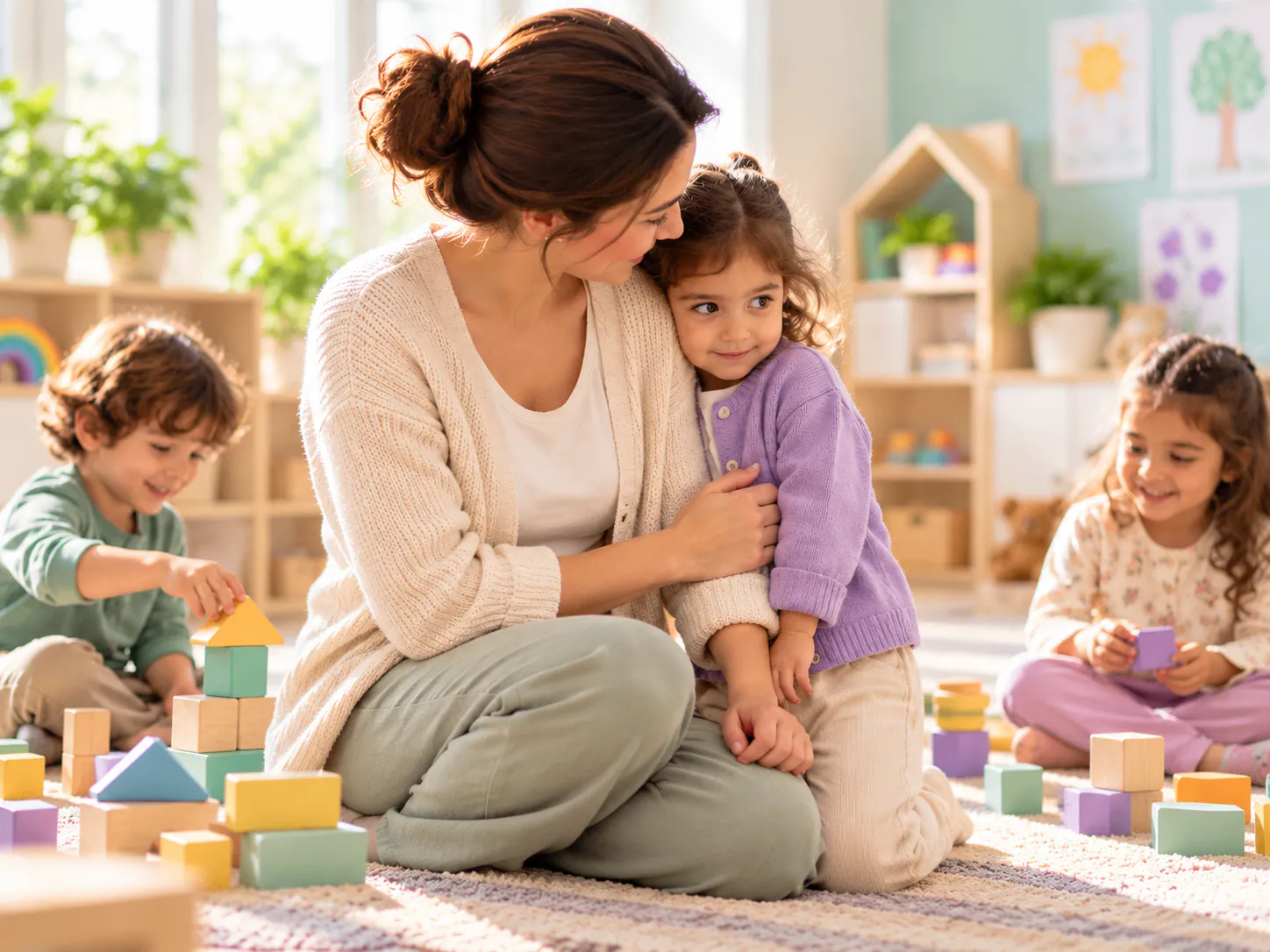
Listening is the best start
Shy child: why kids ages 2 to 12 are shy and how to help
Does your child hide behind your legs when someone says hi, or stay silent at preschool? Learn why children are shy, how shyness looks at each age and how to help without pushing.
General Information: General information only; it may vary from child to child. Talk to your doctor or a specialist before making decisions.
In short
- Shyness is not a disorder; for most children it is an inborn temperament and they simply need more time to warm up.
- Pushing a child to say hi or calling them “shy” in front of others tends to make them hold back more.
- Let your child watch from the side first, introduce one child before a group, and step back once they join in.
- A shy child still talks, even if it is hard; if your child cannot speak at all in some places or avoids daily life, talk to your pediatrician.
Lumiya Editorial TeamBased on 2 sourcesOur editorial standards
Does your child hide behind your legs when another kid comes over, or look at the floor when you say, “Say hi”? Shyness is very common between ages 2 and 12, and it is usually part of a child’s inborn temperament. With no pressure, small steps and a little preparation, most shy children warm up at their own pace.
Why is my child so shy, and is it normal?
A shy child approaches new people and places more carefully. They watch first, figure things out, and join in once they feel safe. That is a personality trait, not a disorder; some children warm up fast and others are “slow to warm up.”
It helps to know what shyness is not. A shy child still speaks, even if it is hard. A child who speaks freely at home but cannot say a word at school may have selective mutism, which needs a different kind of help.

Some children are born with a nervous system that is more alert to anything new: a strange face or a loud room triggers a stronger “stop and watch” reaction. That reaction fades as trust grows. Pressure makes it stronger, which is why patience works better than pushing.
The first month of school does not count, because shyness is common during this period.
In other words, going quiet during the first weeks in a new class is expected. What matters is whether your child slowly starts to take part.
What does shyness look like at different ages?
Shyness changes shape as children grow. A 2-year-old may cling to you at a party, while a 10-year-old may avoid raising a hand in class.
| Age | What it looks like | How you can help |
|---|---|---|
| 1-3 years | Won’t look at strangers, stays in your lap, doesn’t play at first | Let them watch from your lap; keep playing nearby when they climb down |
| 3-6 years | Stands at the edge at preschool or parties, won’t say hi | Talk it through ahead of time, arrive early, introduce one child |
| 6-9 years | Doesn’t raise a hand, won’t make the first move with a new friend | Plan small steps with the teacher, find a club built on a shared interest |
| 9-12 years | Fears speaking in groups or being laughed at | Rehearse at home, give responsibility in an area of strength |
How can I help my shy child?
Shy children usually warm up to a new setting in four steps: they watch from the side, approach with you, play next to one child, then join the group. Your job is not to rush these steps but to be a safe base at each one.
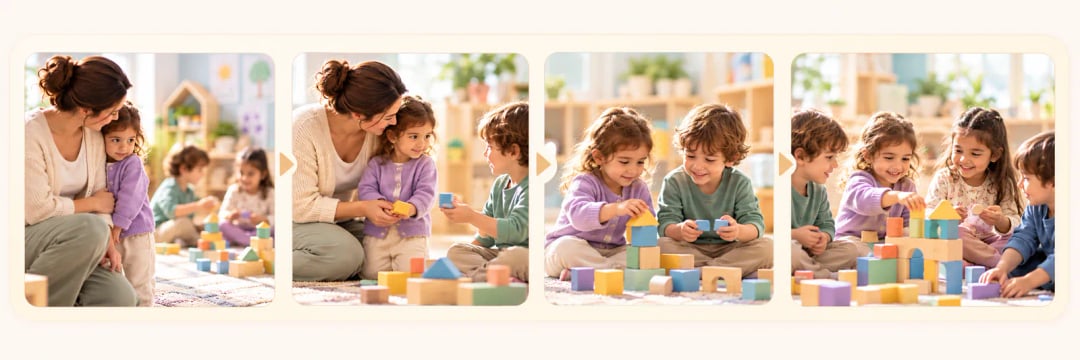
While your child watches, skip “Go on, go play.” Describe what you see instead: “Those kids are building a tower. Which block do you think goes on top?” That draws them closer without pressure.
Birthday party or preschool morning: getting ready
-
Talk about it first
The day before, calmly explain where you are going, who will be there and what will happen.
-
Arrive early
Getting there before the crowd lets your child meet the room and the people one by one.
-
Start with one person
Introduce one child or a familiar adult first; the group can come later.
-
Practice at home
Use toys to rehearse: “Hi, I’m Maya. Can I play with you?”
-
Plan an exit
Say, “If you need a break, squeeze my hand and we’ll step outside.” Knowing there is a way out builds courage.
Notice small wins out loud: “I saw you show Leo your truck today.” Praising the effort rather than the outcome makes the next step easier.
What should I avoid?
Well-meant pushing often backfires. The CDC notes that fears and worries are typical in children. A shy child who is shamed for it usually learns to hide the feeling, not to outgrow it.
| Don’t | Instead |
|---|---|
| Insist: “Say hi to Grandpa right now!” | Greet first yourself and let your child wave later |
| Announce, “She’s so shy,” in front of others | Say something neutral: “He likes to look around first.” |
| Compare them with a sibling or cousin | Compare them with themselves: “Last week you watched; today you joined.” |
| Answer every question for them | Wait a few seconds so they have a chance to answer |
| Avoid all new places | Try short, planned visits and build up slowly |

Feeling embarrassed when your child won’t say hi to relatives is completely human. Your child’s temperament is not a grade on your parenting. Telling others, “She’ll join in once she warms up,” protects both of you.
For more on this topic, see our shyness and social confidence section, and for age-specific ideas visit the 3-6 years and 6-9 years pages.
When to see a doctor
For most children, shyness is temperament and needs no treatment. Two situations are worth telling apart: being unable to speak at all in some places (selective mutism) and intense social anxiety that limits daily life.
| Sign | Shyness | Selective mutism | Intense social anxiety |
|---|---|---|---|
| Speaking | Talks, even if it’s hard | Talks at home, silent in certain places | Talks but constantly fears being judged |
| How long | Eases once warmed up | Lasts more than a month | Lasts weeks, in every setting |
| Daily life | Little or no effect | Affects school and friendships | Leads to avoiding school or parties |
| See a doctor if | Normal |
|---|---|
| Not speaking at school or preschool for more than a month | Staying at the edge for the first minutes somewhere new |
| Stomachaches, meltdowns or poor sleep before social events | Needing to warm up before saying hi |
| Having no friends at all and being unhappy about it | Preferring one or two friends to a big group |
| Regularly refusing school or parties | Hesitating to speak up in class |
If you notice these signs, talk to your pediatrician or family doctor; for school-age children, the school counselor is also a good first step. They can refer you to a child mental health professional if needed.
The CDC advises that if you are concerned about fear or anxiety in your child, the first step is to talk with your child’s primary care provider or a mental health specialist about an evaluation. MedlinePlus notes that selective mutism is diagnosed only when the pattern lasts at least one month.
General Information: This content offers general information based on expert sources. Every child, family and situation is different, so what is described here may vary from person to person. Talk to your doctor or a qualified specialist before making decisions about your child.
Was this article helpful?
This topic at other agesShyness
Tools for this Age
- Baby percentile calculatorWhere does your child's weight and height sit among children the same age? See it in seconds on the WHO growth curves.
- Baby and child sleep scheduleHow much should your child sleep in 24 hours, and when should bedtime be? Calculate it from official guidance and compare it with your own log.
- Potty training chartWhen to start and how to prepare? A roadmap by age, a daily routine and a printable reward chart.
- Baby milestones by monthCheck off what most children your child's age can do, and talk about the rest with your doctor.
- Baby vaccine schedulePick your country, enter the birth date, and see the official schedule as your own dates.
- Baby teething chart: order and timelineEnter the date of birth to see the typical eruption window of all 20 baby teeth, the next tooth and the teeth already through — on one screen.
Checklist
Popular Topics
Frequently Asked Questions
- 1
- 2
- 3
- 4
- 5
Editorial Note
This article is general information; every child’s temperament and family is different. If shyness affects your child’s school, friendships or sleep, talk with your pediatrician, family doctor or school counselor.