
 lumiya.com.tr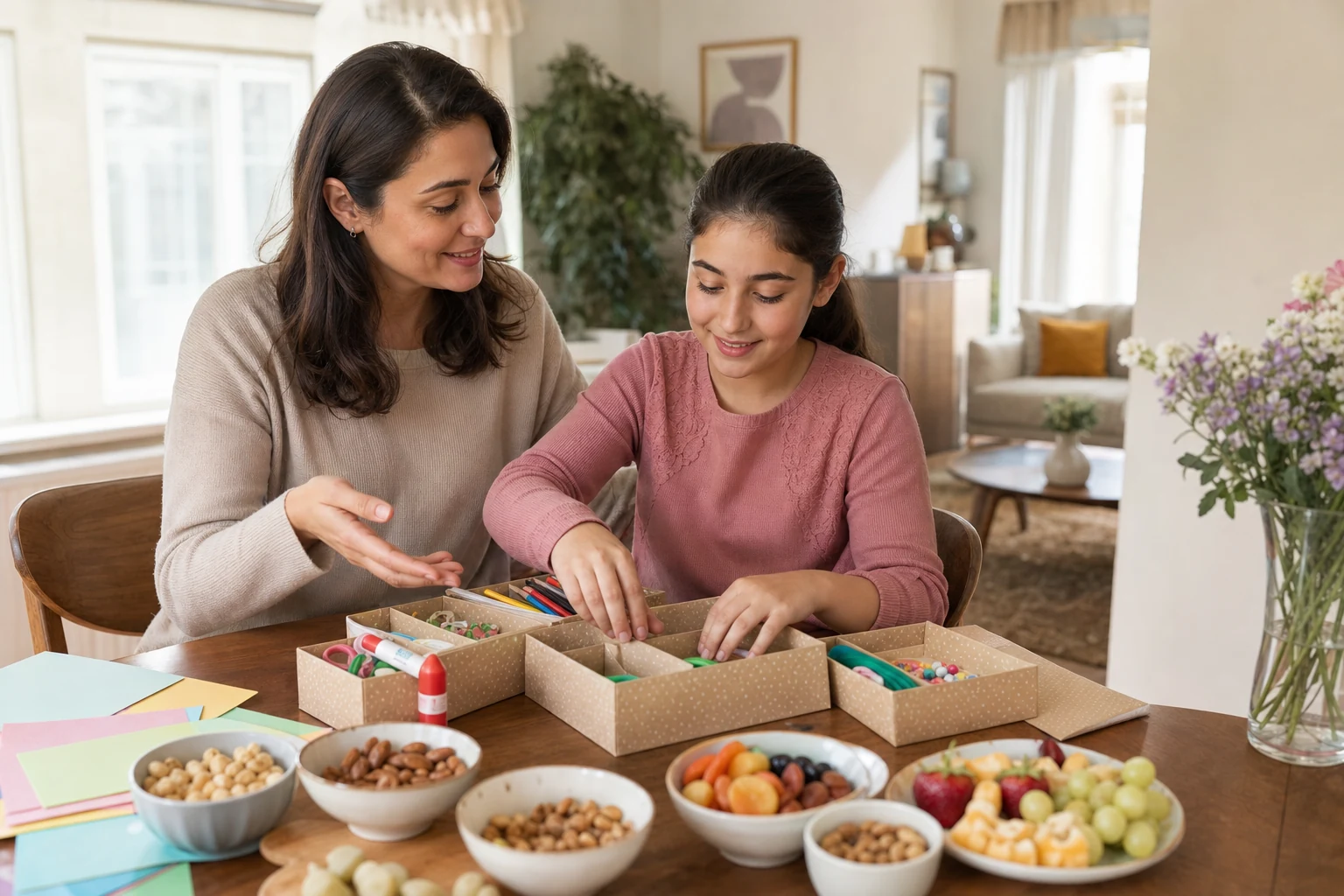
Listening is the best start
9–12 Years: Sharing with Friends—What Parents Can Do
Teach kids to share with consent, set boundaries, and handle conflicts without forcing apologies or passwords.
General Information: General information only; it may vary from child to child. Talk to your doctor or a specialist before making decisions.
In short
- Sharing means consent, boundaries, and repair—not just giving things away.
- Kids learn to ask, refuse, and negotiate while respecting school rules and safety.
- Address cultural, financial, and ability differences without shame or pressure.
- Use clear escalation steps for bullying, coercion, or immediate danger.
Lumiya Editorial TeamBased on 4 sourcesOur editorial standards
Sharing isn’t just about handing things over—it’s about respect, consent, and safety. For kids ages 9–12, learning to share means understanding when to say yes, when to say no, and how to handle conflicts without pressure.
Sharing as a skill, not a rule
Sharing is a social skill that grows with practice. At this age, children are developing the ability to see situations from others’ perspectives, negotiate, and set personal boundaries. Instead of treating sharing as a moral obligation, frame it as a tool for building trust and cooperation.

Sharing means asking first, respecting no, and fixing mistakes when they happen. It’s not about giving up what’s yours or forcing apologies.
Teach your child that sharing includes digital items too. Photos, videos, and files should only be shared with permission. Remind them that once something is online, it can be hard to control who sees it or how it’s used.
Belongings, time, and group work
Kids this age often struggle with sharing items they value, like favorite toys, art supplies, or sports equipment. Start by identifying which belongings are personal and which can be shared. Label items clearly and discuss why some things—like a special stuffed animal or a diary—are off-limits.
Time is another shared resource. Help your child practice taking turns during play or group activities. Use timers or visual schedules to make the process fair and predictable. In school projects, emphasize collaboration over competition.
Snacks, devices, and digital sharing
Food and devices are common sources of sharing tension. Pack extra snacks in case a friend forgets theirs, but also teach your child to ask before offering food to others. Some children have dietary restrictions or allergies, so it’s important to respect boundaries around food sharing.
Devices and digital files require clear rules. Remind your child that passwords and accounts are private. Sharing login details can lead to misuse or cyberbullying. If a friend asks for a password, teach your child to say no firmly and explain why it’s unsafe.
Boundaries, repair, and escalation
Boundaries are a key part of sharing. Teach your child to recognize when a request crosses a line, whether it’s about borrowing a favorite shirt or sharing a personal photo. Role-play scenarios where they can practice saying no politely but firmly.
Mistakes happen. If your child accidentally breaks or loses a borrowed item, guide them to take responsibility. Help them apologize sincerely and offer a fair solution, like saving allowance money to replace the item or helping repair it. Avoid forcing apologies, as this can teach insincerity.
When conflicts escalate, know the difference between ordinary disagreements and harmful behavior. Coercion, theft, extortion, bullying, or discrimination require adult intervention. Use clear escalation steps: talk to the child’s parents, contact the school, or seek professional help if needed. Never dismiss serious issues as "just kids being kids."
Cultural, financial, and ability differences
Every family has different values around sharing, and that’s okay. Some cultures emphasize generosity, while others prioritize personal ownership. Talk to your child about these differences without judgment.
Financial differences can also affect sharing. A child who can’t afford to replace a lost item may feel pressured to share out of fear. Address these concerns openly and work with your child to find solutions, like setting limits on what they bring to school.
Siblings, peers, and separated homes
Siblings often have the most frequent sharing conflicts. Set clear family rules about borrowing and respecting each other’s things. Use a "check-out" system for shared items and discuss consequences for damage or loss. If conflicts arise, mediate without taking sides and encourage problem-solving.
For children in separated homes, sharing can become complicated. Coordinate with the other parent to set consistent rules about belongings and digital access. Avoid using shared items as leverage or punishing a child for not sharing with one parent over the other.
A two-week sharing tracker
Use this table to practice sharing skills in real life. Fill it out together after playdates, school projects, or digital interactions. Look for patterns and celebrate progress, not perfection.
| Context or item | Request | Child response | Peer response | Adult support | Boundary | Safety | Repair | Next step |
|---|---|---|---|---|---|---|---|---|
| Library book | "Can I borrow your book after you’re done?" | "Sure, but please return it by Friday." | "Okay, I’ll bring it back on time." | Praise the clear agreement | Respect for borrowed items | No damage to the book | None needed | Schedule a reminder to return the book |
| Soccer ball | "Let’s play with your ball at recess." | "I’d rather keep it today, but you can use my jump rope." | "Cool, thanks!" | Acknowledge the boundary | Personal preference respected | No pressure to share | None needed | Bring the jump rope next time |
| Group project idea | "Can I add my idea to the poster?" | "Yes, but let’s ask the group first." | "Great idea! Let’s include it." | Encourage teamwork | Credit given to contributors | Fair collaboration | None needed | Celebrate the team effort |
| Friend’s tablet | "Can I use your tablet to play a game?" | "No, my mom says I can’t share it." | "That’s okay, I’ll ask my mom if I can use my own." | Reinforce the boundary | Respect for family rules | No unauthorized access | None needed | Suggest a different activity |
| Accidental spill on art project | "I spilled juice on your drawing." | "I’ll help you clean it up and draw a new one." | "Thanks, I’ll help too." | Guide the repair process | Responsibility for mistakes | No blame or shame | Cleanup and new drawing | Discuss how to prevent spills next time |
When to seek help
Most sharing conflicts are normal and resolve with practice. But some situations require adult intervention. If your child is being coerced, threatened, or excluded, act quickly. Signs include sudden changes in mood, reluctance to go to school, or unexplained injuries.

If a child feels pressured, scared, or unsafe, it’s not just a sharing problem—it’s a safety issue. Talk to the child, their teacher, or a counselor right away.
For digital issues, report cyberbullying to the platform and save evidence. Contact your child’s school and, if needed, local authorities. Use resources like the U.S. Federal Trade Commission’s guidance on kids and cell phones to set clear device rules at home.
Small steps, big growth
Sharing is a lifelong skill, and every child learns at their own pace. Celebrate the small wins—like a child asking before borrowing or respecting a friend’s no. Use mistakes as teaching moments, not punishments.
Remember, your role is to guide, not control. Offer support, set clear expectations, and step in when safety is at risk. Over time, your child will develop the social skills they need to share—and to stand up for themselves—with kindness and confidence.
General Information: This content offers general information based on expert sources. Every child, family and situation is different, so what is described here may vary from person to person. Talk to your doctor or a qualified specialist before making decisions about your child.
Was this article helpful?
This topic at other agesRelationships & Communication
Tools for this Age
- Baby and child sleep scheduleHow much should your child sleep in 24 hours, and when should bedtime be? Calculate it from official guidance and compare it with your own log.
- Screen time by ageSee how much screen time a day your country's official body recommends at your child's age; add daily use to compare it with the advice.
- Child Height Predictor & Genetic Target Height CalculatorHow tall will your child be as an adult? Enter both parents' heights to calculate the pediatric mid-parental target height and expected adult height range using the Tanner and AAP formulas.
Checklist
Popular Topics
Frequently Asked Questions
- 1
- 2
- 3
- 4
Editorial Note
This guide offers practical steps and local resources to support children’s social learning. If you suspect bullying, cyberbullying, or emotional distress, contact a trusted adult, school counselor, or local support service. Professional help is always available.
Other situations in this topic
Dealing with a different side of the same topic? Each situation has its own guide.
- How friendship skills develop with ageFriendship skills evolve with age. Learn how to guide your child through each stage—from parallel play to privacy and boundaries—without pushing popularity or a fixed number of friends.1 items
- My child has no friendsPractical ways to support your 6–12-year-old as they build friendships, navigate group dynamics, and handle conflicts with confidence.1 items