
 lumiya.com.tr

Small habits, big steps
Morning routine battles with kids aged 3 to 12: a calmer school-morning plan
Won't get up, won't get dressed, dawdles over breakfast while the bus waits? Why school mornings turn into battles, a plan that starts the night before, and age-by-age morning jobs.
General Information: General information only; it may vary from child to child. Talk to your doctor or a specialist before making decisions.
In short
- Most morning battles come from kids being slower than adults, too little sleep and a tight clock, not from defiance.
- A calm morning starts the night before, with the backpack packed, clothes laid out and a consistent bedtime.
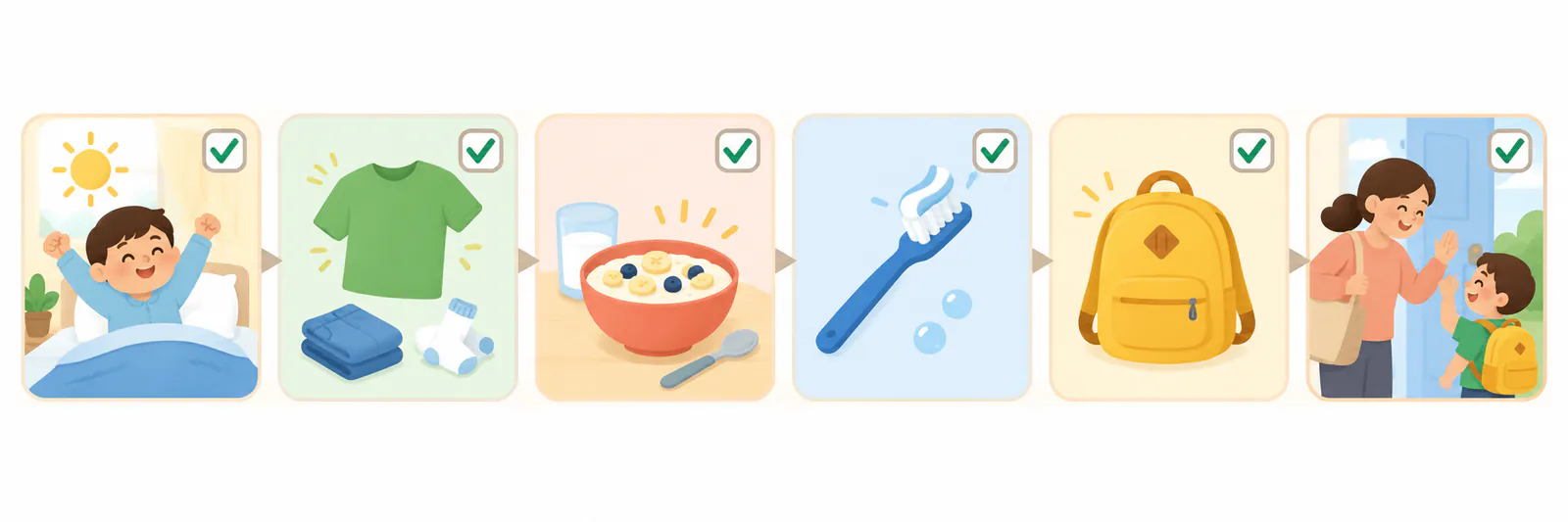
- A picture chart that runs in the same order every day replaces constant reminders.
- Letting your child do the jobs that fit their age saves time and cuts down on conflict.
Lumiya Editorial TeamBased on 3 sourcesOur editorial standards
It's 7:40, the bus is coming, and your child is still in one sock? Morning battles are very common between 3 and 12, and they're usually about time and sleep, not defiance. What works: prep the night before, a picture chart in the same order every day, and jobs your child owns.
Why are school mornings so hard?
Kids get dressed, brush their teeth and eat breakfast far more slowly than adults do. They're also easily pulled away by a toy, a cartoon or a story they suddenly need to tell you.
Too little sleep makes all of this worse. A child who went to bed late wakes up groggy, cranky and not hungry.
Meanwhile you're racing your own clock: work, a younger sibling, the bus. The two clocks run at different speeds, and that gap is where the fights happen.

Children need more time and more cues than adults to switch from one task to the next. A routine that runs in the same order every morning turns those switches into habits, so your child spends less energy remembering what comes next and you no longer have to call out every step.
To help mornings go more smoothly, put as many things in order as possible the night before.
Mornings by age
-
Doing it, with help
Still needs help with dressing and brushing. Picture charts and two-choice questions work best at this age.
-
School rhythm
Can do most jobs alone but dawdles. A short checklist and a fixed leave-the-house time replace nagging.
-
Their own routine
Can own their backpack and alarm. Bedtimes start to drift later, so screen limits in the evening matter more.
How do you set up a calmer morning the night before?
Most of the morning is decided the evening before. The American Academy of Pediatrics suggests keeping wake-up routines cheerful and positive, and nothing makes that easier than leaving less to do at 7 a.m.
5 steps from evening to morning
-
Backpack and clothes ready
Homework goes in the bag, tomorrow's outfit goes on the chair. Let your child choose: “Do you want the blue one or the green one tomorrow?”
-
A consistent bedtime
Keep weeknights and weekends close. Turn screens off well before bed.
-
Wake up 15 minutes earlier
Build a small buffer into the morning; room to dawdle means less room to fight.
-
A picture chart
Wake up, get dressed, breakfast, teeth, backpack, shoes. The chart does the reminding, not you.
-
A short goodbye
A hug, a kind word, a wave. The same goodbye every day takes the tension out of the doorway.
Morning jobs by age
| Age | What they can do alone | Where you help |
|---|---|---|
| 3-6 years | Take off pajamas, put on easy clothes, carry their bowl to the table | Buttons and laces, the picture chart |
| 6-9 years | Get dressed, brush teeth, put the backpack by the door | Backpack check the night before, a leave-time reminder |
| 9-12 years | Set their own alarm, pack bag and clothes, make a simple breakfast | Agree on bedtime and screen limits together |
The AAP also recommends easing into earlier bedtimes a week or two before school starts. A child who goes to bed on time is far easier to get out the door.
For example, a 5-year-old can usually pull on socks and pants alone, and an 8-year-old can pack their own backpack the night before. Doing a job they can already do for them doesn't shorten the morning; it makes it longer.
What should you do when the morning blows up?
Don't debate in the moment; talking only makes the morning longer. Point to the chart with one short, calm sentence: “What's next on your chart?”
| Don't | Instead |
|---|---|
| Yell “How many times do I have to tell you?” | Point to the chart: “What's the next picture?” |
| Call out every single step | Give one reminder and keep a fixed leave time |
| Dress them yourself when they dawdle | Help with the hard part and hand back the rest: “I'll hold the zipper, you pull it up.” |
| Lecture at the door | Say a short goodbye and talk it over in the evening |
If a morning did go badly, talk about it briefly that evening and fix the plan together. Asking “What should we change for tomorrow?” turns your child into part of the solution.

Raising your voice in the morning rush doesn't make you a bad parent; everyone's patience runs thinnest when the clock is against them. Give yourself a 15-minute buffer too. One short sentence from a calm adult does more than a long lecture from a rushed one.
For more on everyday structure, see our daily routines section, or browse ideas for ages 3 to 6 and ages 6 to 9.
When to see a doctor
Mornings often get harder at the start of school, after a vacation or during a tiring week. This table helps you tell what's normal from what deserves a closer look.
| See a doctor if | Normal |
|---|---|
| Refusing school every morning, getting worse over weeks | Tears at drop-off in the first weeks of school |
| Sleepy all day despite enough sleep, snoring, dozing in class | Hard to wake after a late or tiring day |
| Stomachaches or nausea every school morning that vanish on weekends | Dawdling or eating little at breakfast |
| Can't focus on anything, leaves tasks unfinished at school too | Taking a few weeks to settle into a new routine |
If these signs last more than a few weeks, talk to your pediatrician or family doctor, or to the school counselor. They can refer you on if needed.
The American Academy of Pediatrics recommends a consistent bedtime every night, easing into earlier bedtimes before school starts and a nutritious breakfast, because children who eat one function better at school. In an emergency, call 911.
General Information: This content offers general information based on expert sources. Every child, family and situation is different, so what is described here may vary from person to person. Talk to your doctor or a qualified specialist before making decisions about your child.
Was this article helpful?
This topic at other agesDaily Life & Self-Care
Tools for this Age
- Baby percentile calculatorWhere does your child's weight and height sit among children the same age? See it in seconds on the WHO growth curves.
- Baby and child sleep scheduleHow much should your child sleep in 24 hours, and when should bedtime be? Calculate it from official guidance and compare it with your own log.
- Potty training chartWhen to start and how to prepare? A roadmap by age, a daily routine and a printable reward chart.
- Baby milestones by monthCheck off what most children your child's age can do, and talk about the rest with your doctor.
- Baby vaccine schedulePick your country, enter the birth date, and see the official schedule as your own dates.
- Screen time by ageSee how much screen time a day your country's official body recommends at your child's age; add daily use to compare it with the advice.
Checklist
Popular Topics
Frequently Asked Questions
- 1
- 2
- 3
- 4
- 5
Editorial Note
This article is general information; every child's sleep needs and temperament are different. For morning problems that don't ease, talk to your pediatrician or your child's school counselor.