
 lumiya.com.tr

Small habits, big steps
How much physical activity do kids need? Guidelines by age
The target changes with age. Find your child's row in the table, learn to tell moderate from vigorous, and see how 60 minutes fits into an ordinary school day.
General Information: General information only; it may vary from child to child. Talk to your doctor or a specialist before making decisions.
In short
- The target changes with age: minutes are not the measure for babies, toddlers need 180 minutes a day, and from age 5 the target is at least 60.
- The 60 minutes do not have to happen in one block; short bouts across the day add up.
- Moderate means your child can still talk; vigorous means finishing a sentence gets hard.
- Muscle- and bone-strengthening activity belongs in the week at least three days.
Lumiya Editorial TeamBased on 4 sourcesOur editorial standards
How much your child needs to move depends on their age: for babies minutes are not the measure at all, toddlers and preschoolers need about 180 minutes spread across the day, and from age 5 onwards the target is at least 60 minutes of moderate-to-vigorous activity.
Below you will find your child's row, how to tell the intensities apart and how the hour fits into a normal school day.
What is the daily target for each age?
There is no single number: as children grow, both the amount and the thing being measured change. The table brings the World Health Organization and CDC recommendations together.
| Age | Daily target | What counts |
|---|---|---|
| 0-12 months | Floor-based play several times a day; at least 30 minutes of tummy time while awake | Reaching, rolling, crawling |
| 1-4 years | 180 minutes spread across the day; from age 3, at least 60 of them moderate-to-vigorous | Walking, running, ball games, dancing |
| 5-17 years | At least 60 minutes moderate-to-vigorous; vigorous and strengthening at least 3 days a week | Younger: chasing games, cycling, swimming; teens: team sport, brisk walking, dance |
What changes with age?
-
Opportunity, not duration
Minutes are not the measure: free floor play and tummy time are.
-
A daily total appears
Now there is a daily total, and from age three intensity starts to count too.
-
Intensity and strengthening
The target shifts to moderate-to-vigorous, and muscle- and bone-strengthening joins the week.
-
The teenager decides
The target stays the same; what changes is who decides, and how much school and travel crowd movement out.
The figures can also be read as a weekly average, so a quiet day can be balanced by a more active one. You will find the other topics of these stages on our 0-12 months and 6-9 years pages.
Moderate or vigorous: how do you tell?
Intensity is measured by breathing, not by the clock. During moderate activity your child's breathing speeds up but conversation continues. During vigorous activity sentences break up and sweating becomes obvious.
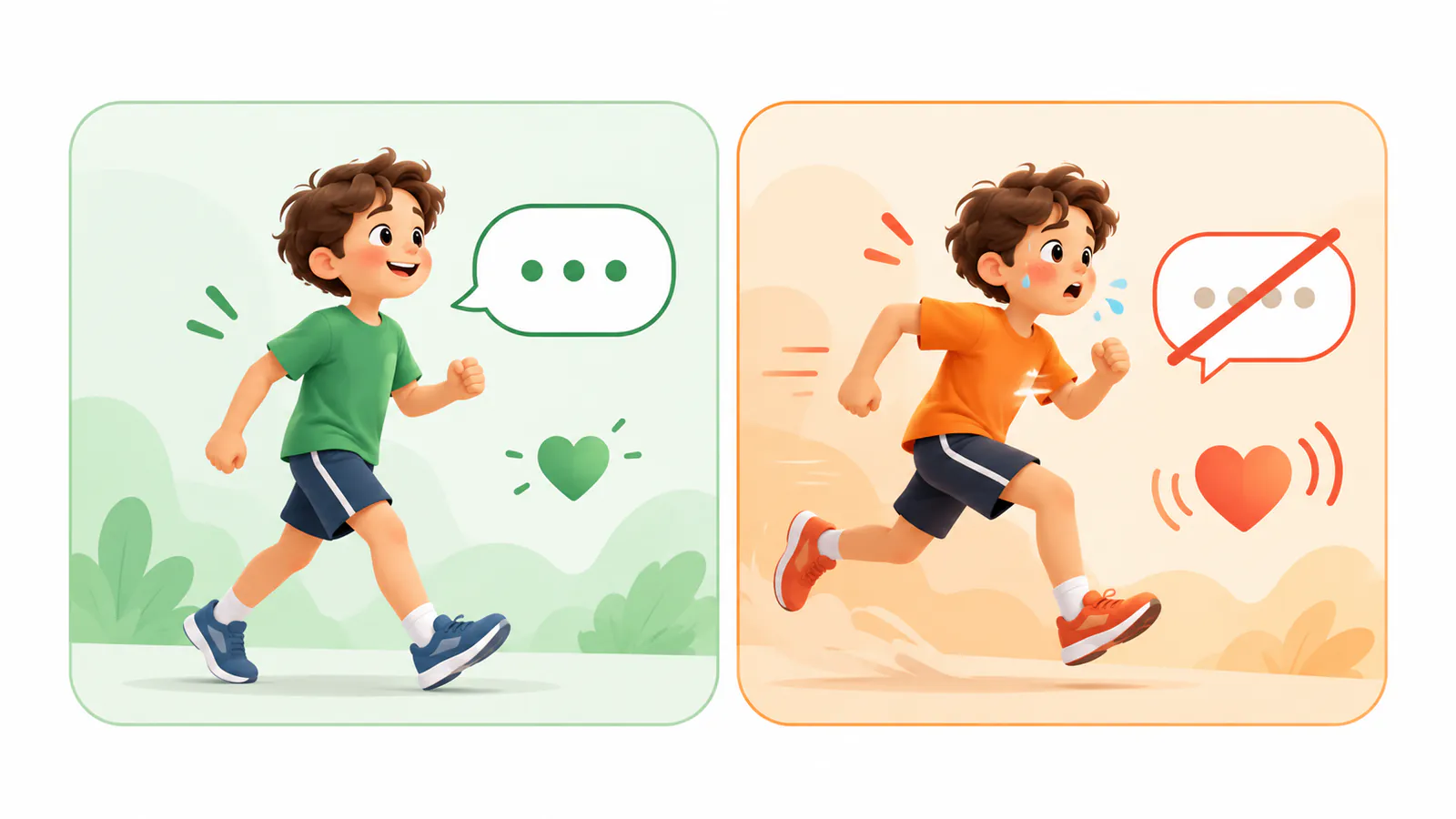
Most of the day is moderate: brisk walking, cycling, playing in the yard. Vigorous activity means chasing games, jumping rope and swimming, and is recommended on at least three days a week together with movement that loads muscles and bones.
How do you fit 60 minutes into the day?
Treating the target as one dedicated exercise hour makes it feel impossible for most families. The time can be broken up, and it slots into gaps the school day already has.

- Walk to school, or get off one stop early and walk the rest. "Want to walk today?" at the door is often all it takes.
- Encourage running at recess, and note which days have PE.
- Make twenty minutes in the yard or park a fixed part of the after-school routine: "Park first, homework after."
- Add a short family walk after dinner; "Let's take a lap around the block" turns it into a habit.
- Plan one longer active session on the weekend: cycling, swimming or a ball game.
We look at where movement sits in the day in more detail in our activity, sports and free time section.
Why that much, and where does sitting become a problem?
Movement is more than burning off energy. Bones grow stronger when they carry load, running and climbing build balance and coordination, and regular activity supports sleep and attention.
Adolescents (11-17) who do not meet the recommended daily activity
The target has another side: long unbroken sitting. For children under five, being restrained in a stroller or high chair for more than an hour at a time is not recommended; for school-age children, long periods of sitting are broken up with short movement breaks.
In the United States the Centers for Disease Control and Prevention sets the 60-minute daily target for ages 6-17 and recommends building activity into daily routines rather than treating it as a separate exercise session; the figures for younger children come from the World Health Organization. According to the World Health Organization's fact sheet, 81% of adolescents aged 11-17 do not reach the recommended level of daily activity.
Babies and toddlers: what is measured instead?
For a baby under one, counting minutes makes little sense. The measure is free time on the floor while awake: reaching, rolling, pushing up, crawling. At least 30 minutes of tummy time across the waking day is recommended, and it can be split into short stretches.
Once a child walks, the measure becomes a daily total again. Children of this age want to move anyway; the parent's job is not to count minutes but to remove the obstacles — a safe floor, shoes that allow movement and time set aside for going outside.
When to see a doctor about your child's movement
Energy levels differ: one child runs constantly while another is calmer by nature. The table below helps you decide when to see a doctor; what matters is whether movement itself is becoming difficult.
| Worth asking about | Usual |
|---|---|
| Runs out of energy quickly in games peers manage, and rest does not help | Tires after a long play session and recovers with a rest |
| Regularly avoids movement or complains of pain | Does not feel like going outside on some days |
| Joint swelling, limping or pain that does not pass | Falls down and is back in the game the next day |
| Clear loss of walking, running or balance skills | Movement skills develop in line with age |
The signs in this table are reasons to make an appointment. Breathlessness, wheezing or blue lips during light activity, however, need urgent assessment rather than a scheduled visit.
General Information: This content offers general information based on expert sources. Every child, family and situation is different, so what is described here may vary from person to person. Talk to your doctor or a qualified specialist before making decisions about your child.
Was this article helpful?
This topic at other agesDaily Life & Self-Care
Tools for this Age
- Baby percentile calculatorWhere does your child's weight and height sit among children the same age? See it in seconds on the WHO growth curves.
- Baby and child sleep scheduleHow much should your child sleep in 24 hours, and when should bedtime be? Calculate it from official guidance and compare it with your own log.
- Baby milestones by monthCheck off what most children your child's age can do, and talk about the rest with your doctor.
- Baby vaccine schedulePick your country, enter the birth date, and see the official schedule as your own dates.
- Baby teething chart: order and timelineEnter the date of birth to see the typical eruption window of all 20 baby teeth, the next tooth and the teeth already through — on one screen.
- Baby feeding schedule: weaning chart by monthEnter your country and the date of birth: when to start solids, meals and textures by age, and until when to avoid certain foods — with dates.
Checklist
Popular Topics
Frequently Asked Questions
- 1
- 2
- 3
- 4
- 5
References & Further Reading
Editorial Note
This article is general information; every child develops differently and every household runs differently. If your child tires quickly, avoids movement or complains of pain, speak to your pediatrician.