
 lumiya.com.tr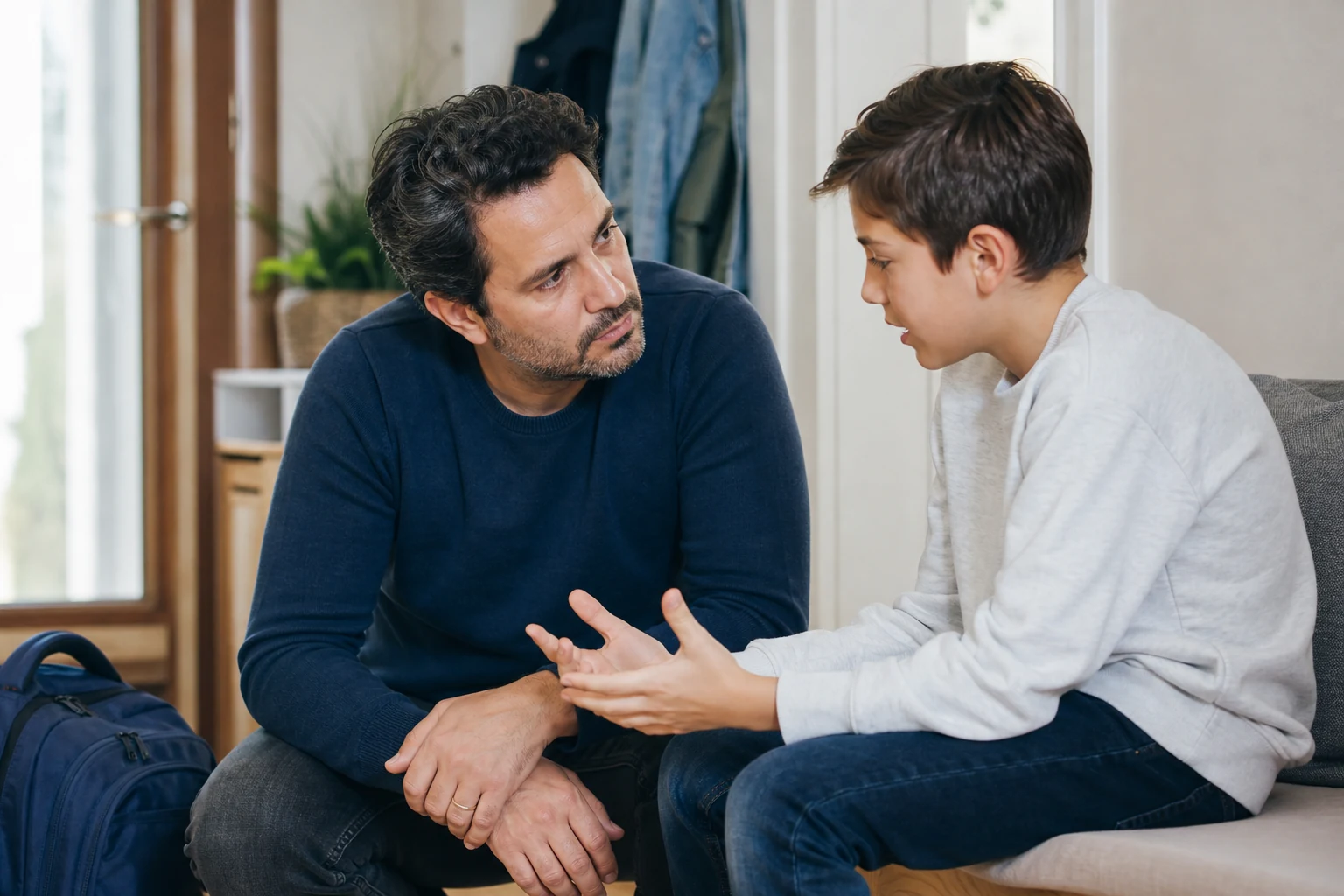
Listening is the best start
Friendship and Bullying at 9–12
Learn how to recognize, respond to, and prevent bullying in friendships for kids ages 9–12. Practical steps to support your child’s emotional safety and confidence.
General Information: General information only; it may vary from child to child. Talk to your doctor or a specialist before making decisions.
In short
- Bullying isn’t just a single mean comment—it’s repeated, unbalanced harm that can deeply affect kids ages 9–12.
- Listen without blame, ask open questions, and avoid telling your child to confront others alone.
- Document incidents, check safety, and involve trusted adults at school or online platforms as needed.
- If threats, self-harm, or serious harm occur, contact local emergency services or a professional immediately.
Lumiya Editorial TeamBased on 4 sourcesOur editorial standards
Friendships at ages 9–12 can feel like a daily emotional workout. Kids are learning to navigate loyalty, exclusion, and shifting social rules, all while their brains are still developing the tools to handle complex emotions.
Spotting the Difference: Conflict vs. Bullying
Not every harsh word or exclusion is bullying. Conflict is a normal part of friendships, especially as kids test boundaries and explore group dynamics. Bullying, however, involves three key elements: unwanted aggressive behavior, a real or perceived power imbalance, and repetition or the likelihood of repetition.

A child who avoids certain hallways at school or deletes social media apps after repeated negative messages may be experiencing bullying, not just a rough patch in a friendship.
Power imbalances can be obvious—like physical size or popularity—or subtle, such as social media reach or access to private group chats. Even if your child seems to “handle it,” the repeated nature of bullying can erode their confidence over time.
How to Listen Without Making It Worse
When your child shares something upsetting, your first instinct may be to fix it immediately. But rushing to solutions can shut down the conversation. Instead, start with open questions that invite sharing without pressure.

If your child says, “I don’t want to talk about it,” resist the urge to push. Instead, try, “I’m here when you’re ready. No rush.” This keeps the door open for future conversations.
It’s also important not to dismiss their feelings as “just part of growing up.” Even if the behavior isn’t bullying, your child’s emotions are real and deserve validation. A simple, “That sounds really hard. I’m glad you told me,” can go a long way in building trust.
Documenting and Acting: A Step-by-Step Approach
Once you’ve listened, the next step is to act thoughtfully. Start by documenting the incidents. Keep a record of dates, times, locations, and any witnesses. If the bullying is online, take screenshots and note usernames and platform names. Avoid sharing the evidence publicly, as this can escalate the situation or violate your child’s privacy.
Next, check immediate safety. If your child is in danger—whether from physical threats, weapons, or self-harm—contact local emergency services right away. If the situation is serious but not an emergency, consider involving a professional, such as a school counselor or therapist, who can provide guidance tailored to your child’s needs.
If your child has harmed others, focus on accountability and repair rather than labels. Work with them to understand the impact of their actions and to practice new skills, like empathy and conflict resolution.
For less severe situations, agree with your child on a trusted adult at school who can help monitor the situation. This might be a teacher, counselor, or coach your child feels comfortable with. Walk through safe routes to and from school or activities, and set a follow-up time to check in.
Online Safety: Blocking, Reporting, and Privacy
Digital spaces can amplify bullying, making it feel inescapable. If the bullying is happening online, start by helping your child block the person involved. Most platforms have reporting tools designed to address harassment.
If your child receives threats, sexually explicit messages, or images that are being used to blackmail them, preserve the evidence and report it to the platform immediately. In these cases, professional support is often necessary to address the emotional impact.
It’s also worth reviewing your child’s privacy settings together. Help them adjust their profiles so only trusted friends can see their posts or contact them. Discuss the importance of not sharing personal information, like their address or school name, online. These steps won’t eliminate bullying, but they can reduce the opportunities for it to escalate.
When to Seek Professional Support
Some situations require more than a parent’s guidance. If your child shows signs of anxiety, depression, or self-harm, or if they express suicidal thoughts, contact a mental health professional or local crisis line immediately. These signs don’t always mean bullying is the cause, but they do signal that your child needs support.
If the bullying involves serious injury, weapons, sexual coercion, or image abuse, treat it as an emergency. Contact local emergency services and seek professional help to address both the immediate safety and the long-term emotional impact.
Professionals can also help if the bullying is part of a larger pattern, such as repeated exclusion from social groups or ongoing harassment tied to a specific identity. They can work with your child to build resilience, assertiveness, and coping skills in a safe, confidential setting.
Building Resilience Without Pressuring Your Child
While you can’t control every interaction your child has, you can help them develop skills to navigate conflicts with confidence. Role-playing scenarios can be a low-pressure way to practice responses.
Encourage your child to find friends who share their values, whether that’s kindness, humor, or shared interests. Help them understand that a true friend won’t make them feel consistently bad about themselves. This doesn’t mean avoiding all conflict—it means recognizing when a friendship is more harmful than helpful.
Practical Table: Quick Actions for Parents
| Situation | Immediate Step | Follow-Up | When to Escalate |
|---|---|---|---|
| One-time mean comment | Listen, validate feelings | Check in later | If it becomes a pattern |
| Repeated exclusion or name-calling | Document, involve trusted adult | Follow up with school | If power imbalance is clear |
| Online harassment or threats | Block, report, save screenshots | Contact platform support | If threats involve self-harm or images |
| Physical altercation or weapon | Ensure safety, contact emergency services | Seek medical attention if needed | Always, if weapons are involved |
| Your child harms others | Address behavior, set limits | Work on accountability and repair | If behavior continues or escalates |
Keeping the Conversation Going
Bullying isn’t a one-time conversation—it’s an ongoing dialogue. As your child grows, their social world will change, and so will the challenges they face. Regular check-ins, even casual ones like, “How was lunch today?” can open the door for them to share more over time.
Remind your child that they don’t have to face this alone. Whether it’s a friend, family member, or trusted adult, there are people who care and want to help.
It’s also okay to admit when you’re unsure. If a situation feels too complex or overwhelming, reach out to a professional for guidance. You’re not expected to have all the answers—what matters is that your child feels supported and safe.
Final Reminders
- Bullying involves repetition, power imbalance, and harm—conflicts don’t.
- Listen without blame, ask open questions, and avoid telling your child to confront others alone.
- Document incidents, check safety, and involve trusted adults when needed.
- If threats, self-harm, or serious harm occur, contact local emergency services or a professional immediately.
Friendships at this age can feel fragile, but they’re also a chance for your child to learn resilience, empathy, and self-advocacy. With your support, they can navigate these challenges and emerge stronger.
General Information: This content offers general information based on expert sources. Every child, family and situation is different, so what is described here may vary from person to person. Talk to your doctor or a qualified specialist before making decisions about your child.
Was this article helpful?
This topic at other agesRelationships & Communication
Tools for this Age
- Baby and child sleep scheduleHow much should your child sleep in 24 hours, and when should bedtime be? Calculate it from official guidance and compare it with your own log.
- Screen time by ageSee how much screen time a day your country's official body recommends at your child's age; add daily use to compare it with the advice.
- Child Height Predictor & Genetic Target Height CalculatorHow tall will your child be as an adult? Enter both parents' heights to calculate the pediatric mid-parental target height and expected adult height range using the Tanner and AAP formulas.
Checklist
Popular Topics
Frequently Asked Questions
- 1
- 2
- 3
- 4
Editorial Note
This guide is for informational purposes only. If you have concerns about your child’s safety or well-being, consult a qualified professional or local emergency services.