 lumiya.com.tr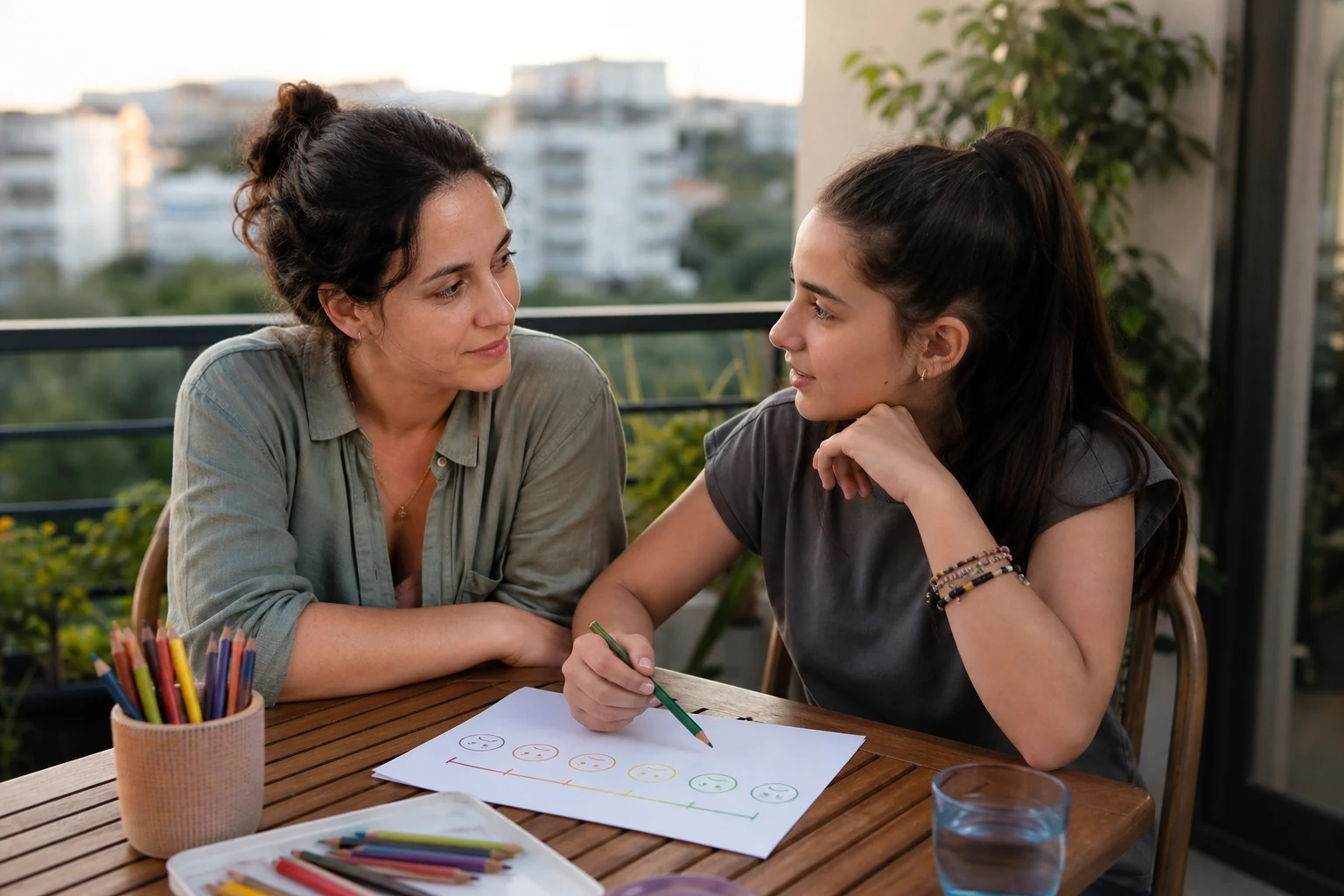
Understanding feelings builds trust
Anger in 9–12 Year Olds: How to Help Them Calm Down
Strong reactions in preteens are normal, but they can feel overwhelming for families. Learn how to recognize triggers, co-regulate during escalation, and build lasting skills for calmer days at home and school.
General Information: General information only; it may vary from child to child. Talk to your doctor or a specialist before making decisions.
In short
- Anger is a signal, not a flaw—help your child decode it with calm observation.
- Co-regulation during escalation keeps everyone safer and teaches lifelong skills.
- Repair after calm moments builds trust and problem-solving habits.
- Predictable routines and emotion vocabulary reduce daily friction.
Lumiya Editorial TeamBased on 4 sourcesOur editorial standards
Why anger feels so big at 9–12
Anger in preteens often arrives without warning and feels impossible to ignore. It’s not a sign of bad character or disobedience—it’s a signal that something inside is asking for attention. The body reacts first: heart pounds, muscles tighten, breathing speeds up. That surge is automatic, not chosen. What matters next is how the family responds.

Strong reactions are normal at this age. Your job is not to stop the feeling but to help your child understand it and choose a calmer next step.
Sleep loss, hunger, transitions, school pressure, friendship conflicts, online experiences, sensory overload, and family stress can all act as hidden triggers. A late bedtime might make a minor disagreement feel like a major threat. A forgotten homework page can feel like the end of the world. These reactions are not about defiance; they’re about a brain and body working hard to keep up.
The five-step map: trigger, body, impulse, action, recovery
Families often focus on the outburst itself, but the real work happens before and after. Use this simple map to observe patterns without judgment.
- Trigger: What happened right before the reaction? Was it a transition, a demand, or an unexpected change?
- Body signals: Did your child’s face flush, fists clench, or voice shake? These are clues, not punishments.
- Impulse: What did the body want to do next? Shout, run, throw, freeze?
- Action: What actually happened? Yelling, slamming, or walking away?
- Recovery: How long did it take to calm down? What helped?
This map turns chaos into data. Over time, you’ll spot which triggers repeat and which recovery tools work best.
Co-regulation: staying calm when emotions are high
When anger spikes, the brain’s alarm system takes over. Logic fades, and safety feels urgent. That’s when co-regulation matters most—not fixing the problem, but staying steady so your child can calm down.
Start by lowering your own voice and slowing your movements. A soft, steady tone tells the nervous system it’s okay to pause. Offer space if it’s safe; some kids need a minute alone. Others need a hand on the shoulder or a quiet presence nearby. Avoid long explanations or demands in the heat of the moment. Wait until breathing slows and faces relax.

Co-regulation isn’t about giving in. It’s about giving safety so learning can happen later.
Brief safety boundaries are still important. If a child is at risk of harming themselves or others, calmly step in to prevent injury. Use short, clear phrases like “I won’t let you hit” or “Let’s step back.” The goal is safety, not punishment.
Repair after calm: rebuilding trust and skills
Once emotions settle, repair begins. This is not the time for forced apologies or lectures. Instead, name what happened with curiosity: “I noticed you were really upset when I asked to turn off the game. What was that like for you?” Listen without interrupting. Then share your own experience: “I felt worried when the door slammed. I want us both to feel safe at home.”
Problem-solving comes next. Ask open questions: “What could help next time?” Offer small, age-respectful choices: a five-minute warning before screen time, a quiet corner to cool down, or a chance to write or draw feelings. These choices build agency and reduce power struggles.
Repair also means modeling your own emotion regulation. If you lose your temper, name it later: “I raised my voice earlier. I’m sorry. Next time I’ll take a breath first.” This shows that everyone is learning together.
Build daily habits that reduce friction
Anger often flares when routines feel unpredictable. Small, consistent habits can prevent many escalations.
Predictable routines: Set regular bedtimes, meal times, and homework windows. Use visual schedules or timers if helpful. Transitions feel safer when children know what’s coming next.
Emotion vocabulary: Name feelings throughout the day. “You look frustrated with that math problem” or “I see you’re disappointed the playdate was canceled.” The more words children have, the less they need to act out.
Sensory check-ins: Some kids feel overwhelmed by noise, light, or textures. Notice when your child seems overloaded and offer a break. Headphones, a quiet room, or a movement break can reset the nervous system.
Online experiences: Screen time can heighten emotions, especially when games or social media feel competitive or unpredictable. Set clear limits and discuss feelings that come up online.
| Common triggers | Body signals | Calm-down tools | Recovery time |
|---|---|---|---|
| Late bedtime | Face flushes, voice shakes | Quiet corner, deep breaths | 10–15 minutes |
| Transition between activities | Fists clench, pacing | Five-minute warning, timer | 5–10 minutes |
| Friendship conflict | Silence, withdrawal | Listening without fixing | 20–30 minutes |
| School pressure | Headache, stomachache | Short walk, water break | 30+ minutes |
Real-life examples from home and school
At home, 11-year-old Maya often refuses to stop gaming when asked. Instead of repeating demands, her parents give a five-minute warning with a timer. When the timer rings, they kneel to her eye level and say, “Time’s up. What’s your plan for saving your game?” This small choice builds cooperation without power struggles.
At school, 9-year-old Jamal struggles with transitions between classes. His teacher posts a visual schedule on his desk and gives a two-minute warning before each change. When Jamal feels overwhelmed, he visits the calm-down corner with headphones and a stress ball. Over time, his outbursts decreased because he learned to recognize his triggers and use tools before emotions peaked.
These examples show that regulation is a skill, not a trait. With practice, children learn to notice their body’s signals and choose tools before anger takes over.
When to seek extra support
Most anger at 9–12 is temporary and responds to consistent, calm support. But some patterns signal the need for extra help. If anger leads to frequent harm to self or others, extreme withdrawal, or prevents daily routines like school or meals, reach out to your pediatrician or school counselor. They can offer guidance tailored to your child’s needs and culture.
Multilingual families can ask for support in their preferred language. School counselors and pediatricians often have interpreters or multilingual staff. Trauma history, neurodiversity, and cultural differences shape how emotions show up—professional support respects these realities without labeling or shaming.
Small steps, lasting change
Anger in preteens is not a flaw to fix—it’s a signal to understand. By observing triggers, co-regulating during escalation, repairing after calm, and building daily habits, families create a home where big feelings are met with curiosity, not fear. Start with one small change: a five-minute warning before transitions, a quiet corner for cool-downs, or naming feelings at dinner. Over time, these steps build resilience and trust.
Anger is not the enemy. How we respond to it shapes our children’s future calm.
The goal is not a life without anger, but a life where anger is met with tools, not shame.
General Information: This content offers general information based on expert sources. Every child, family and situation is different, so what is described here may vary from person to person. Talk to your doctor or a qualified specialist before making decisions about your child.
Was this article helpful?
This topic at other agesAnger & tantrums
Tools for this Age
- Baby and child sleep scheduleHow much should your child sleep in 24 hours, and when should bedtime be? Calculate it from official guidance and compare it with your own log.
- Screen time by ageSee how much screen time a day your country's official body recommends at your child's age; add daily use to compare it with the advice.
- Child Height Predictor & Genetic Target Height CalculatorHow tall will your child be as an adult? Enter both parents' heights to calculate the pediatric mid-parental target height and expected adult height range using the Tanner and AAP formulas.
Checklist
Popular Topics
Frequently Asked Questions
- 1
- 2
- 3
- 4
Editorial Note
If anger leads to persistent harm to self or others, major loss of school or daily function, coercion, bullying, abuse, severe withdrawal, or immediate danger, contact your child’s school, pediatrician, or local mental-health services for timely support.
Other situations in this topic
Dealing with a different side of the same topic? Each situation has its own guide.