 lumiya.com.tr

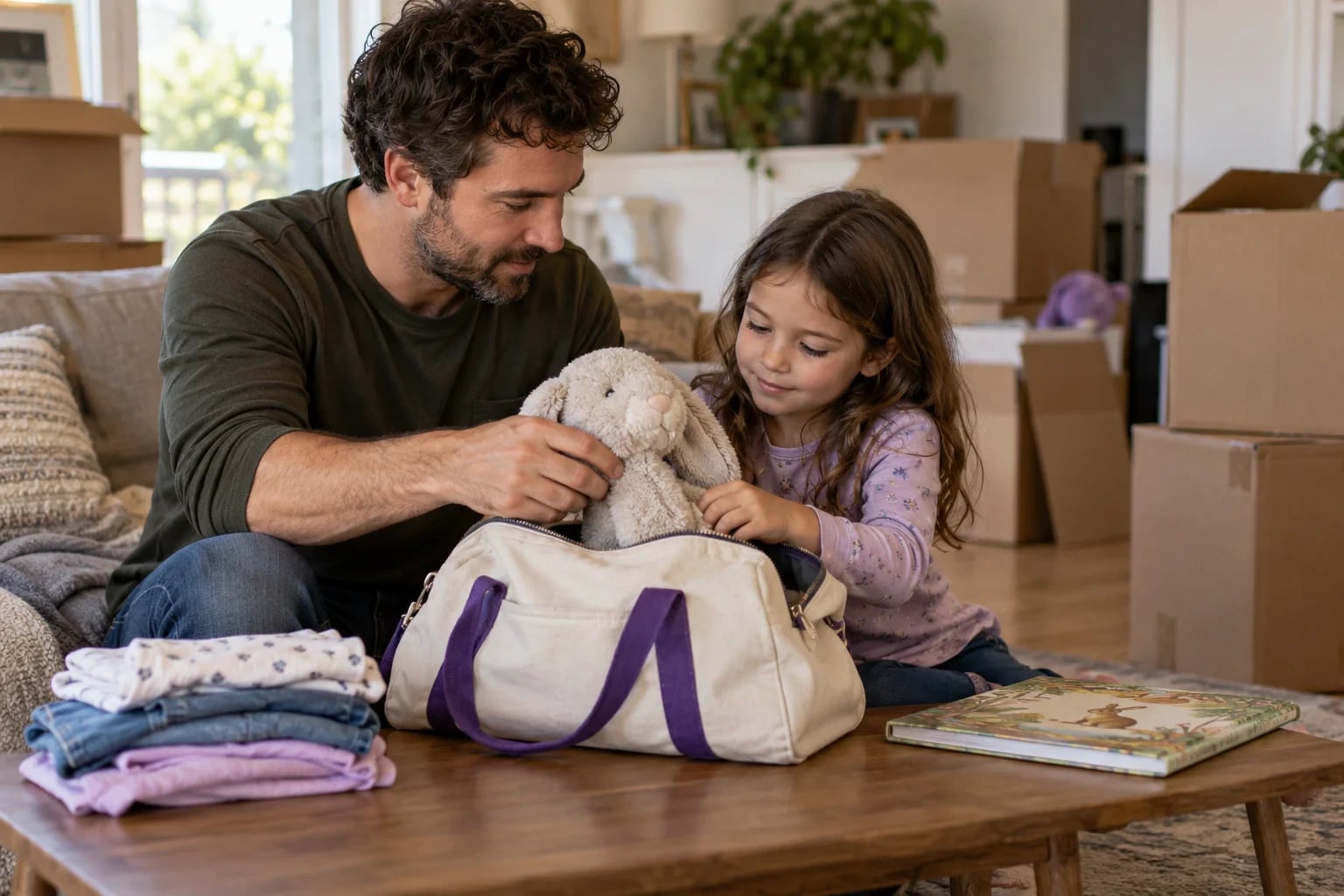
Understanding feelings builds trust
Low self-confidence and afraid to try: how to build confidence in kids aged 3 to 12
When your child says “I can't” before even trying, what actually helps? Why confidence wobbles, how it changes from preschool to middle school, and the signs worth raising with your pediatrician.
General Information: General information only; it may vary from child to child. Talk to your doctor or a specialist before making decisions.
In short
- Self-confidence is not fixed at birth; it grows every time a child tries something hard and gets through it.
- Avoiding new things is usually fear of failing, not laziness.
- Noticing effort rather than results, and never comparing your child with others, are the two habits that matter most.
- When your child says “I can't,” breaking the task into small steps works better than pushing or doing it for them.
Lumiya Editorial TeamBased on 5 sourcesOur editorial standards
Does your child hang back at the edge of the playground or say “I can't” before even trying? Between ages 3 and 12 this is very common, and confidence is a skill that can be learned. What helps most is breaking tasks into small steps, noticing effort instead of results, and never comparing your child with others.
Why do kids lose confidence and avoid trying?
Avoiding new things is rarely laziness or stubbornness. Your child thinks “What if I can't do it?”, and not trying feels like a safe way to never fail.
Some children are cautious by temperament and simply need time to warm up. Frequent criticism, constant correcting and comparisons can turn that caution into fear.

Self-confidence is a child's sense of “I can do this,” and it grows with every experience of managing something on their own. A child who is allowed to make mistakes learns firsthand that mistakes aren't the end of the world. That is why confidence is fed less by compliments than by challenges they have tried and gotten through.
Your child needs to feel comfortable, not defeated, when they make mistakes or fail.
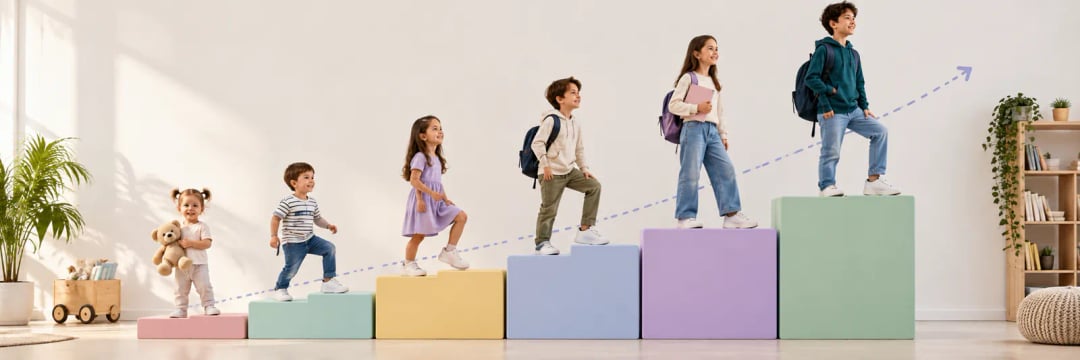
Confidence by age
-
“Me do it!”
Wants to do everything alone but runs out of patience fast. Zipping a jacket or setting the plates on the table are the first building blocks of confidence.
-
School and comparing
Starts measuring themselves against classmates: reading level, grades, speed at recess. Comments like “I'm dumb” may appear now.
-
Fitting in
How they look to the group matters more. Fear of being laughed at can make them skip tryouts, clubs or new activities.
How can you build confidence at home?
The CDC's positive parenting tips for preschoolers are refreshingly simple: let your child help with simple chores and give them a limited number of simple choices. Those two small habits carry a big message: “I trust you to handle this.”
5 everyday steps
-
Give an age-appropriate job
“Feeding the cat is your job this week.” Finishing a real task on their own makes “I can” concrete.
-
Break it into small steps
Don't expect them to ride a bike in one go: balance first, then pedals, then a short loop around the block.
-
Name the effort
“You didn't give up, you tried three times.” Describe the work and the strategy, not just the result.
-
Make mistakes safe
Share your own: “I burned the pancakes today, tomorrow I'll turn the heat down.” They see mistakes can be fixed.
-
Offer choices
“Do you want the blue shirt or the green one?” Small decisions exercise the decision-making muscle.
Praise or encouragement?
The American Academy of Pediatrics notes that children praised for being smart can grow to fear being seen as anything else, while those noticed for effort develop a passion for growth. “You're so smart!” sets a bar to protect. “Starting with the edge pieces really worked” gives your child a strategy to reuse.
What do experts in other countries recommend?
Public health agencies and pediatric groups in different countries land on remarkably similar advice.
| Country and organization | Key recommendation |
|---|---|
| United States — American Academy of Pediatrics | Praise effort, not only reaching the goal; kids should feel comfortable, not defeated, when they fail. |
| Germany — Federal Institute for Public Health (BIÖG) | Let children try things out and copy role models; this builds early trust in their own abilities. |
| Netherlands — Netherlands Youth Institute (NJI) | Praise the attempt too; small steps and showing first, then letting go, grow confidence. |
The shared message: look at effort rather than outcome, skip comparisons, and leave room for your child to try on their own.
What to do when your child says “I can't”
Don't try to argue or push in that moment. Name the feeling first, then shrink the task: “It looks hard, I get it. Want to try just the first step together?”
| Don't | Instead |
|---|---|
| Say “Come on, it's easy!” | Ask “That feels hard, huh? Where should we start?” |
| Compare them with a sibling or friend | Compare them with their past self: “Last week you read two pages, today three.” |
| Jump in and do it for them | Show the first step and hand the rest back |
| Brush off failure: “Never mind, it doesn't matter” | Talk about what they learned: “What would you do differently next time?” |

Your child's hesitation may test your patience or even stir up memories of your own childhood. That's a very human reaction. Standing next to them instead of pushing them forward is one of the strongest seeds of confidence you can plant.
For more, explore our self-confidence section, or see age-specific tips for ages 3-6 and ages 9-12.
When to see a doctor
Hanging back in new places and saying “I can't” now and then are normal. This table helps you tell the everyday from what's worth a conversation with a professional.
| Worth checking — ask a professional | Normal |
|---|---|
| Avoiding almost every new situation, so daily life shrinks | Watching for a while before joining a new game |
| Constant put-downs like “I'm stupid, nobody likes me” | Saying “I can't” on hard homework, then trying |
| Worry that comes with stomachaches, sleep problems or refusing school | Being upset for a short time after losing |
| Pulling away from all friends, or signs of being bullied | Acting shy when praised |
If these signs last more than a few weeks, talk to your pediatrician or the school counselor. They can refer you to a child psychologist if needed.
The CDC encourages parents to let preschoolers help with simple chores and make simple choices, small steps that build independence. If your child talks about hurting themselves, call or text 988; if there is immediate danger, call 911.
General Information: This content offers general information based on expert sources. Every child, family and situation is different, so what is described here may vary from person to person. Talk to your doctor or a qualified specialist before making decisions about your child.
Was this article helpful?
This topic at other agesEmotions & Behavior
Tools for this Age
- Baby percentile calculatorWhere does your child's weight and height sit among children the same age? See it in seconds on the WHO growth curves.
- Baby and child sleep scheduleHow much should your child sleep in 24 hours, and when should bedtime be? Calculate it from official guidance and compare it with your own log.
- Potty training chartWhen to start and how to prepare? A roadmap by age, a daily routine and a printable reward chart.
- Baby milestones by monthCheck off what most children your child's age can do, and talk about the rest with your doctor.
- Baby vaccine schedulePick your country, enter the birth date, and see the official schedule as your own dates.
- Screen time by ageSee how much screen time a day your country's official body recommends at your child's age; add daily use to compare it with the advice.
Checklist
Popular Topics
Frequently Asked Questions
- 1
- 2
- 3
- 4
- 5
References & Further Reading
- 1
- 2
- 3
- 4
- 5
Editorial Note
This article is general information; every child's temperament and circumstances are different. For advice about your own child, talk to your pediatrician, the school counselor or a licensed child mental health professional.