
 lumiya.com.tr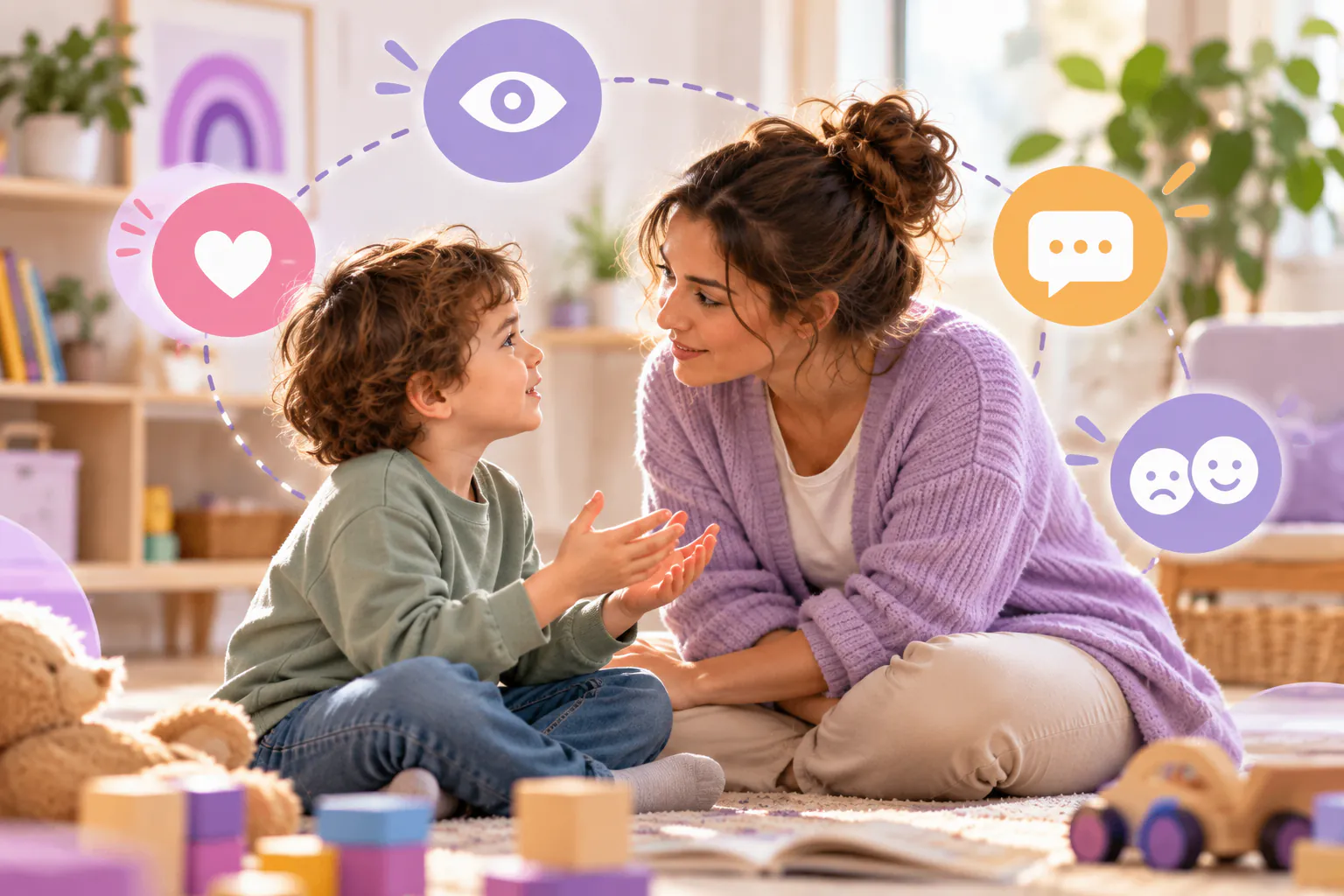
Listening is the best start
How to raise an empathetic child from ages 3 to 18
Empathy is not built in at birth; it grows step by step from age 3 into the teen years. Here is what helps at home, how it changes with age, and when to talk to your pediatrician.
General Information: General information only; it may vary from child to child. Talk to your doctor or a specialist before making decisions.
In short
- Empathy is learned: it usually starts around age 3 or 4 and keeps developing through adolescence.
- Children learn it best when their own feelings are understood and when they watch adults treat others kindly.
- Naming feelings, asking “How would you feel if you were her?” and talking about characters in books are three habits that work.
- Not sharing and acting self-centered are normal in young children; a calm repair talk works better than punishment.
Lumiya Editorial TeamBased on 3 sourcesOur editorial standards
Is your child still playing while a friend cries after a fall? That is usually not coldness: empathy isn't built in at birth, it starts around age 3 or 4 and keeps developing into the teens. The strongest support comes from naming your child's feelings, asking questions and modeling kindness every day.
When and how does empathy develop?
Young children see the world through their own eyes first. If they like something, they assume everyone does. Realizing that others can feel differently takes time.

Empathy has two sides: feeling what someone else feels and understanding their point of view. The first shows up early; the second depends on language, imagination and impulse control, so it matures through the school years and adolescence.
Acknowledge and ask about your child’s feelings to model empathy.
Empathy by age
-
“Is she sad too?”
Starts to notice other people's feelings, but their own wants still come first. Sharing is hard; turn-taking can be learned.
-
Fairness and friendship
Tries to imagine a friend's point of view. “That's not fair!” is a big feeling; games with rules build empathy.
-
Groups and belonging
Friend groups matter more. Noticing a left-out classmate and standing up for them is a key skill.
-
Deeper perspective
Can understand different views, but emotions run high. Empathy online has to be learned too.
How can you build empathy at home?
The American Academy of Pediatrics puts it simply: children learn to be kind by watching, so be sure you are setting a good example. Empathy grows through small moments repeated every day, not one big talk.
5 everyday steps
-
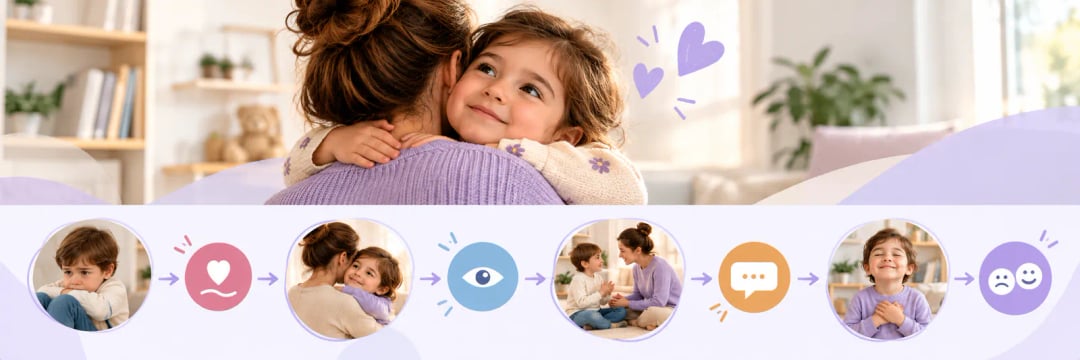
Name the feeling
“You were really mad when your tower fell.” A child whose feelings are understood is readier to understand others.
-
Ask a question
“How would you feel if you were in her shoes?” Listen to the answer instead of correcting it.
-
Talk about stories
When you read together, ask how a character feels and why.
-
Model it
Thanking a server or helping a neighbor: your child is watching and copying.
-
Notice kindness
“Giving your sister a turn made her happy.” Behavior that gets noticed gets repeated.
Ages 3-6: Put a name on feelings
At this age children are learning the words for feelings. Making faces in the mirror together or guessing how people in pictures feel turns it into a game.
Ages 6-12: Stand in a friend's shoes
Friendship problems are the best empathy school. When your child tells you about an argument, skip the verdict and ask first: “Why do you think he did that?”
Ages 12-18: Listen without judging
Teens want to be understood, not lectured. The AAP recommends reflective listening: listen attentively, summarize what your child says and repeat the message you heard. Feeling heard is what teaches a teen to hear others.
What should you do when your child hurts someone?
A lack of empathy can look like pushing a friend or making fun of someone. How you handle that moment shapes what your child learns.
| Don't | Instead |
|---|---|
| Say “How could you be so mean?” | Ask “Your friend is crying. How do you think she feels?” |
| Force an apology in front of everyone | Talk privately once everyone is calm and plan a repair together |
| Brush it off with “kids will be kids” | Name the behavior and explain briefly why it hurt |
| Give a long lecture | One sentence and a concrete repair: “Want to draw her a picture?” |

Seeing your child hurt someone can feel embarrassing and upsetting. It doesn't make you a bad parent. Take a breath first; a calm adult is the best model of how to handle big feelings.
For related situations, see our section on empathy and respect, and for age-specific tips the 3-6 years and 12-18 years pages.
When to see a doctor
Not wanting to share, acting selfish at times and fighting with friends are normal parts of growing up. This table helps separate what is typical from what needs a closer look.
| See a doctor if | Normal |
|---|---|
| A school-age child hurts others on purpose, again and again | A 3- to 5-year-old refuses to share toys |
| Cruelty toward animals or other living things | Sulking for a while after an argument |
| Never seems to understand anyone's feelings or feel sorry | Sometimes missing a friend's sadness |
| No friends at all, constant exclusion or withdrawal | A teen pulling away from family toward friends |
If any of these signs lasts for weeks, talk to your pediatrician or family doctor, or to the school counselor. They can refer you to a child mental health professional if needed.
The CDC encourages families to take time to talk with their child and be an active listener, and to acknowledge and ask about feelings. If you are worried about your child's safety or someone else's, call 911; for a mental health crisis, call or text 988.
General Information: This content offers general information based on expert sources. Every child, family and situation is different, so what is described here may vary from person to person. Talk to your doctor or a qualified specialist before making decisions about your child.
Was this article helpful?
This topic at other agesRelationships & Communication
Tools for this Age
- Baby and child sleep scheduleHow much should your child sleep in 24 hours, and when should bedtime be? Calculate it from official guidance and compare it with your own log.
- Screen time by ageSee how much screen time a day your country's official body recommends at your child's age; add daily use to compare it with the advice.
- Child Height Predictor & Genetic Target Height CalculatorHow tall will your child be as an adult? Enter both parents' heights to calculate the pediatric mid-parental target height and expected adult height range using the Tanner and AAP formulas.
- Baby percentile calculatorWhere does your child's weight and height sit among children the same age? See it in seconds on the WHO growth curves.
- Potty training chartWhen to start and how to prepare? A roadmap by age, a daily routine and a printable reward chart.
- Baby milestones by monthCheck off what most children your child's age can do, and talk about the rest with your doctor.
Checklist
Popular Topics
Frequently Asked Questions
- 1
- 2
- 3
- 4
- 5
References & Further Reading
- 1
- 2
- 3
Editorial Note
This article offers general information; every child and family is different. For advice about your own child, talk with your pediatrician, the school counselor or a licensed child mental health professional.