 lumiya.com.tr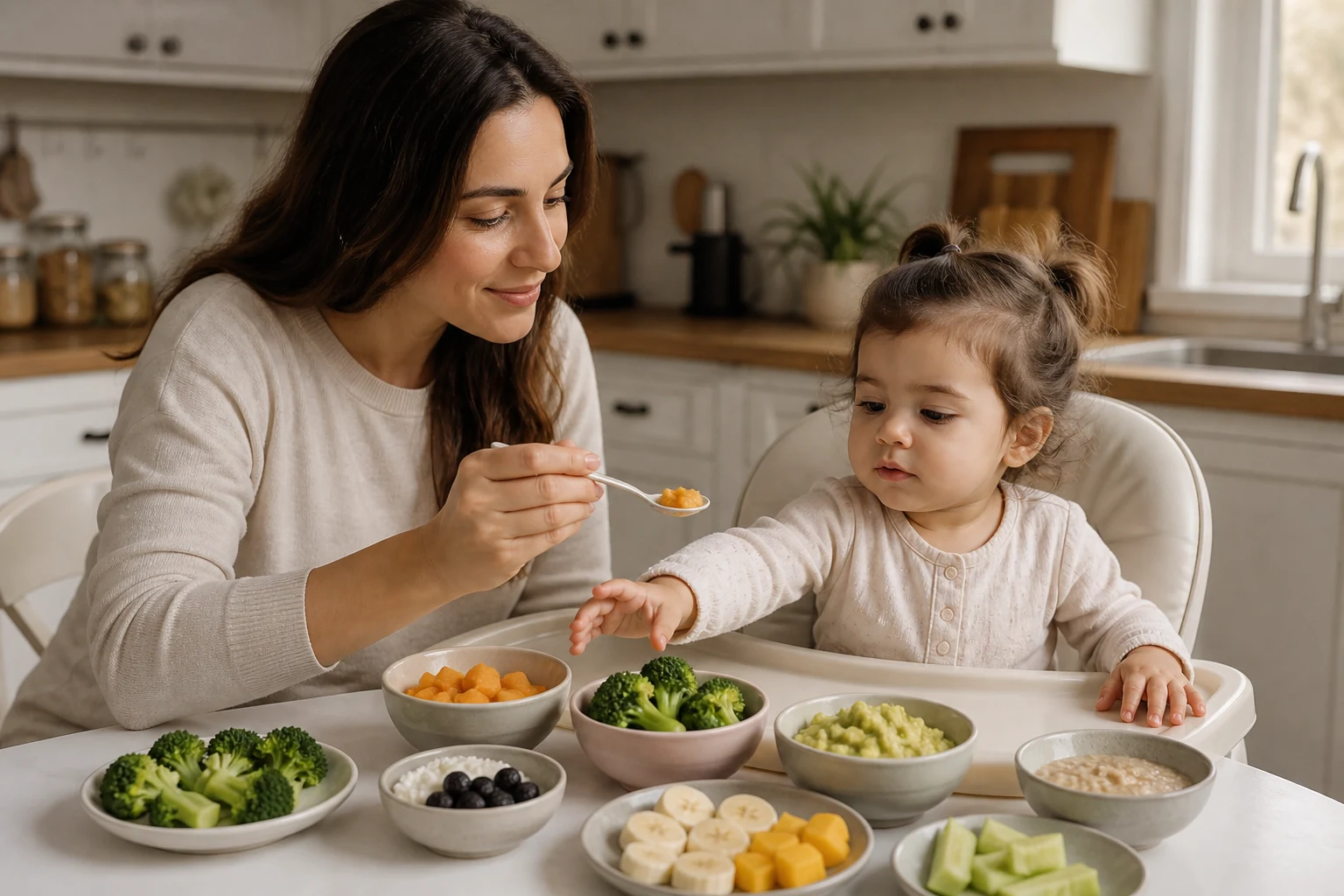
Balanced plates, happy tables
1–3 Years: Expanding Toddler Meals Beyond Baby Food
Practical ways to shift your toddler from baby foods to family meals while keeping meals safe, varied, and fun.
General Information: General information only; it may vary from child to child. Talk to your doctor or a specialist before making decisions.
In short
- Gradually introduce family foods by separating portions before adding salt, sugar, or hard pieces.
- Encourage self-feeding with safe textures and utensils while modeling eating behaviors.
- Watch for hunger and fullness cues to respect your child’s appetite without pressure.
- Change one step at a time to build confidence and skills in a supportive environment.
Lumiya Editorial TeamBased on 4 sourcesOur editorial standards
Our tool for this topic
From Baby Spoons to Family Tables
Between ages one and three, many toddlers move from soft baby foods to sharing meals with the family.
Start with textures that match your child’s current ability. If they’re comfortable with soft lumps, try mashed or finely chopped foods.

A toddler who smears oatmeal across a tray is practicing hand-eye coordination, not being difficult. Keep a damp cloth handy and stay patient.
Skills to Practice, One Bite at a Time
Self-feeding builds confidence and fine motor skills. Offer finger foods that are easy to grasp, like steamed carrot sticks, ripe avocado slices, or small pasta shapes.
Watch how your child holds food or utensils. Some toddlers prefer to use their whole hand at first, while others try pincer grasps early.
Modeling eating behaviors helps your toddler learn what to do. Sit together during meals and eat the same foods you’re offering.
Handling Picky Moments
Toddlers often go through phases where they accept only a few foods. This is normal and usually temporary. Avoid making separate meals or negotiating bites.

Avoid making separate meals or negotiating bites. Keep offering a variety of foods without comment.
If mealtime becomes stressful, take a step back. Shorten the meal or end it early.
Adapting Family Favorites for Little Hands
Many family dishes can be adapted for toddlers with minimal changes. Start by preparing a portion of the meal before you add seasonings or hard ingredients.
Look for naturally soft foods that require little chewing: mashed beans, scrambled eggs, or well-cooked grains like quinoa.
Cultural staples can be just as adaptable. A bowl of lentil soup can become a toddler-friendly meal with extra broth and soft lentils.
Vegetarian and Religious Considerations
Vegetarian meals can provide plenty of nutrients for toddlers when planned carefully. Focus on protein sources like beans, lentils, tofu, and eggs.
Always check with your child’s healthcare provider if you have concerns about meeting nutritional needs.
A Two-Week Transition Table
This table shows how to adapt common family meals for a toddler aged 1–3 years.
| Family Meal | Toddler Adaptation | Skill Practiced | Response to Watch | Hunger/Fullness Cue | Safety/Comfort Note | Next Step |
|---|---|---|---|---|---|---|
| Baked chicken thighs with roasted potatoes and green beans | Shredded chicken, soft potato cubes, steamed green bean pieces | Self-feeding with fingers, chewing soft solids | Coughing or gagging on larger pieces | Pushes plate away or turns head | Cut green beans lengthwise to reduce choking risk | Offer slightly larger potato cubes next time |
| Spaghetti with marinara sauce and meatballs | Plain pasta shapes, small pieces of meatball (no sauce), steamed carrot sticks | Using utensils, managing mixed textures | Spits out meatball pieces | Eats slowly, pauses often | Ensure pasta is well-cooked and cut into small pieces | Try a fork next time |
| Scrambled eggs with toast and sliced avocado | Scrambled eggs cut into small pieces, toast cut into strips, avocado slices | Picking up food, chewing mixed textures | Gags on egg pieces | Leaves some food on plate | Serve eggs in a shallow bowl to make scooping easier | Offer a spoon for eggs |
| Lentil soup with rice and spinach | Lentils and rice mashed slightly, spinach finely chopped | Spoon use, swallowing soft solids | Coughs while swallowing | Plays with spoon, loses interest | Add a familiar food like banana slices to the tray | Try soup again in a few days |
| Taco night with seasoned ground beef, cheese, and tortillas | Plain beans, shredded cheese, soft tortilla pieces | Self-feeding, managing soft wraps | Struggles to hold tortilla pieces | Eats cheese but leaves beans | Warm tortilla slightly to make it easier to fold | Offer a dip like yogurt for beans |
| Oatmeal with cinnamon and apple slices | Plain oatmeal with mashed banana, soft apple slices | Spoon use, chewing soft fruit | Spits out oatmeal | Finishes apple slices first | Serve oatmeal in a shallow bowl to make scooping easier | Try adding a sprinkle of cinnamon next time |
| Stir-fry with chicken, bell peppers, and rice | Shredded chicken, soft-cooked bell pepper strips, plain rice | Picking up food, chewing mixed textures | Pushes plate away after a few bites | Eats slowly, takes breaks | Cut bell peppers into thin strips to reduce choking risk | Offer a familiar food like yogurt next time |
| Grilled cheese sandwich with tomato soup | Small cheese cubes, soft bread pieces, plain soup broth | Self-feeding, managing soft bread | Gags on cheese cubes | Leaves most of the bread | Cut cheese into tiny cubes or melt slightly for easier handling | Try a different cheese next time |
| Baked salmon with mashed sweet potatoes and peas | Flaked salmon, mashed sweet potato, steamed pea pods | Chewing soft solids, managing peas | Spits out salmon flakes | Eats sweet potato eagerly | Ensure salmon is boneless and flaked finely | Try salmon again in a week |
| Pancakes with syrup and banana slices | Small pancake pieces, banana slices, plain syrup on the side | Self-feeding, managing sticky textures | Struggles with syrup mess | Eats pancake pieces but ignores banana | Serve syrup separately to avoid stickiness | Offer a fork for pancake pieces |
Use this table as a flexible guide. Your child’s responses will tell you what to try next.
Multigenerational and Childcare Meals
When meals are shared across generations or in childcare settings, communication is key.
In multigenerational homes, older siblings or grandparents may need reminders about safe textures and portion sizes.
Consistency between settings helps your child feel secure and reduces mealtime stress.
If your toddler is in childcare, pack a small container of familiar foods to supplement their daycare meal.
Budget-Friendly Tips
Adapting family meals for toddlers doesn’t have to be expensive. Use affordable staples like rice, beans, eggs, and seasonal vegetables.
Batch-cook and freeze portions of foods like mashed sweet potatoes, shredded chicken, or cooked pasta. These can be thawed and served quickly on busy days.
Food Safety Reminders
Always wash hands, utensils, and surfaces before preparing food. Cook foods to safe temperatures and avoid raw or undercooked items like runny eggs or rare meat.
Keep choking hazards out of reach. Avoid whole nuts, popcorn, hard candies, and large chunks of raw vegetables.
When to Seek Extra Support
Most toddlers go through phases of picky eating or slow skill development. These are usually normal parts of growth.
Trust your instincts as a caregiver. You know your child best. If something feels off, don’t hesitate to reach out for support.
Small Steps, Big Progress
The journey from baby foods to family meals is a marathon, not a sprint.
Remember, every child learns at their own pace. What works for one toddler may not work for another—and that’s okay.
General Information: This content offers general information based on expert sources. Every child, family and situation is different, so what is described here may vary from person to person. Talk to your doctor or a qualified specialist before making decisions about your child.
Was this article helpful?
This topic at other agesFeeding & Nutrition
Tools for this Age
- Baby feeding schedule: weaning chart by monthEnter your country and the date of birth: when to start solids, meals and textures by age, and until when to avoid certain foods — with dates.
- Baby percentile calculatorWhere does your child's weight and height sit among children the same age? See it in seconds on the WHO growth curves.
- Baby and child sleep scheduleHow much should your child sleep in 24 hours, and when should bedtime be? Calculate it from official guidance and compare it with your own log.
- Potty training chartWhen to start and how to prepare? A roadmap by age, a daily routine and a printable reward chart.
- Baby milestones by monthCheck off what most children your child's age can do, and talk about the rest with your doctor.
- Baby vaccine schedulePick your country, enter the birth date, and see the official schedule as your own dates.
Checklist
Popular Topics
Frequently Asked Questions
- 1
- 2
- 3
- 4
Editorial Note
Always supervise your child during meals and snacks. If you notice choking, breathing difficulty, severe allergic symptoms, dehydration, repeated vomiting, persistent swallowing pain or difficulty, unusual lethargy, loss of an established feeding skill, a very narrow eating pattern with distress, or any concern about growth, contact your local child-health professional or emergency support immediately.
Other situations in this topic
Dealing with a different side of the same topic? Each situation has its own guide.