 lumiya.com.tr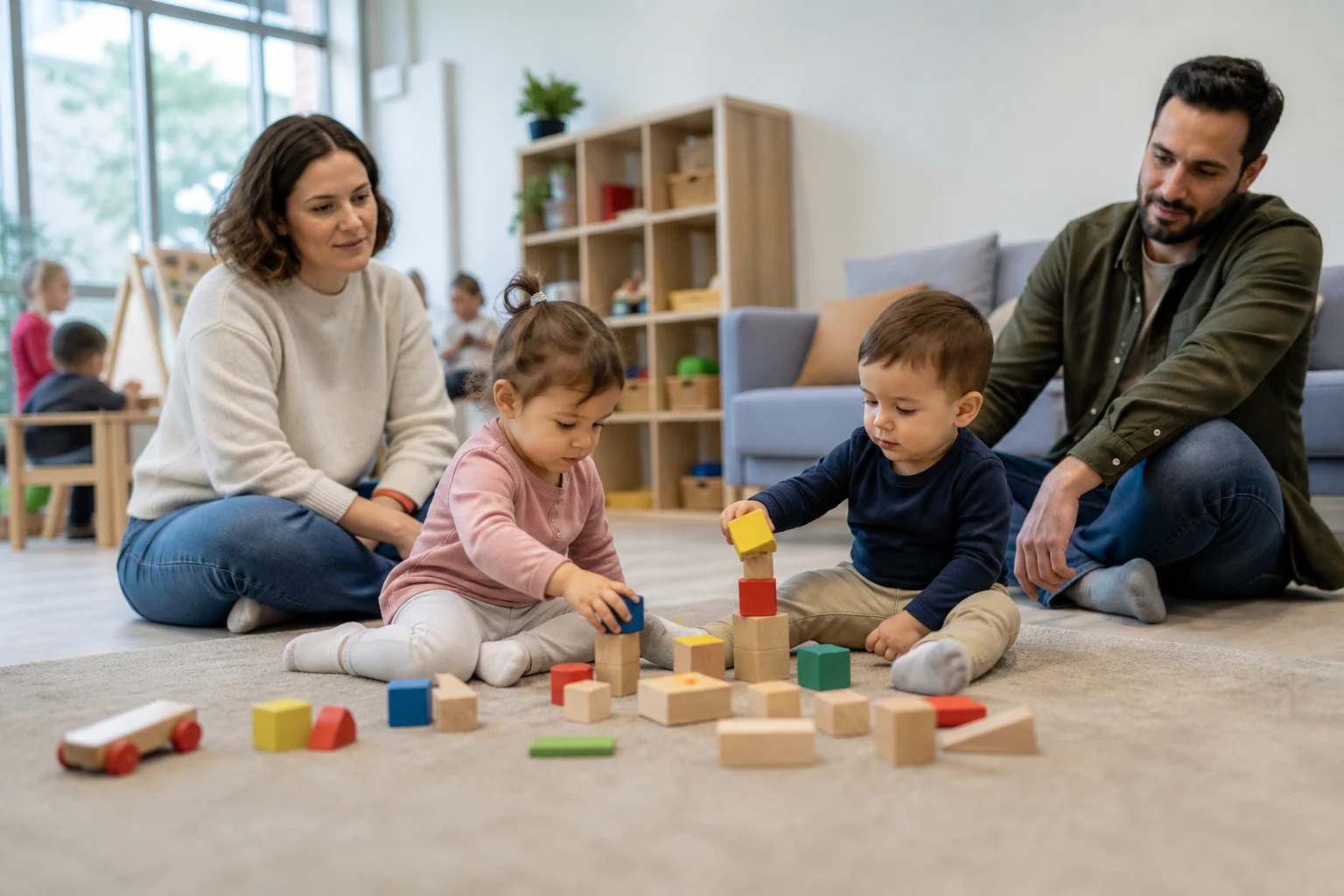
Toddler Social Skills: How to Support Early Friendships (1–3 Years)
Learn how to nurture your toddler’s first social steps with simple, low-pressure play ideas and responsive caregiving that respects their unique pace.
What social learning looks like at 1–3 years
Toddlers are not yet ready for adult-style friendships or long cooperative play. Instead, they learn social skills through watching other children, parallel play, imitation, and brief turn-taking. They may approach another child, move away, protect a toy, or seek a familiar adult when unsure. These small steps build the foundation for later social confidence.
Caregivers often wonder if their toddler is ‘behind’ because they don’t share or play cooperatively. But sharing on command and cooperative play are skills that develop gradually, usually after age 3. For now, focus on creating safe, low-pressure opportunities for your toddler to observe and practice simple social routines.

Toddlers learn best when they feel safe and when adults stay close, narrate feelings, and model gentle social behaviors without rushing them.
Parallel play—when children play near each other with similar toys but not together—is normal and valuable. Your toddler may watch another child stack blocks, then try it themselves. They might also imitate sounds, actions, or even facial expressions. These moments are early social learning in action.
Recognizing your toddler’s cues
Every child has a unique temperament. Some toddlers dive into new groups eagerly, while others hang back or need more time. Pay attention to your child’s signals. If they turn away, hide behind you, or start fussing, they may need a break. Respecting these cues helps them build trust in social settings.
Toddlers also express feelings through actions rather than words. A push or grab might mean ‘I want that toy,’ not aggression. Responding with calm guidance—like offering a duplicate toy or modeling asking—helps them learn without shame.
Setting up low-pressure play opportunities
Short, simple playdates in familiar places work best for toddlers. A park, backyard, or quiet playroom reduces distractions and makes it easier for your child to focus. Avoid crowded or noisy settings that might overwhelm them.
Choose open-ended materials like large blocks, balls, or art supplies that encourage independent exploration. Duplicate toys or shared materials—such as two crayons or two trucks—can reduce conflicts over possession. Keep the group small, ideally one or two other toddlers, to avoid overstimulation.
Preparing for transitions
Toddlers thrive on predictability. Before the playdate, talk about what to expect using simple words: ‘We’ll play with blocks, then we’ll have a snack, then it’s time to go home.’ A visual schedule with pictures can help, especially for children who are still learning language.
When it’s time to leave, give a clear warning: ‘Five more minutes, then we’ll clean up.’ Use a timer or song to signal the transition. If your toddler resists, stay calm and offer comfort. Rushing or forcing them can create more distress.
How to support your toddler during play
Stay close but avoid hovering. Your presence provides security, but giving them space to explore builds confidence. Narrate what you see in simple language: ‘You’re rolling the ball to Sam. Sam is rolling it back to you.’ This helps your toddler connect actions with words.
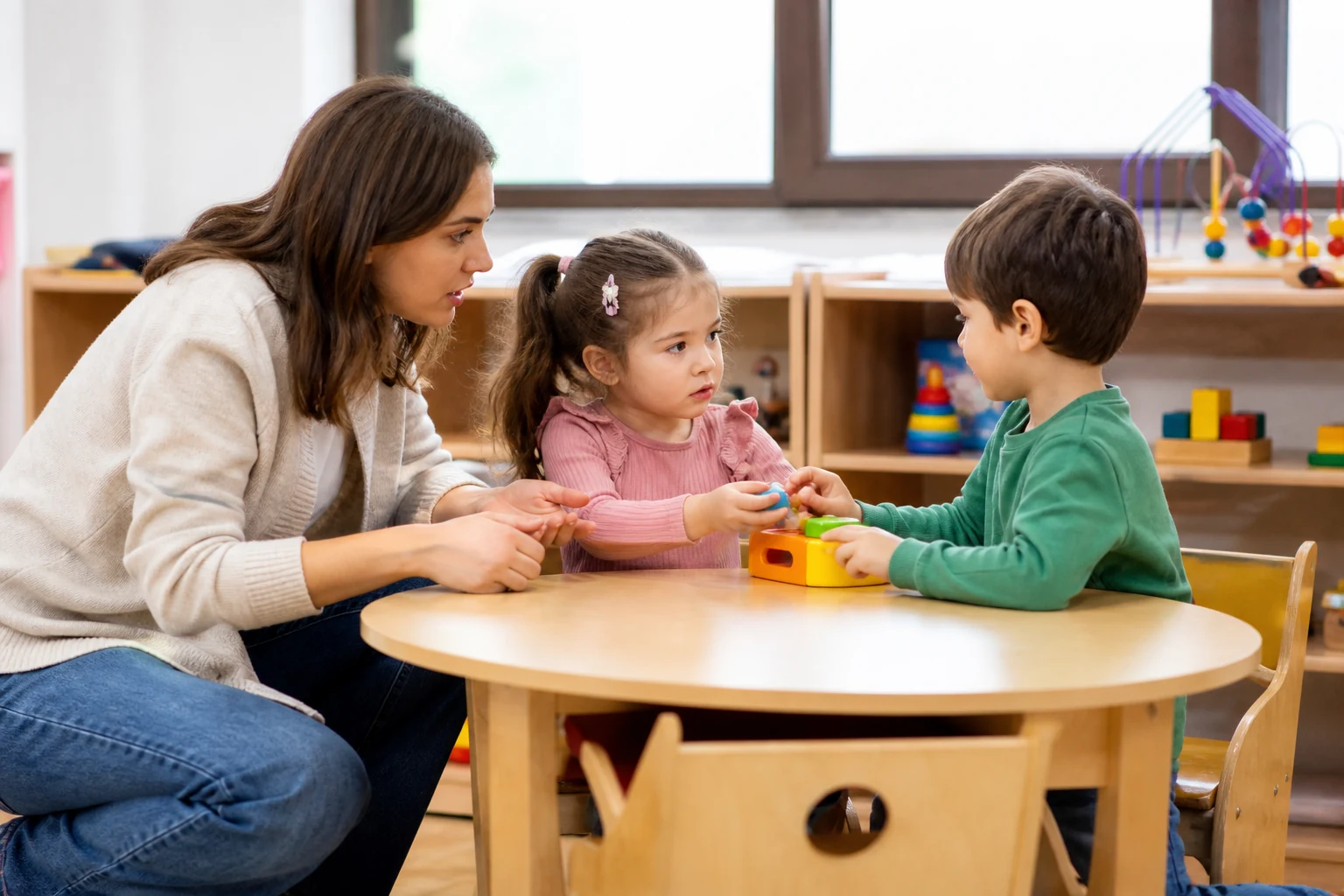
Model turn-taking and gentle approaches. If two toddlers both want the same toy, step in with a calm voice: ‘I see you both want the truck. Let’s take turns. You go first, then Sam.’ Offering a timer or counting to three can make the routine clearer.
Protecting bodies and possessions
Toddlers are still learning about personal space and ownership. If your child grabs a toy, gently redirect: ‘That’s Sam’s truck. You can have the red one.’ If another child grabs from your toddler, step in quickly: ‘That’s your truck. You can say ‘mine’ or ask for a turn.’
Teach gentle touches by modeling and praising kind behavior. ‘You patted Sam’s back so softly! That feels nice.’ Avoid labeling behaviors as ‘good’ or ‘bad.’ Instead, focus on describing actions and feelings.
After conflicts: helping toddlers reconnect
Conflicts are normal and even helpful for learning. If toys are grabbed or cries erupt, stay calm and intervene if safety is a concern. Once the immediate moment passes, help your toddler reconnect by offering comfort or a new activity.
Avoid forcing apologies or public explanations. Instead, model gentle behavior: ‘I’m sorry you’re sad. You can ask for a turn next time.’ Give your toddler time to process before expecting them to ‘fix’ the situation.

Toddlers learn social skills through repetition and gentle guidance, not through punishment or shaming.
Adapting to different temperaments and needs
Some toddlers are naturally social, while others prefer to observe from a distance. If your child is shy, start with one-on-one playdates in a quiet space. If they’re energetic, choose active play like chasing games or dancing.
Sensory differences also matter. A child who dislikes loud noises may need a quieter setting, while another might thrive in a bustling park. Observe what environments help your toddler feel most comfortable.
Supporting multilingual families
If your family speaks more than one language, your toddler is already building social flexibility. Use simple phrases in both languages to describe feelings and routines: ‘You’re happy! Feliz!’ This reinforces emotional connections and social learning.
Avoid pressuring your toddler to speak a specific language during playdates. Let them communicate in the way that feels easiest, whether through words, gestures, or sounds.
Sample observation table: what to notice and how to respond
| Setting | Child’s cue | Child’s response | Adult support | Recovery after conflict |
|---|---|---|---|---|
| Playroom with two other toddlers | Toddler watches another child stack blocks | Tries stacking blocks nearby | Narrate: ‘You’re building too!’ | Offer a second set of blocks |
| Park with a small group | Toddler grabs a toy from another child | Other child cries | Step in: ‘That’s Sam’s truck. You can have the red one.’ | Redirect to a different activity |
| Backyard with one other toddler | Toddler moves away and clings to caregiver | Fusses and hides behind leg | Comfort: ‘You feel shy. That’s okay.’ | End playdate early if needed |
| Quiet playroom with siblings | Toddler pushes sibling away from toy | Sibling cries | Model: ‘Gentle hands. You can ask for a turn.’ | Offer a duplicate toy |
Use this table to track your toddler’s progress and adjust your approach. Look for patterns in their cues and responses to guide your next steps.
When to seek extra support
Most toddler social challenges are typical and resolve with time and practice. However, if you notice persistent extreme distress, loss of previously used social or communication skills, or limited response to interaction, it may be time to talk with a local child-health professional.
If you have any safeguarding concern or feel unsure about your child’s development, reach out to your pediatrician or early intervention team for guidance.
Trust your instincts as a caregiver. You know your child best, and small, responsive steps often make the biggest difference over time.
"Health Disclaimer: This content is provided for general informational purposes only and does not constitute personal medical advice, diagnosis, or treatment. Always seek the advice of a qualified health professional with any questions you may have regarding your health or your child's health."
Was this article helpful?
Fast Summary
- Toddlers learn social skills through watching, parallel play, and brief interactions rather than long cooperative play.
- Respect your child’s temperament and avoid pushing them into interactions they’re not ready for.
- Stay close, narrate feelings, and model simple social routines like turn-taking and gentle approaches.
- Choose short, low-pressure playdates and prepare for transitions to reduce stress for both you and your toddler.
Tools for this Age
Checklist
Popular Topics
This topic at other ages· Friendship
Frequently Asked Questions
- 1
Show 3 moreCollapse
- 2
- 3
- 4
References & Further Reading
Editorial Note
Repeated serious harm, persistent extreme distress across familiar settings, loss of previously used social or communication skills, limited response to sound or interaction, safeguarding concern, or caregiver concern warrants timely local child-health or developmental support. Immediate safety danger requires emergency help.