 lumiya.com.tr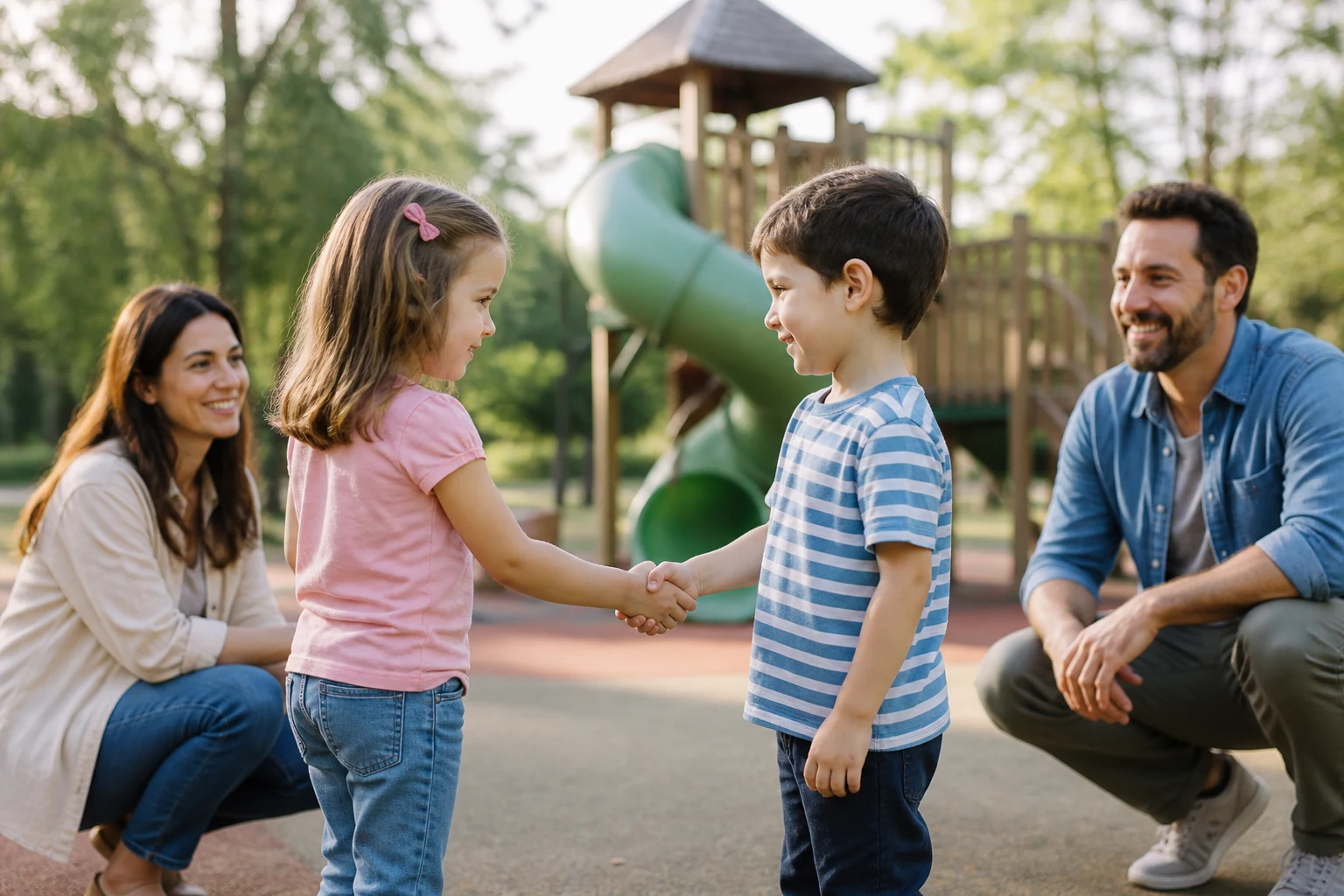
How to Help Your 3- to 6-Year-Old Make Friends
Friendship skills develop gradually between ages 3 and 6. Learn how to support your child’s social growth with practical, age-appropriate strategies that respect their temperament and individual pace.
Friendship isn’t a popularity contest—it’s a skill set
Between ages 3 and 6, children are still learning how to connect with others. Friendship isn’t about being the most liked child in the room; it’s about practicing small, everyday actions like taking turns, sharing ideas, and noticing when someone wants space.

Children learn friendship one step at a time. If your child struggles with a specific moment—like being left out or feeling frustrated—respond with calm curiosity rather than quick fixes. Ask, “What happened next?” instead of rushing to solve the problem for them.
Your role isn’t to make your child popular. It’s to offer gentle guidance, model respectful behavior, and create opportunities for practice. When you focus on skills instead of outcomes, your child learns that friendship is about connection, not competition.
How to support your child’s social learning at home
Children learn best when they feel safe to try and fail. At home, you can model friendship skills in everyday moments. For example, when you’re playing together, take turns choosing the game or activity. Say, “My turn to build the tower.
Another way to support social learning is through pretend play. Use stuffed animals or puppets to act out scenarios like inviting a friend to play or asking for a turn. These playful moments let your child practice responses in a low-pressure setting. You might say, “Bear wants to play, but Fox is busy drawing.
Small steps that build big confidence
| Skill | What it looks like | How to support it |
|---|---|---|
| Entering play | Walks up, watches, then joins with a simple idea | Stay nearby, give your child space to observe first |
| Offering an idea | Says, “Let’s build a castle!” or “Can I have the red block?” | Praise the attempt, even if the idea isn’t accepted |
| Taking turns | Waits, hands over the toy, or waits for their turn in a game | Use a timer or count aloud to make waits feel predictable |
| Sharing with realistic expectations | Offers a toy for a short time or shares space | Avoid forcing long turns; short, positive experiences build trust |
| Using words for preferences | Says, “I don’t like that,” instead of grabbing or pushing | Model phrases like, “I need space,” or “I want to try that next” |
| Noticing when someone wants space | Steps back when a friend walks away or says, “I need a break” | Point out these moments: “Jamie walked away. Maybe he needs quiet time” |
| Coping with rejection | Handles a “no” without tears or aggression | Stay calm, say, “It’s okay to feel disappointed. Let’s try again later” |
| Repairing small conflicts | Says sorry or offers a new idea after a disagreement | Focus on actions: “You gave Sam the crayon back. That helped fix things” |
| Asking an adult for help | Comes to you when a conflict feels too big | Teach a simple phrase: “I need help” |
Playdates and preschool: creating safe spaces to practice
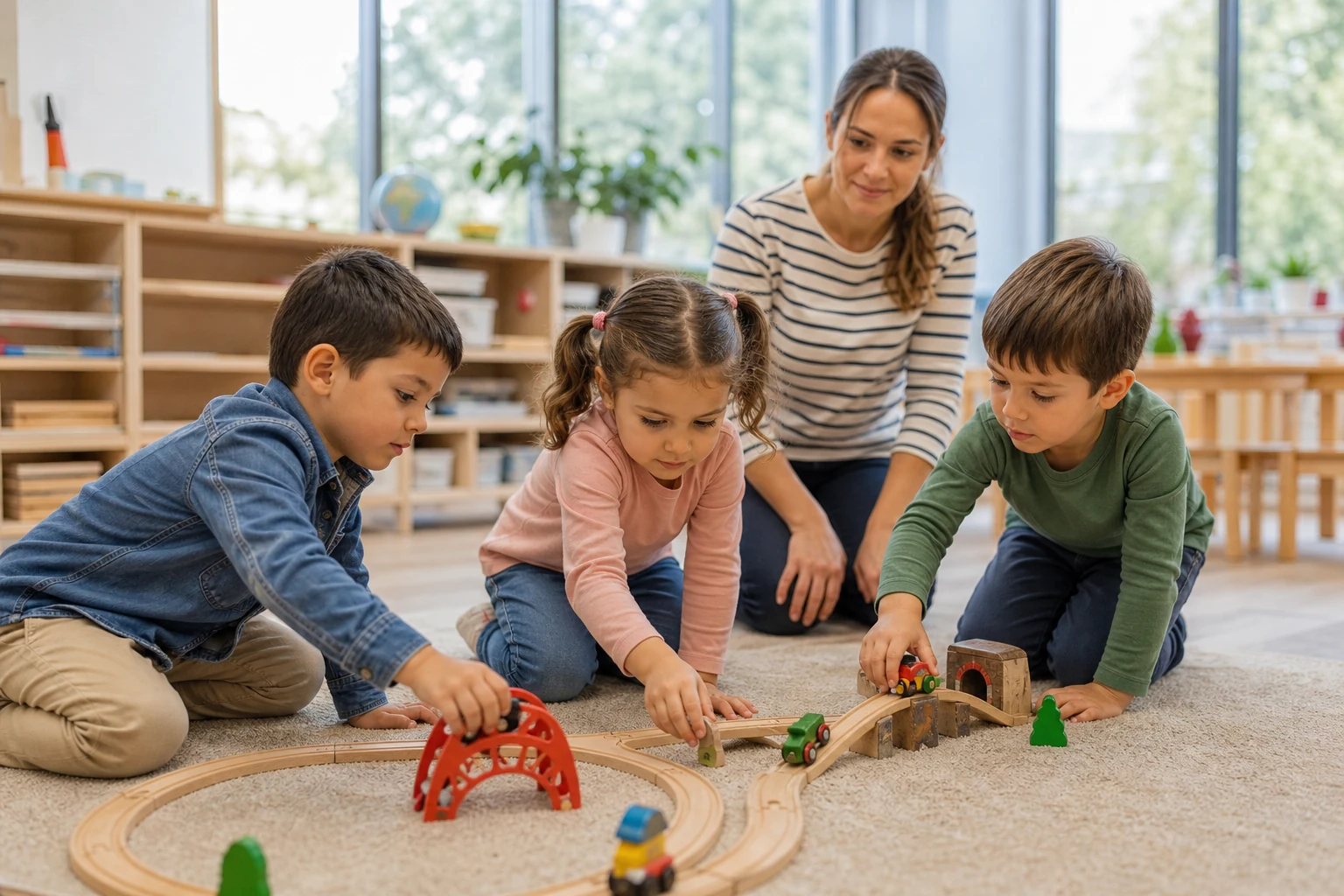
Playdates and preschool offer real-world practice, but they can also bring challenges. Some children thrive in busy classrooms; others need smaller groups or one-on-one time. Respect your child’s temperament. If they’re shy or easily overwhelmed, start with short, predictable playdates at home or in quiet settings.
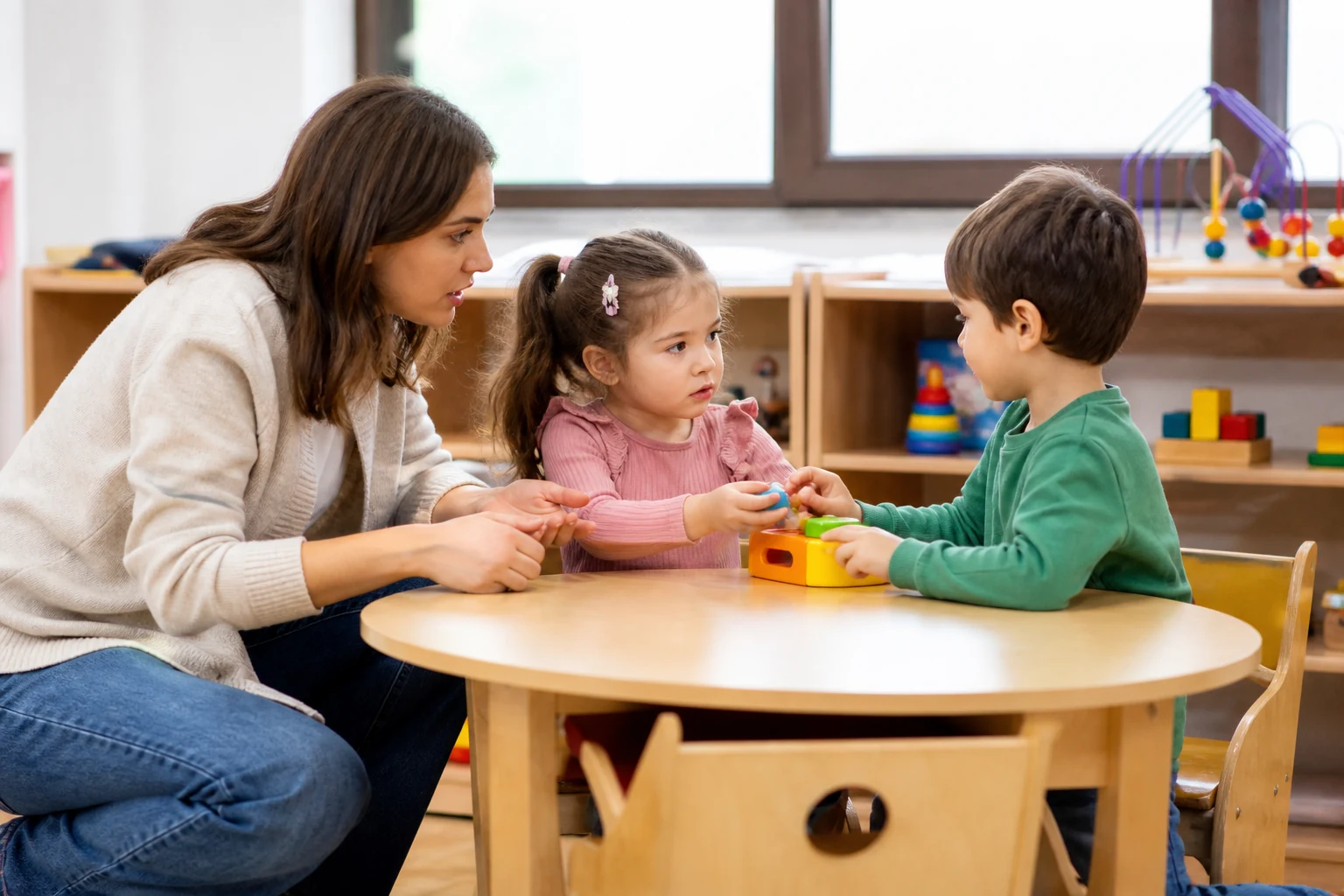
At preschool, teachers can help by structuring activities that encourage cooperation. Look for programs that balance free play with guided group activities. Ask teachers how they support children who need more time to join in or who struggle with transitions.

Some children need more time or smaller groups to feel comfortable. If your child struggles in large settings, ask about smaller playgroups or individual support options at preschool.
When to seek extra support
Most friendship challenges in early childhood are temporary and part of normal development. But some patterns may need extra attention. If your child consistently avoids play, shows intense frustration during conflicts, or struggles to communicate needs, it may be helpful to talk with your pediatrician or a child development specialist.
Collaboration with preschool staff is also important. If your child’s challenges appear in multiple settings—home, preschool, and playdates—teachers and caregivers can share observations and strategies. Together, you can create a consistent approach that supports your child’s growth.
Respecting differences and avoiding pressure
Every child learns friendship at their own pace. Some children are naturally outgoing; others prefer quiet observation. Some may need more time to process social cues or express themselves. Avoid comparing your child to others or pushing them to perform friendship in a specific way. Instead, celebrate their unique approach.
What to avoid
- Forcing apologies or sharing before your child is ready
- Labeling your child as “shy” or “bossy” in front of others
- Expecting instant friendships or constant popularity
- Comparing your child’s social skills to siblings or peers
Instead, focus on small, positive moments. Praise effort over outcomes: “You asked nicely for the truck. That was kind.” This builds confidence and encourages your child to keep trying.
Practical tools for everyday moments
You don’t need special tools to support your child’s friendship skills. Everyday routines offer plenty of opportunities.
Quick scripts for common situations
- When your child wants to join play: “Watch what they’re doing first. Then you can ask, ‘Can I play too?’”
- When your child is left out: “It’s hard when friends play without you. Want to try asking again later?”
These simple phrases give your child language to use in the moment. Over time, they’ll internalize these skills and use them independently.
Building a community of support
Friendship isn’t just your child’s responsibility—it’s a shared effort. Talk with other parents about their experiences. Share what’s working for your child and ask for advice. You might discover that another parent is also looking for ways to support their child’s social growth. Together, you can create a network of understanding and encouragement.
Signs your child is ready for more
- Shows curiosity about other children’s play
- Uses words to express preferences or needs
- Handles minor conflicts with minimal help
- Asks to invite a friend over or join a group activity
When you see these signs, it’s a good indication that your child is building confidence and readiness for deeper connections. Celebrate these moments and continue offering gentle support.
When patterns repeat across settings
If your child’s challenges with friendship appear in preschool, playdates, and home, it may be time to seek additional support. Talk with your pediatrician about your observations. They can help rule out underlying factors and connect you with resources. Early support can make a meaningful difference in your child’s social development and overall well-being.
Remember, friendship is a journey, not a destination. Every small step your child takes builds their confidence and resilience. With patience, respect, and consistent support, they’ll develop the skills they need to form meaningful connections now and in the future.
"Health Disclaimer: This content is provided for general informational purposes only and does not constitute personal medical advice, diagnosis, or treatment. Always seek the advice of a qualified health professional with any questions you may have regarding your health or your child's health."
Was this article helpful?
Fast Summary
- Friendship is a skill set, not a popularity contest, and it grows with practice and patience.
- Support your child’s social learning by modeling gentle ways to join play, take turns, and express preferences without forcing outcomes.
- Respect your child’s temperament and need for space; some children thrive in smaller groups or need more time to warm up.
- When challenges persist across settings, collaborate with preschool staff and seek guidance from a professional.
Tools for this Age
Checklist
Popular Topics
This topic at other ages· Friendship
Frequently Asked Questions
- 1
Show 3 moreCollapse
- 2
- 3
- 4
References & Further Reading
Editorial Note
Friendship skills develop at different paces for each child. If your child shows persistent distress, limited participation, or unsafe behaviors, talk with your pediatrician or a child development specialist. Early support can make a meaningful difference.