 lumiya.com.tr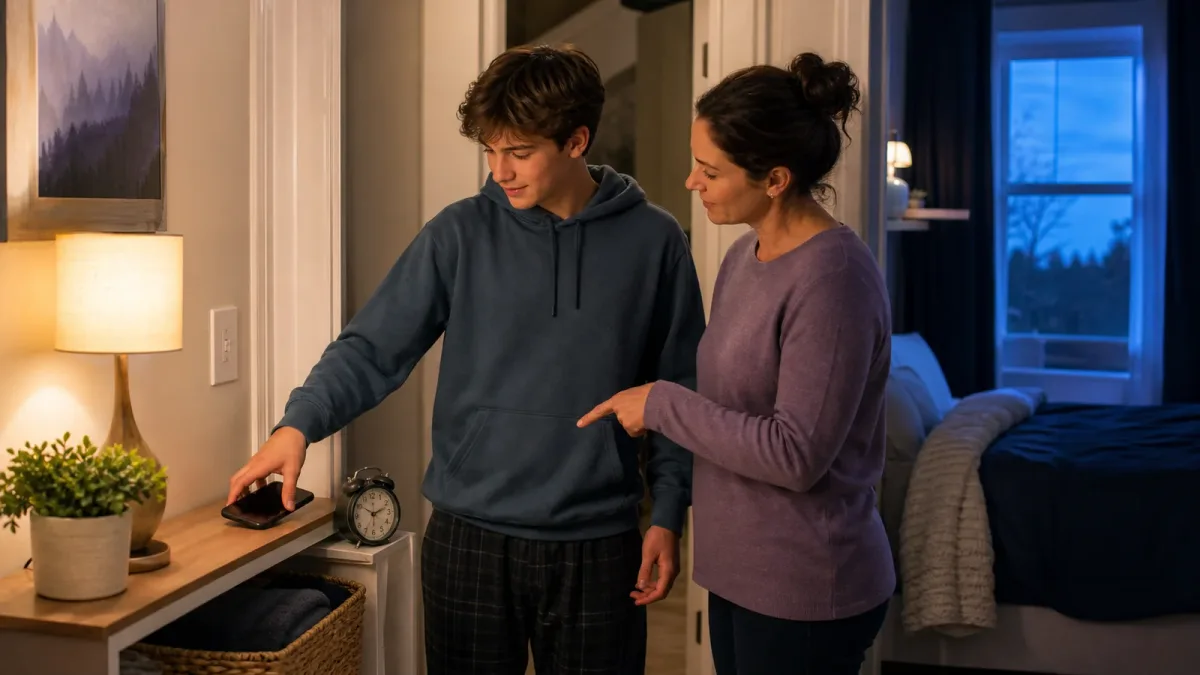
Safe Sleep for Ages 12-18: A Collaborative Family Plan
Build a measurable sleep plan that respects adolescent biology and independence while addressing school schedules, screens, caffeine and warning signs.
Teen sleep is not simply a matter of choosing an earlier bedtime. During adolescence the body clock commonly shifts later, while school can still begin early. Homework, sport, paid work, social life, exam stress and overnight notifications compete with the same limited window. A safe sleep plan does not call a young person lazy or irresponsible; it treats biology, daily demands and growing independence as parts of one system.
For ages 13 to 18, the usual reference is 8 to 10 hours of sleep on a regular basis. A 12-year-old still sits within the 6-to-12 recommendation of 9 to 12 hours. These ranges are not grades. If a teenager is extremely hard to wake, dozes in class, sleeps far longer on free days or shows persistent irritability and poor concentration, look beyond time in bed. Sleep timing, continuity and daytime function all matter.
Read body-clock timing and actual sleep need together
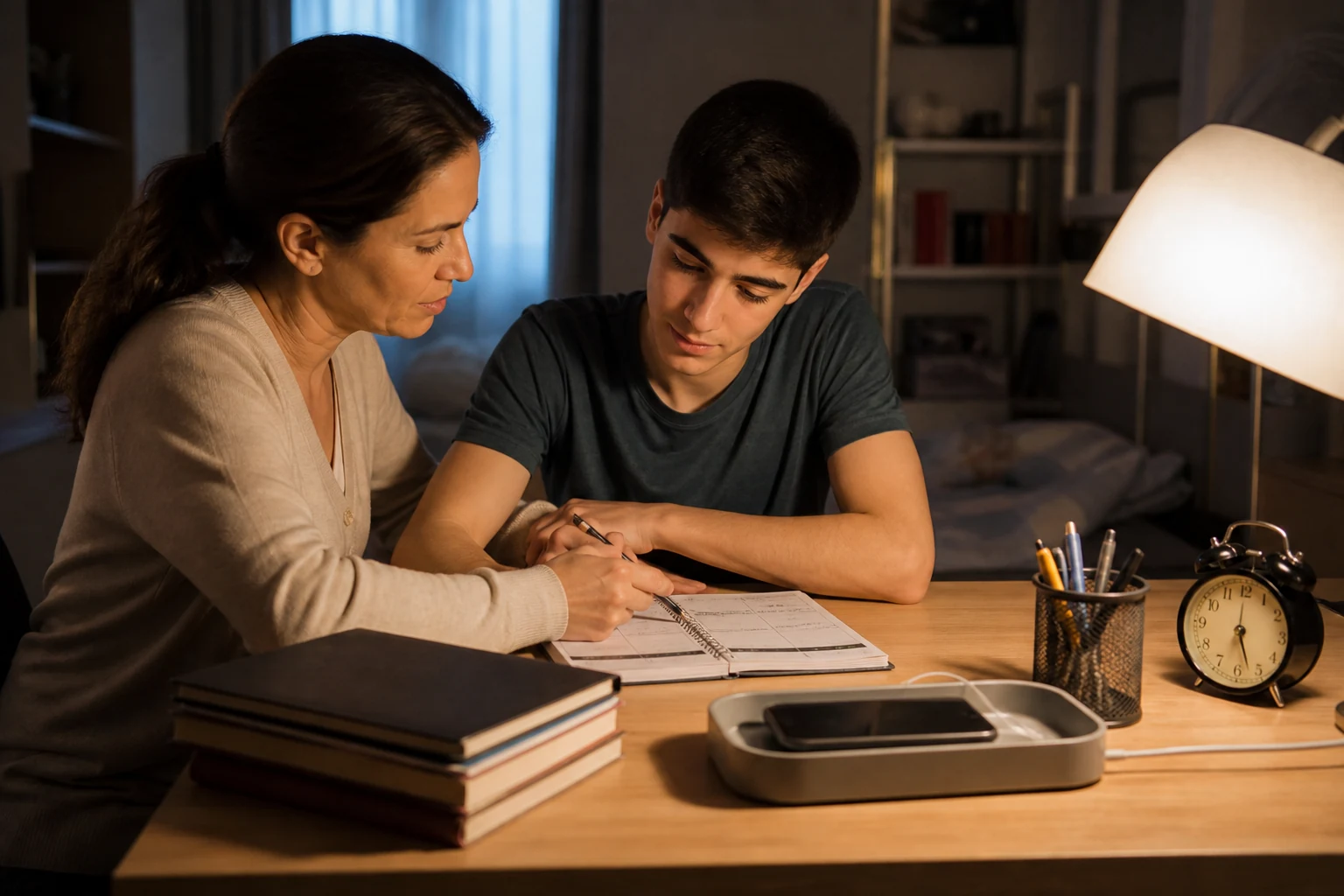
Begin with a simple seven-to-fourteen-day sleep diary. Record lights-out time rather than merely getting into bed, estimated sleep onset, night waking, wake time, naps, caffeine, evening screen use and morning energy. Do not use the diary to catch the teenager doing something wrong. It is a way to identify patterns. When the young person owns part of the record, the task becomes a personal experiment instead of surveillance.
Work backwards from the required school wake time. A 15-year-old who must rise at 6:45 needs an opportunity for 8 to 10 hours plus realistic settling time. Moving bedtime an hour earlier in one night may fail; shifting it by 15 or 20 minutes every few days can be more workable. Morning daylight, breakfast and daytime movement give the body clock useful signals that the day has begun.

A safe plan does not ask a teenager to deny adolescent biology; it builds small changes that protect sleep within the timetable the family actually has.
Build a weekly plan that starts with wake time
Wake time is often the most stable anchor. Keeping weekend wake time within roughly an hour of the school schedule can make Monday less severe. Repeatedly trading sleep for last-minute revision can undermine attention and memory. Move homework, showering, packing and other predictable tasks into earlier, visible blocks so that the final hour is not overloaded.
| Plan area | Decision made with the teenager | Sign to review after one week |
|---|---|---|
| Wake time | Realistic school-day and weekend range | Less snoozing and morning conflict? |
| Wind-down | Homework stop and 30-60 quiet minutes | Shorter time to fall asleep? |
| Phone | Notification cutoff and shared charging place | Fewer overnight screen checks? |
| Caffeine | A time boundary for coffee and energy drinks | Less evening restlessness? |
| Recovery | If needed, a short early daytime rest | Better energy without delaying bedtime? |
Call this a one-week trial. A step that does not work is information, not failure. The teenager should identify real constraints such as late training, a long commute, caring responsibilities or shift work. Adults should own barriers they can change, including transport, household noise and late family messages. Sleep should not become one more task that only the young person is blamed for.
Make screens, caffeine and the bedroom safer
Screens affect more than light exposure. An exciting game, social comparison, unfinished conversations and the expectation of a notification can all maintain alertness. Aim for a calmer 30 to 60 minutes before sleep. Instead of searching or confiscating a phone, create an overnight charging place that applies to the household. If the teen worries about missing an emergency, configure selected contacts to bypass silent mode together.
Energy drinks, coffee, strong tea, cola and some sport products contain caffeine. Read labels and remember that effects can last for hours. Using caffeine to cover a sleep debt may make the next night harder, extending the cycle. Alcohol, nicotine, cannabis or other substances are not safe sleep tools: feeling drowsy is not the same as obtaining restorative sleep, and these substances add separate health and safety risks.
Keep the room as dark, quiet and comfortably cool as practical. When the bed becomes a constant place for homework, gaming and conflict, the sleep cue can weaken. Room-sharing siblings may need an agreed lights-and-noise schedule. Do not charge a device under a pillow or in bedding; use a clear, ventilated surface away from the bed and follow the manufacturer's charging guidance.

A screen boundary is not a test of trust; it is a shared redesign of the system that repeatedly interrupts sleep at night.
Use family language that protects autonomy
“Put the phone down and go to bed” sees only the final five minutes of the problem. Talk during the day when nobody is exhausted. “Mornings seem hard; what is one change you would test for a week?” invites useful detail. If the young person's suggestion is safe, try it before imposing a more restrictive plan. Notice small gains such as using the first alarm, moving caffeine earlier or switching notifications off.
Adults need to model the rule. If parents use phones in bed, send late messages or shift the entire weekend schedule, the family plan loses credibility. Review outcomes beyond school grades: mood, enjoyment, sport recovery, injury risk and alertness while travelling all count. Secret room searches or all-night tracking can damage trust and may drive device use underground rather than improving sleep.
Act on warning signs instead of waiting
An occasional late night is not a disorder. Repeated loud snoring, witnessed breathing pauses, gasping, morning headaches, involuntary daytime sleep, persistent difficulty sleeping for several weeks or uncomfortable night-time leg sensations deserve assessment. If sleep change appears alongside a sudden fall in school performance, withdrawal, severe anxiety, persistent low mood or thoughts of self-harm, “go to bed earlier” is not an adequate response.
Stop driving, riding or operating hazardous equipment when drowsy and arrange safe transport. Do not begin sleeping tablets, melatonin or herbal products from online advice; age, other medicines and the underlying reason need review. Use local emergency services for severe breathing difficulty, fainting, immediate self-harm risk or another urgent threat. Safe sleep is not a promise of perfect nights. It is a family system that notices patterns, respects the teenager's voice and seeks timely help.
"Health Disclaimer: This content is provided for general informational purposes only and does not constitute personal medical advice, diagnosis, or treatment. Always seek the advice of a qualified health professional with any questions you may have regarding your health or your child's health."
Was this article helpful?
Fast Summary
- Ages 13-18 generally need 8-10 hours of sleep regularly; a 12-year-old is usually guided by the 9-12 hour range for ages 6-12.
- Start with wake time, morning light, daytime movement and school demands rather than focusing only on bedtime.
- Replace phone punishment with a shared overnight charging place, quiet notifications and an agreed emergency exception.
- Seek care for breathing pauses, loud habitual snoring, involuntary daytime sleep, persistent insomnia or major mood and function changes.
Tools for this Age
Checklist
Popular Topics
This topic at other ages· Sleep
Frequently Asked Questions
- 1
Show 3 moreCollapse
- 2
- 3
- 4
Editorial Note
This is general family education, not a diagnosis or individualized treatment. Do not start sleep medicines, melatonin or herbal products without a qualified clinician reviewing the young person's needs and other medicines. Stop driving, cycling or hazardous work if drowsiness is present. Use local emergency services for breathing emergencies, fainting, immediate self-harm risk or another urgent safety threat.