 lumiya.com.tr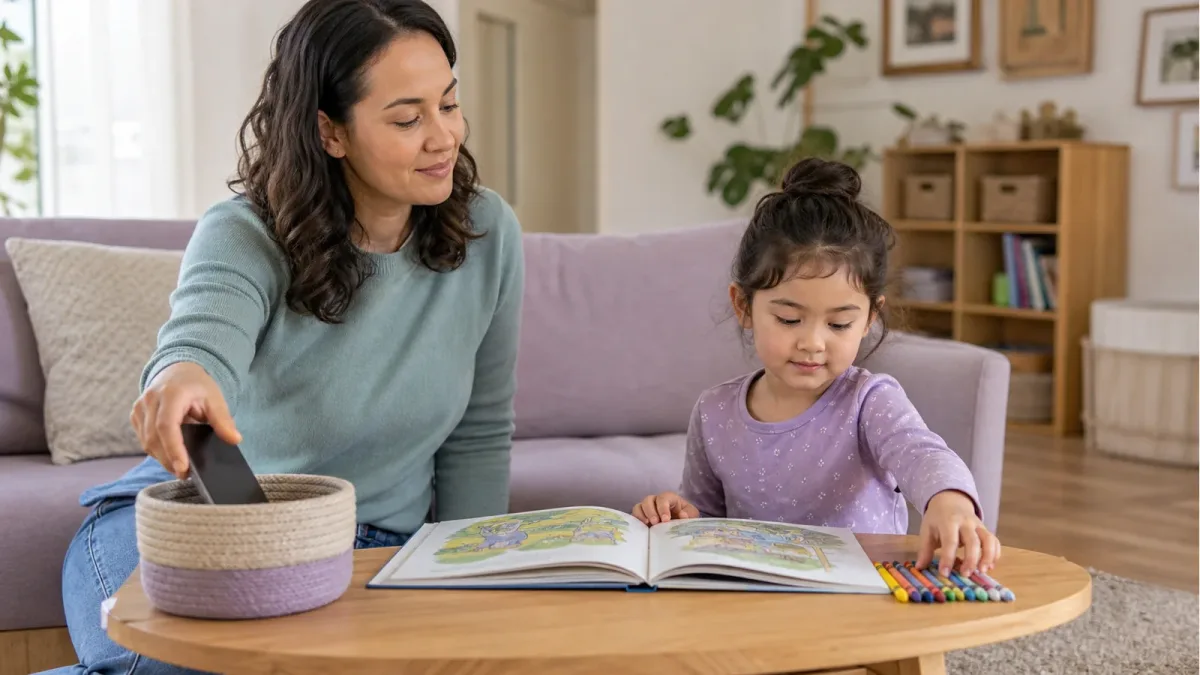
Phone Use at Ages 3-6: A Practical Family Plan
Manage phone use through content, context, co-use and what it displaces—not through minutes alone—and make stopping predictable for preschoolers.
A phone can be a camera, a map, a video-call window, a music player and a source of entertainment. To a three- to six-year-old, it is also a small object that adults check repeatedly and carry everywhere. That combination makes it unusually powerful. Interest in the phone does not by itself mean addiction. A more useful question is how the device is used, who is present and what part of childhood it may be replacing.
A family plan needs more than a daily minute target. Is the content understandable and free of manipulative ads? Is an adult close enough to talk about it? Does use happen during meals or just before sleep? Can the child move to blocks, pretend play or outdoor activity when it ends? The goal is not to make technology mysterious or forbidden. It is to prevent the phone from becoming the automatic answer to every wait, protest and moment of adult busyness.
Observe what the phone replaces for one week
Keep a brief seven-day record of the beginning, purpose and ending of each use. Write “adult started one short video while dinner was prepared; child stopped at the end and moved to drawing,” rather than simply “18 minutes.” Note sleep, outdoor movement, conversation, books, pretend play and opportunities to cope with boredom. A series of tiny sessions can shape a strong habit even when the daily total looks modest, especially if the phone appears at every meal, car ride or adult conversation.
Watch the child's state afterward. Can ordinary play hold attention, or does a rapid autoplay stream make slower activities feel unrewarding? Does the child repeat useful ideas, or imitate frightening behaviour and ask for advertised products? Separate exceptional days—illness, travel or an urgent appointment—from the ordinary plan. One difficult transition is not a diagnosis; a repeated pattern is information the family can use.

Screen time is only one signal. Content, context, co-use and the experiences displaced by the phone determine what the session means.
Let an adult choose the content and share the experience
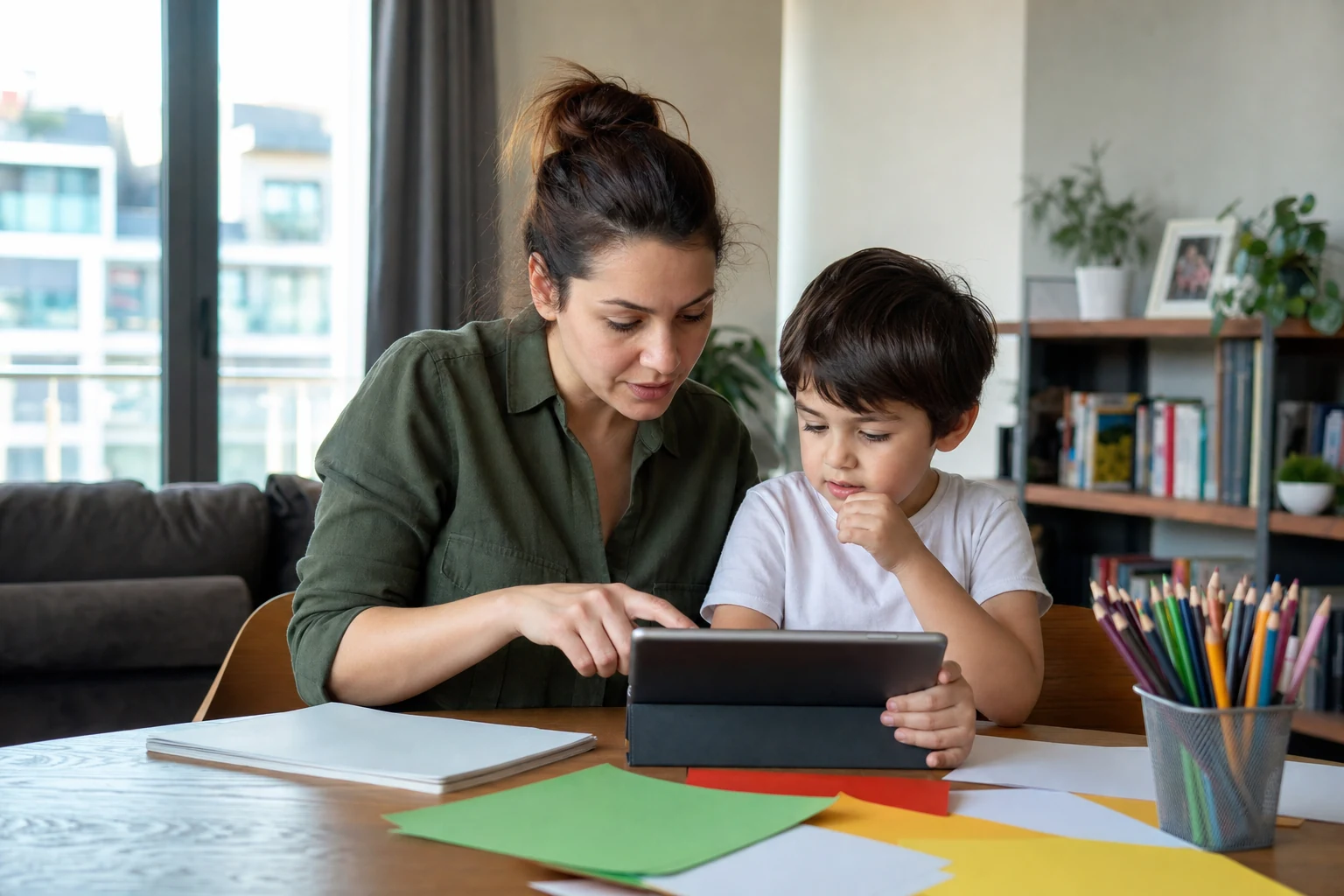
A preschooler cannot safely manage app stores, autoplay, advertising, external links, camera access or location permissions. An adult should open the intended item, disable unnecessary notifications and purchases, and check what appears after the first screen. “Made for kids” is not a complete quality test. Prefer short, understandable material without frightening imagery, endless reward loops or ads designed to look like play buttons.
Whenever possible, sit close and make the session social. Ask what the character is trying to do, name an emotion and connect the screen to the room: after a shape game, find shapes around the house; after an animal clip, move like the animal. Video calls can support real relationships when an adult helps the child greet, wait for a turn, show an object and say goodbye. Co-use does not mean quizzing continuously. It means the adult remains available to explain, notice discomfort and help the child turn digital input into real-world language and play.
Protect device-free routines and define a clear use window
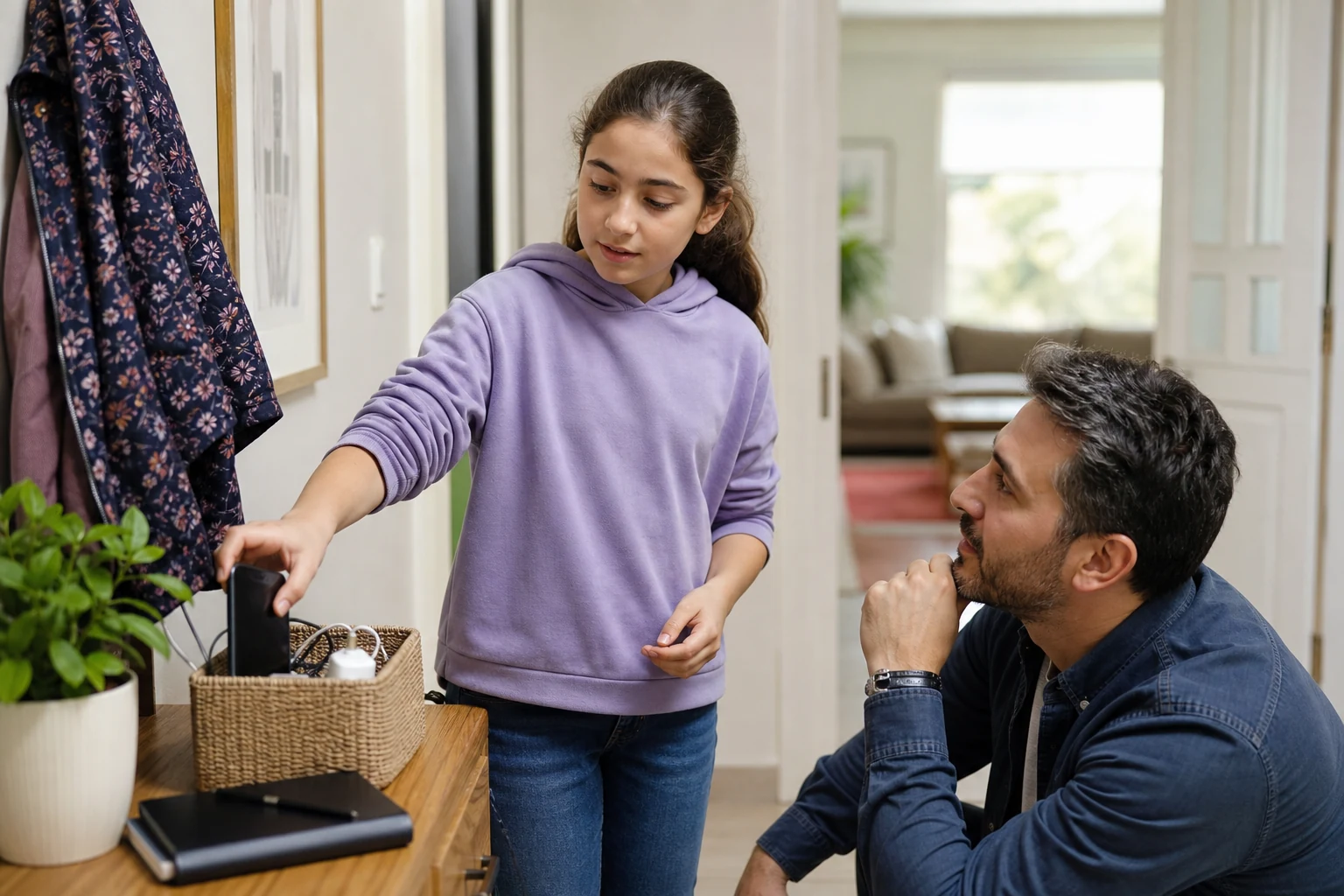
Meals, the final bedtime routine, toileting, an active tantrum and face-to-face family conversation should not be routinely filled with a phone. Choose a visible charging place or device basket outside the child's reach. The rule is stronger when adult phones go there too. If an adult must respond to something important, narrate the exception: “I am checking the message from the clinic, then the phone goes back.” That is more credible than telling a child not to look at screens while an adult scrolls nearby.
State the beginning and the ending before the phone comes out. “One short episode, then bath” is easier to understand than “for a little while.” A limited window when an adult can be present is usually clearer than fragments scattered through the day. Avoid making the phone the grand prize for eating or behaving; that can increase its status. Offer choice within the boundary: two approved clips, or two offline activities after the session.
| Everyday moment | Automatic phone response | More balanced family step |
|---|---|---|
| Dinner is being prepared | Start an endless video feed | Offer a small task, kitchen play or one preplanned short session |
| Waiting away from home | Open the phone at every pause | Pack stickers or a small book; keep the phone as a planned backup |
| Video call | Leave child alone with the device | Adult supports greeting, turn-taking and a clear goodbye |
| Tantrum | Use a screen to stop crying immediately | Secure safety and help regulation; do not make the phone the bargain |
| Bedtime | Let a video continue in bed | Phone stays in the shared area; use the same book-and-talk ending |
Teach the ending before conflict starts
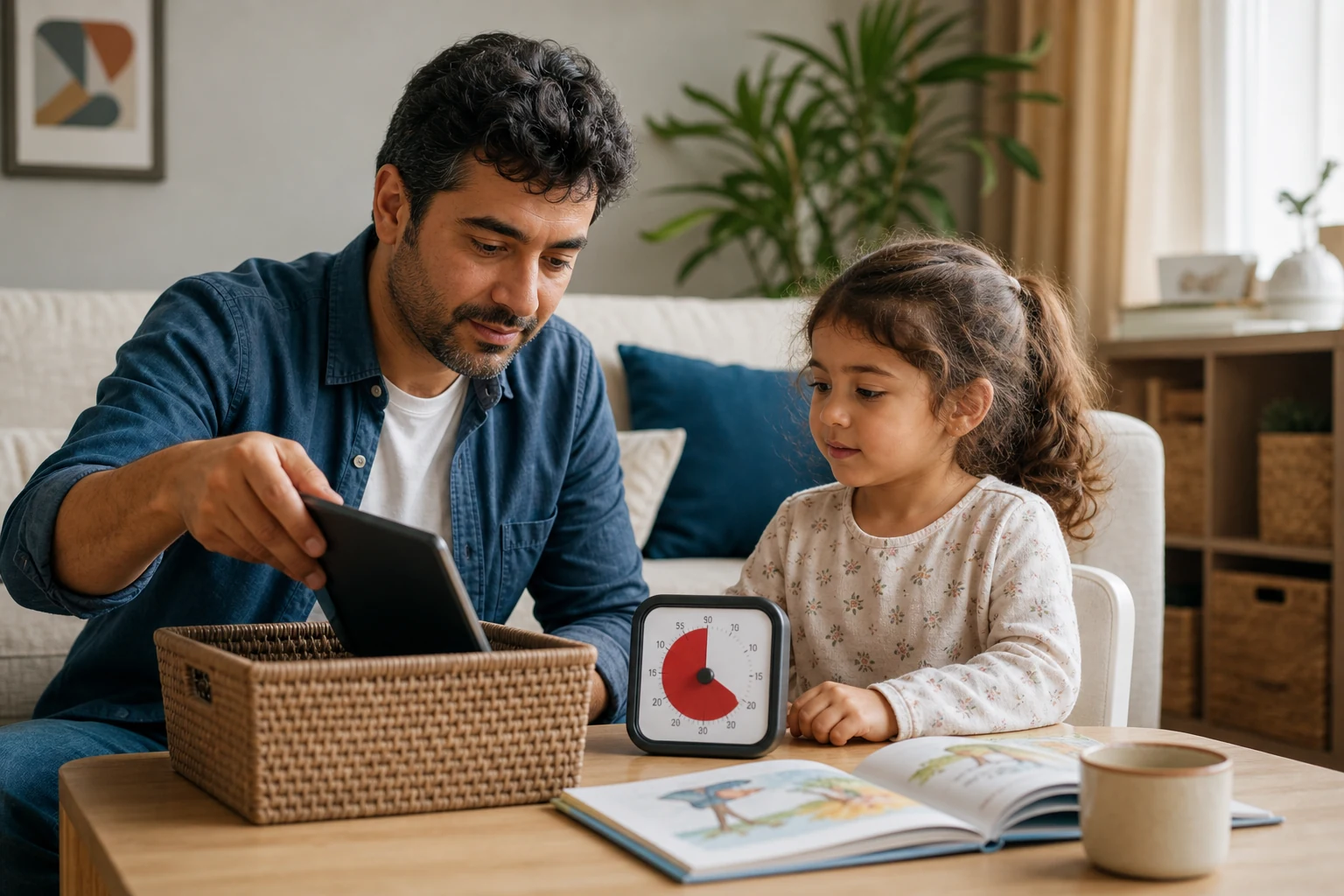
Preschoolers often struggle to leave an absorbing activity; this is not unique to phones. Give a five-minute and one-minute warning, and use a visual timer if helpful. Stop at a natural endpoint—the end of an episode, the last photo or a completed game round—rather than in the middle of a task. Name the next action: “Phone in the basket, then red crayons or blue crayons?” A concrete transition is easier to follow than “Go do something else.”
If the child cries, acknowledge the feeling: “You wanted more; stopping is hard.” Keep the ending brief and do not reopen the negotiation during the protest. Avoid snatching, shaming or threatening to throw the phone away. The adult can hold the device and place it safely out of reach. If hitting or throwing begins, protect bodies and property first. When calm returns, rehearse the next ending. Notice the exact skill: “You heard the timer, put the phone in the basket and chose your book.”

A child's disappointment does not prove that the boundary is harmful. The adult's job is to carry the feeling while keeping the plan calm and predictable.
Model the rule and review the family plan each week
Children learn a phone rule by watching adult attention. If the device receives the first greeting at home, appears throughout dinner or interrupts the child mid-sentence, “phones only when needed” will not feel true. Adults can silence nonessential notifications, park devices during meals and look up when someone speaks. The aim is not perfect behaviour. It is a visible practice of choosing when technology deserves attention.
Once a week, ask four questions: Did the phone push aside sleep or movement? Could the child talk and play with what was viewed? Are endings becoming easier? Did adults follow the shared rules? Change one element at a time—move use away from bedtime, turn off autoplay or make the table device-free—so the family can see what helps.
A few hard endings are expected. Seek support if phone use delays sleep for weeks, markedly reduces active or imaginative play, interrupts language and face-to-face contact, or makes ordinary preschool routines unmanageable. Bring the seven-day notes to the pediatrician or developmental professional. The purpose is not to blame the child or the parent; it is to restore room for sleep, movement, conversation, play and secure connection.
"Health Disclaimer: This content is provided for general informational purposes only and does not constitute personal medical advice, diagnosis, or treatment. Always seek the advice of a qualified health professional with any questions you may have regarding your health or your child's health."
Was this article helpful?
Fast Summary
- Minutes matter, but content, context, co-use and what the phone displaces matter too.
- A preschooler should not manage apps, autoplay, ads or permissions alone; an adult selects and stays nearby.
- Meals, bedtime, active play and family conversation need protected device-free space.
- Seek pediatric guidance when phone use persistently disrupts sleep, play, movement, language or relationships.
Tools for this Age
Checklist
Popular Topics
This topic at other ages· Digital Life
Frequently Asked Questions
- 1
Show 3 moreCollapse
- 2
- 3
- 4
References & Further Reading
Editorial Note
This guide provides general parenting education and does not replace individualized medical or developmental advice. Speak with your child's pediatrician or developmental professional if phone use persistently disrupts sleep, face-to-face communication, active play, preschool functioning or family relationships; if safe limits cannot be maintained; or if content repeatedly frightens the child.
Health Information
The content and guidance in this article are prepared solely to inform parents, based on current medical literature and scientific research. The information provided here does not, in any way, replace direct medical diagnosis, treatment, or professional medical advice. If you have any concerns or doubts about your baby's health or development, please consult a pediatrician or your healthcare provider without delay.