 lumiya.com.tr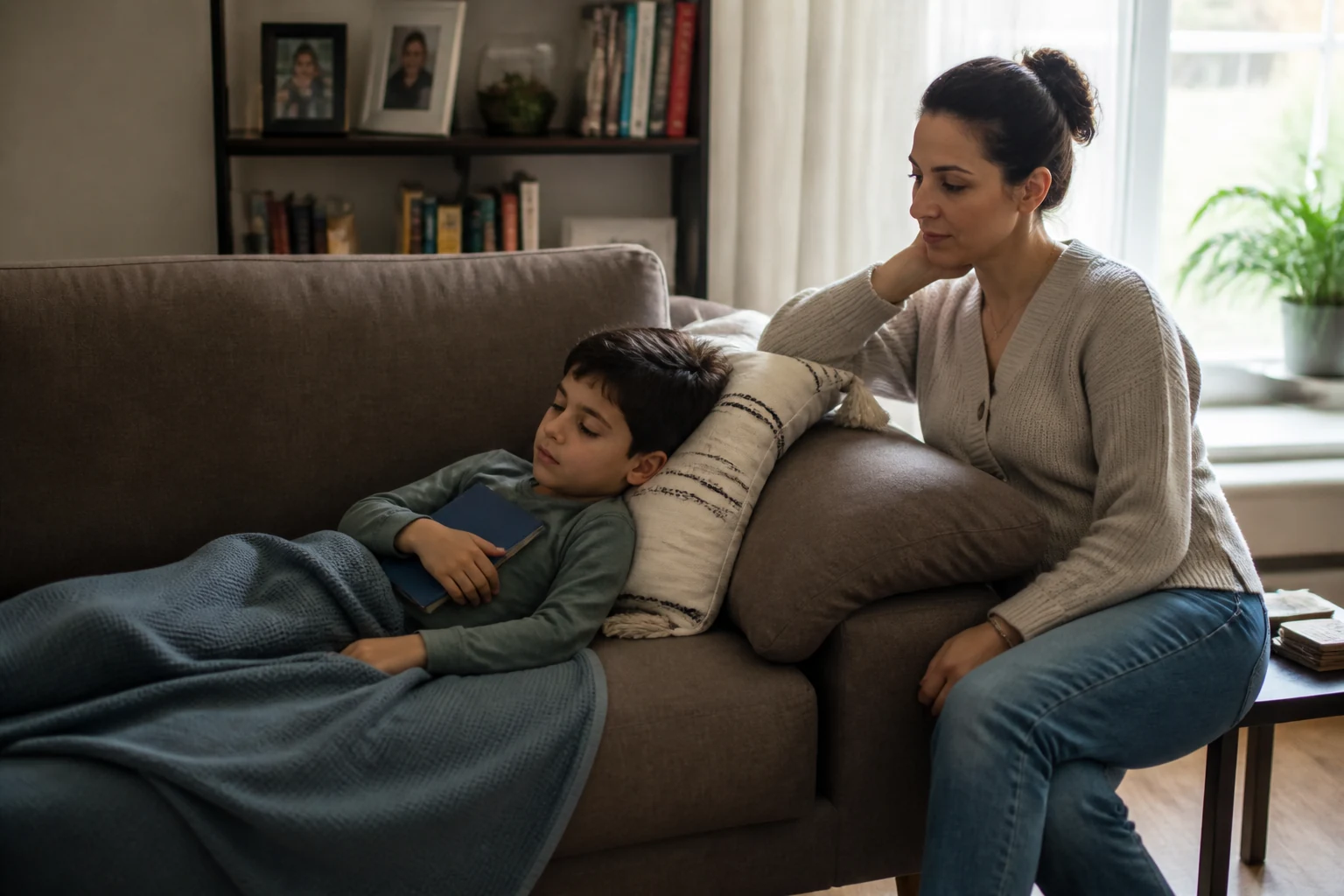
Calm nights, gentle mornings
Daytime Sleepiness in 6–9-Year-Olds
Learn how to recognize when your child needs a short rest, how to support healthy daytime function, and when to seek help for persistent tiredness in kids aged 6–9.
General Information: General information only; it may vary from child to child. Talk to your doctor or a specialist before making decisions.
In short
- Daytime sleepiness in 6–9-year-olds is usually temporary and tied to schedule changes, illness, or disrupted night sleep.
- Occasional naps or quiet breaks can restore energy, but forcing sleep can backfire.
- Watch for patterns: tiredness after late nights, early mornings, or high-energy days.
- If tiredness is persistent or severe, consult a healthcare provider to rule out underlying issues.
Lumiya Editorial TeamBased on 4 sourcesOur editorial standards
When your 6–9-year-old starts yawning at the dinner table or dozing off during homework, it’s easy to wonder: Is this normal? Should I insist on a nap? The answer isn’t one-size-fits-all.
Why kids in this age group get sleepy during the day
Children aged 6–9 are still building stamina. A late bedtime, an early wake-up for soccer practice, or even a week of rainy afternoons indoors can leave them dragging.
Physical activity plays a role too. A child who spends the morning running around the playground may crash harder by 3 p.m. than one who had a quieter morning.

Daytime sleepiness is often a signal, not a flaw. It doesn’t always mean your child needs a nap—sometimes it means they need a calmer afternoon, an earlier bedtime, or a chance to decompress without screens.
When tiredness isn’t the whole story
Not every yawn or droopy eyelid points to a nap. Some children resist sleep when they’re overtired because their bodies are too wired to settle.
Physical cues matter more than the clock. Rubbing eyes, zoning out during conversation, or slumping over a book are clearer signs than a specific hour.
The role of naps and quiet breaks
Naps aren’t mandatory for every 6–9-year-old, but they can be restorative when needed. A 20–30 minute nap after school can sharpen focus for homework, while a longer nap risks pushing bedtime too late.
Schools often build rest time into the schedule, whether through designated nap periods or quiet reading time.
How to offer a rest opportunity without pressure
Start by setting the stage: dim the lights, reduce noise, and remove screens. A short story or soft music can help a child relax without demanding sleep.
Timing matters. A nap too late in the afternoon can interfere with nighttime sleep, while one too early may not restore enough energy. Aim for a window between 1 p.m. and 3 p.m.
Night sleep and daytime function: the invisible link
Nighttime sleep sets the stage for the next day. If your child consistently struggles to fall asleep or wakes frequently, daytime tiredness is likely to follow.
Travel disrupts routines too. Jet lag, unfamiliar beds, or excitement can shorten nighttime sleep, leaving children vulnerable to afternoon crashes.
What to watch for beyond tiredness
Most daytime sleepiness in 6–9-year-olds is temporary and tied to external factors. But if tiredness is persistent, severe, or accompanied by other changes—like snoring, breathing pauses, or unusual movements—it’s worth discussing with a healthcare provider.
A week in the life: tracking patterns without overreacting
Use this table to observe how nighttime sleep, daily activities, and rest opportunities interact.
| Previous night context | Morning function | Time and reason for tiredness | Nap/quiet break choice | Approximate outcome | Evening effect | Next adjustment |
|---|---|---|---|---|---|---|
| Bedtime at 8:30 p.m., woke once | Energetic, ate breakfast | 2:45 p.m., after soccer practice | Quiet break with audiobook | Stayed awake for homework, bedtime at 8:15 p.m. | Calmer evening, no resistance to bedtime | Keep early bedtime after active days |
| Late dinner at 8 p.m., screen time until 9 p.m. | Grumpy, slow to start | 1:30 p.m., after school | No nap, quiet drawing | Fell asleep during homework, bedtime at 9:30 p.m. | Fussy at bedtime, woke once | Move dinner earlier, reduce screens before bed |
| Slept in until 7:30 a.m. (usual wake 6:30) | Quiet, less chatty | 3:15 p.m., after early morning | 20-minute nap | Refreshed for dinner, bedtime at 8:45 p.m. | Smooth bedtime routine | Avoid late wake-ups on school days |
| Overnight cough, woke twice | Drained, skipped breakfast | 2:00 p.m., during recovery | 30-minute nap | Ate dinner, bedtime at 8:30 p.m. | Slept through the night | Monitor illness, offer fluids and rest |
| Weekend, no school, late bedtime | Playful but scattered | 4:00 p.m., after park visit | Quiet break with puzzles | Bedtime at 9:15 p.m. | Fell asleep easily | Keep weekend routines flexible but structured |
| Early soccer game at 7 a.m. | Irritable, hard to wake | 1:00 p.m., after school | 25-minute nap | Focused for homework, bedtime at 8:20 p.m. | Calmer mood | Plan earlier bedtimes after early wake-ups |
| Screen time until 10 p.m. | Yawning, low energy | 2:30 p.m., after school | No nap, quiet music | Fell asleep during reading, bedtime at 9:45 p.m. | Fussy at bedtime | Reduce screens 1 hour before bed |
Practical ways to support your child’s energy
Start with small, consistent habits. A predictable bedtime routine—like a bath, story, and lights out—helps signal to your child’s body that it’s time to wind down.
Physical activity matters too. Kids who move during the day tend to sleep better at night, but timing is key. Avoid high-energy play close to bedtime, as it can leave them wired.
When to adjust the routine
If your child is consistently tired at the same time each day, experiment with small changes.
School demands can also play a role. If homework or after-school activities are leaving your child drained, talk to the teacher about workload or timing.
Avoiding common pitfalls
One of the biggest mistakes is treating sleep as a reward or punishment.
Another pitfall is assuming every tired child needs a nap. Some children are naturally low-energy in the afternoons and recharge through quiet play. Others may be emotionally drained rather than physically tired.
Quiet breaks over naps: a flexible approach
Not every child will nap, and that’s okay. Quiet breaks offer the same benefits without the pressure to sleep. They can include activities like coloring, listening to music, or even a short walk outside.
If your child’s school has a rest time, ask how it’s structured. Some classrooms allow children to read or draw if they don’t want to sleep.
When to seek help
Most daytime sleepiness in 6–9-year-olds is temporary and tied to schedule changes or illness.

Sleep-disordered breathing, such as loud snoring or breathing pauses, can disrupt sleep quality even if your child seems to sleep through the night. If you notice these signs, talk to your pediatrician.
Red flags to watch for
- Falling asleep in unsafe situations (e.g., during car rides or while standing)
- Persistent loud snoring or gasping during sleep
- Unusual movements during sleep (e.g., frequent kicking or jerking)
- Severe pain, breathing difficulty, or bluish color around lips
- Reduced responsiveness or confusion
- Injury or sustained impairment at school or home
- Major mood or behavior changes
- Caregiver fear of losing control or any immediate danger
If any of these occur, contact your local child-health provider or seek emergency care based on severity.
Final takeaways for families
Daytime sleepiness in 6–9-year-olds is usually a temporary response to schedule changes, illness, or disrupted night sleep. Occasional naps or quiet breaks can restore energy, but forcing sleep can backfire.
General Information: This content offers general information based on expert sources. Every child, family and situation is different, so what is described here may vary from person to person. Talk to your doctor or a qualified specialist before making decisions about your child.
Was this article helpful?
This topic at other agesNot enough sleep & daytime tiredness
Tools for this Age
- Baby and child sleep scheduleHow much should your child sleep in 24 hours, and when should bedtime be? Calculate it from official guidance and compare it with your own log.
- Screen time by ageSee how much screen time a day your country's official body recommends at your child's age; add daily use to compare it with the advice.
- What temperature is a fever in children?See whether the temperature you measured counts as a fever according to your country's official health source, when to get help at your child's age and the warning signs.
- Child Height Predictor & Genetic Target Height CalculatorHow tall will your child be as an adult? Enter both parents' heights to calculate the pediatric mid-parental target height and expected adult height range using the Tanner and AAP formulas.
Checklist
Popular Topics
Frequently Asked Questions
- 1
- 2
- 3
- 4
Editorial Note
Daytime sleepiness can sometimes signal an underlying issue. If your child shows persistent loud snoring, breathing pauses, unusual movements, severe pain, breathing difficulty, bluish color, reduced responsiveness, injury, or sustained school or family impairment, seek timely local child-health or emergency support.