
 lumiya.com.tr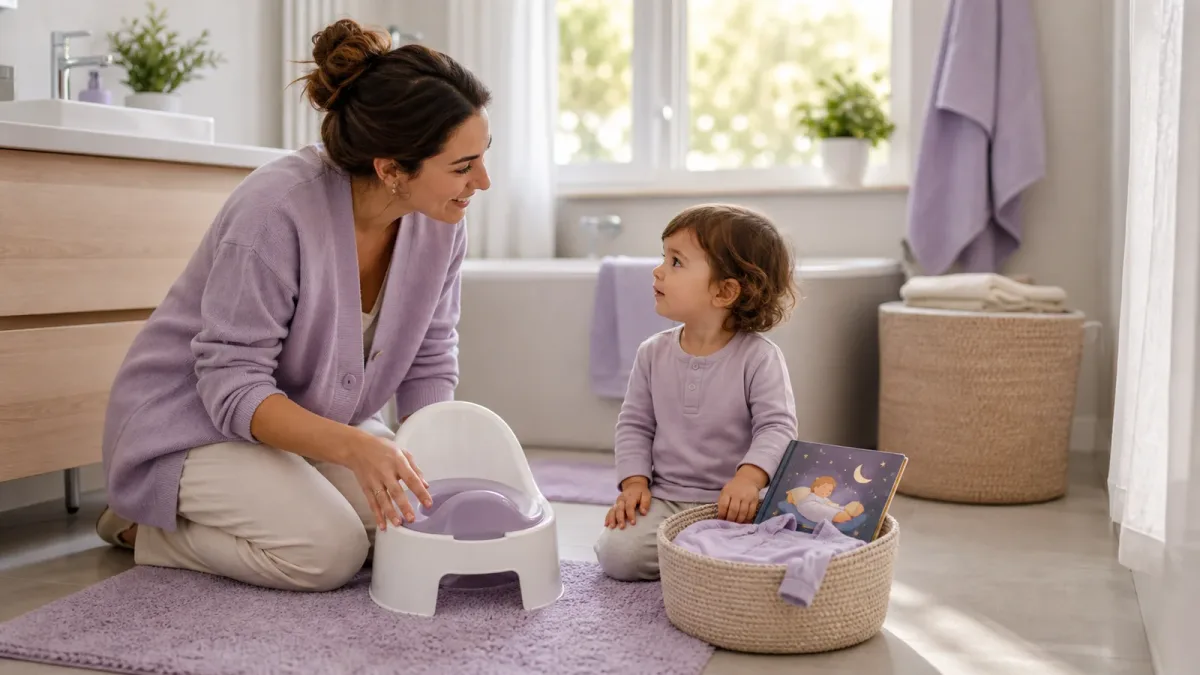
Small habits, big steps
Wetting at Ages 1–3: A Calm, Safe Potty-Training Guide
Separate daytime accidents from nighttime wetting, follow readiness rather than a deadline, and build a shame-free routine with clear signs for seeking health advice.
General Information: General information only; it may vary from child to child. Talk to your doctor or a specialist before making decisions.
In short
- Accidents and wet nights are usually part of learning between ages one and three.
- Daytime toilet skills and nighttime dryness do not have to arrive together.
- Follow readiness and avoid pressure, shame or using water as a reward or punishment.
- Seek pediatric advice for pain, fever, unusual thirst or a clear loss of an established skill.
Lumiya Editorial TeamBased on 4 sourcesOur editorial standards
Our tool for this topic
Between one and three, a child is learning a surprisingly long sequence: notice a full bladder, understand the sensation, pause play, reach the bathroom, manage clothing, sit safely and wait. Those steps do not mature on the same day. A puddle beside the sofa or a wet diaper in the morning is therefore information about an unfinished skill, not proof that a toddler is lazy, defiant or “behind.” The most helpful starting point is to remove blame from a body process the child cannot yet manage reliably.
Read this alongside the broader toilet-learning guidance and principles of shame-free support.
Part of a calm routine

Evidence context
Toilet skills do not develop on one timetable; noticing readiness and avoiding pressure supports a child’s participation.
A calm plan after a mishap
These three steps centre care, learning and safety rather than punishment.
-
Stay calm
Use a short sentence that accidents can happen; avoid shaming comments.
-
Clean up together
Offer one age-appropriate task, then return to handwashing and dry clothes.
-
Plan the next try
Notice hunger, tiredness or toilet cues and choose the next opportunity together.
Families often use “bedwetting” for any wet night, but a toddler’s nighttime wetness should not be given an adult-sounding diagnosis. Many children begin to recognize daytime urges while still sleeping through a full bladder. U.S. families can also feel pressure from preschool plans, relatives or social media schedules. A calendar can help organize practice, but it cannot make the nervous system mature. The goal is not to remove diapers by a fashionable birthday; it is to protect health, readiness and trust while the skill emerges.
Treat daytime learning and nighttime dryness as different skills
During the day, a child is awake and can connect a body signal with an action. At night, bladder capacity, sleep arousal and overnight urine production all matter, and none can be commanded by trying harder. A child who uses underwear during the day may need training pants or a diaper at night for months or longer. That does not erase the daytime achievement.
When the morning diaper is dry repeatedly and the child is interested, you can try sleeping without it. Prepare a mattress protector and spare pajamas without turning the experiment into a test. If wet nights return, say that the body needs more time and use protection again. Carrying a half-asleep toddler to the toilet may keep sheets dry on a particular night, but it does not show that the child has learned to wake to a bladder signal.

Nighttime dryness is not a behavior grade; it reflects the combined maturation of sleep, bladder and nervous-system signals.
Look for readiness instead of chasing a date
Readiness appears as a cluster. A child might stay dry for a short stretch, dislike a wet diaper, recognize words for pee and poop, follow one-step directions, sit and rise safely, or signal before or just after going. Clothing independence is useful but not required; asking an adult for help is itself a skill. Interest can also come and go. A toddler who sits happily today and refuses tomorrow is not manipulating the family.
| What you notice | A useful response | What to avoid |
|---|---|---|
| Diaper stays dry for a while | Offer the potty at a calm transition | “You must never have an accident now” |
| Child pauses or hides to poop | Name the body signal simply | Interrogating or shaming |
| Child refuses the potty | Pause and try another week | Holding the child on the seat |
| Dry by day, wet at night | Keep nighttime protection | Comparing with siblings |
| Child reports an accident | Thank them for telling you | Acting disgusted |
Keep the potty accessible and stable, or use a secure toilet insert with firm foot support. Offer a brief sit after waking, after meals or before the bath—times that already have a natural transition. An invitation should have an exit: the child can get up. Notice steps such as walking to the bathroom, trying to lower pants, sitting briefly and washing hands, not only urine in the potty.
Build a routine that keeps accidents small
Simple clothing, reachable spare underwear and a washable mattress cover reduce family strain. After an accident, help the child become warm and dry first. Then invite one small contribution: place wet clothes in a hamper or choose clean pajamas. This is self-care practice, not repayment. A parent’s face and tone can communicate more than a careful sentence, so avoid grimacing, angry sighs or jokes that may teach the child to hide body signals.
Childcare providers, co-parents and relatives should use the same basic words and expectations. If one adult forces hourly sitting while another ignores every signal, the toddler receives a confusing lesson. Agree on respectful names for body parts and on a short response to accidents. Praise communication and effort rather than giving a large prize for every dry trip; an elaborate reward chart can turn a maturing body function into a performance.

“An accident happened. You are safe, and we can clean it together” protects both the practical boundary and the relationship.
Consider fluids, sleep and bowel comfort together
Do not dehydrate a toddler to protect the bed. Spread normal drinks through the day, avoid an exceptionally large drink immediately before sleep, and offer the potty at the end of the bedtime routine. Fluid needs change with heat, activity and health; a rigid restriction belongs only in an individualized plan from a clinician. Water should never become a bargaining chip.
Constipation can complicate toileting. Hard or painful stool, several days of withholding, belly pain, stool smears or fear of the toilet deserve attention. A child expecting pain may hold both stool and urine. Regular meals, age-appropriate fiber, movement and fluids support bowel comfort, but persistent constipation needs pediatric advice rather than an improvised laxative or enema.
A predictable sleep routine helps the entire household, though it cannot force overnight control. Keep the route to the bathroom clear and use a dim night-light if needed. If the child does not wake independently, nighttime “training” can wait. A protected mattress and prepared clothing let adults respond quietly and return to sleep without making the child responsible for the family’s frustration.
Know the signs that deserve health advice
Accidents are expected in early learning, but some patterns should not be dismissed as stubbornness. Contact a pediatric clinician for pain or crying with urination, fever, blood in urine, a marked odor, very frequent small urinations, intense thirst, weight loss, low energy or significant constipation. A child who was reliably dry and suddenly begins wetting often also deserves a conversation about illness, family changes and stress.
Children with communication, movement, sensory or developmental differences may learn the same sequence with different supports. A picture schedule, adapted seat, predictable sensory routine or more hands-on help can make the bathroom accessible. Different support is not failure. The pediatrician and relevant developmental professionals can help the family choose reasonable goals.
Healthy toilet learning is broader than dry sheets. It includes a child who can report a body signal without fear, ask for help and know that an accident does not change how the family sees them. When adults stay calm, consistent and flexible, daytime mastery and nighttime maturation can proceed on their own schedules—and the bathroom remains a place for learning self-care, not fighting for control.
General Information: This content offers general information based on expert sources. Every child, family and situation is different, so what is described here may vary from person to person. Talk to your doctor or a qualified specialist before making decisions about your child.
Was this article helpful?
This topic at other agesDaily Life & Self-Care
Tools for this Age
- Potty training chartWhen to start and how to prepare? A roadmap by age, a daily routine and a printable reward chart.
- Baby percentile calculatorWhere does your child's weight and height sit among children the same age? See it in seconds on the WHO growth curves.
- Baby and child sleep scheduleHow much should your child sleep in 24 hours, and when should bedtime be? Calculate it from official guidance and compare it with your own log.
- Baby milestones by monthCheck off what most children your child's age can do, and talk about the rest with your doctor.
- Baby vaccine schedulePick your country, enter the birth date, and see the official schedule as your own dates.
- Baby teething chart: order and timelineEnter the date of birth to see the typical eruption window of all 20 baby teeth, the next tooth and the teeth already through — on one screen.
Checklist
Popular Topics
Frequently Asked Questions
- 1
- 2
- 3
- 4
Editorial Note
This article offers general developmental and parenting information, not diagnosis or individual treatment. Seek pediatric care for painful urination, fever, blood in urine, strong-smelling urine, unusual thirst, weight loss, or a sudden return of frequent wetting after established dryness.
Other situations in this topic
Dealing with a different side of the same topic? Each situation has its own guide.