 lumiya.com.tr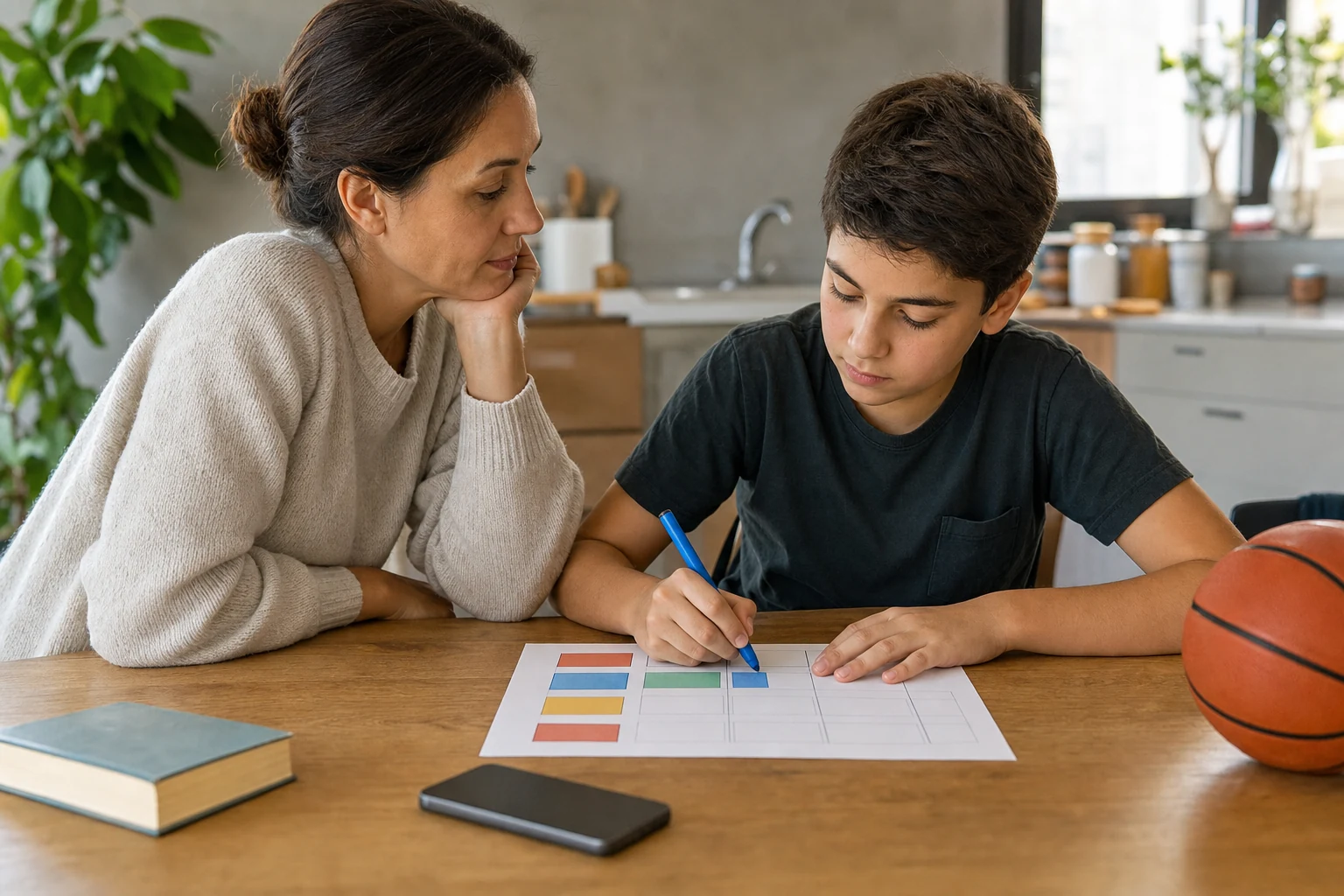
Screen Time for 9–12 Year Olds: A Parent’s Practical Guide
How to balance screen use for 9–12 year olds without rigid limits. Learn what matters most, how to set a family plan, and when to seek help.
Why minutes alone don’t tell the whole story
Screen time isn’t just about how long a child stares at a device. For 9–12 year olds, what matters most is the purpose, the context, and what it replaces. A video call with a grandparent is different from a late-night gaming session, and both are different from scrolling through social media.
Use this plan alongside the broader screen-time guidance and the principles of evidence-informed parenting.
Build the screen plan together


Screen time is only one slice of a child’s day. The goal isn’t to eliminate screens but to make sure they don’t crowd out sleep, movement, learning, or relationships.
For this age group, screens often serve practical needs: homework research, messaging with classmates, or creative projects. But they can also displace physical activity, family meals, or unstructured play. The key is to notice the trade-offs and adjust as a family.
Building a family plan that fits your child
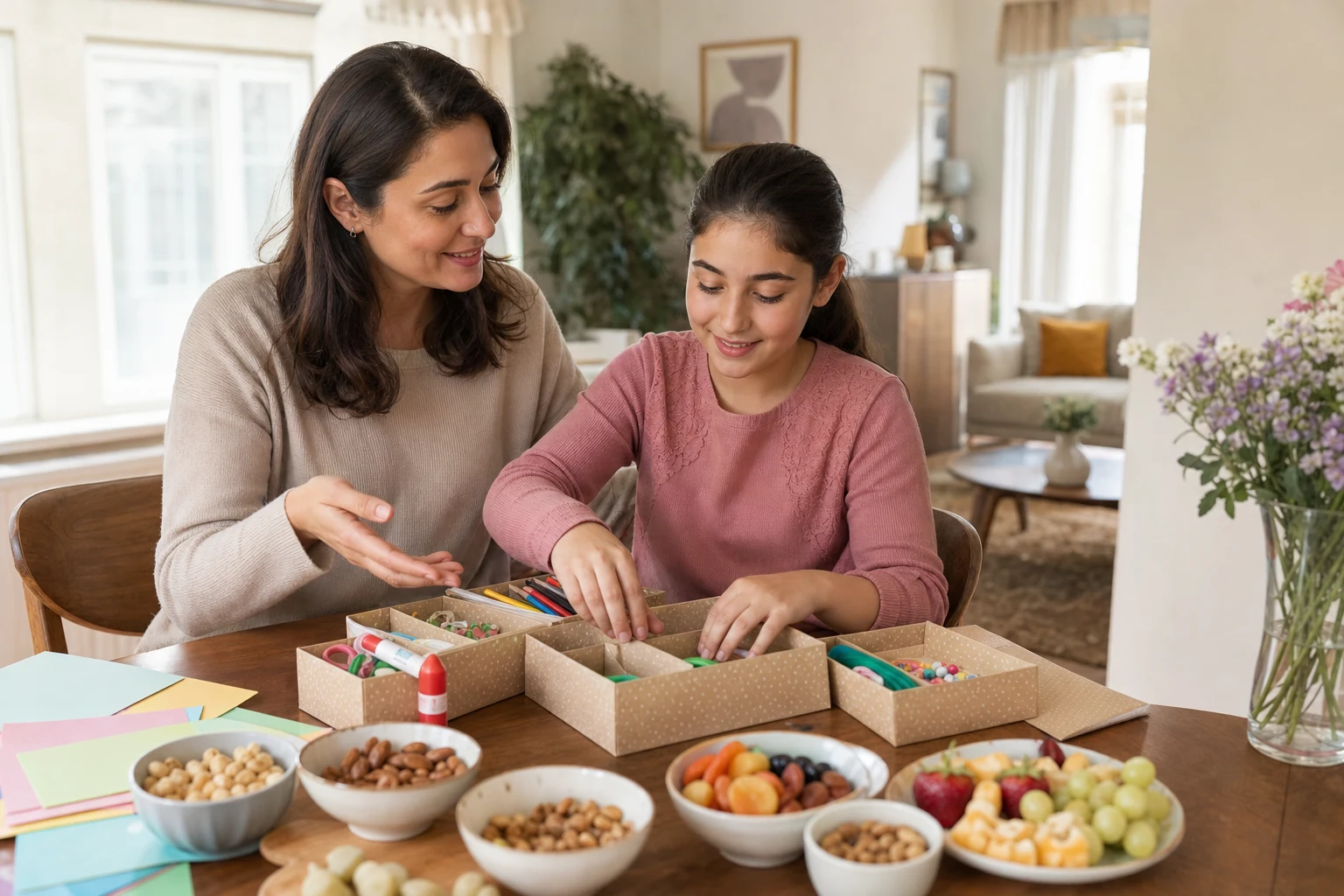
A family media plan isn’t a one-size-fits-all rulebook. It’s a living agreement written with your child, not for them. Start by listing the activities that matter most: homework, messaging friends, gaming, video watching, and creative projects. Then, decide together when and where screens are allowed.
Shared devices can complicate things. If the family tablet is the only one available, it’s harder to enforce boundaries. Consider staggered access or rotating use so each child gets dedicated time. For multilingual families, screen time might include language learning apps or video calls with relatives abroad—these can be valuable parts of the plan.
Privacy and purchases are also worth discussing. Talk openly about keeping personal information private and avoiding in-app purchases without permission. Set clear expectations about what happens if a child accidentally makes a purchase or shares something they shouldn’t. The goal is to build trust while setting reasonable limits.
Notifications, transitions, and stopping cues
Notifications are designed to grab attention, and children are especially sensitive to them. Turning off non-essential alerts can reduce distractions during homework or family time. For transitions between activities, use visual or auditory cues—like a five-minute warning or a chime—to help your child shift focus without frustration.
Stopping cues are just as important. A timer, a visual countdown, or a shared agreement about when to pause can prevent power struggles. If your child struggles to stop, review the plan together. Sometimes, the issue isn’t the screen but the transition itself. Adjust the routine or the cue to make it easier.
For children with disabilities or neurodiverse needs, transitions can be particularly challenging. Work with your child to find cues that match their sensory preferences—whether it’s a gentle vibration, a color-coded timer, or a social story that explains the change.
When screen use interferes with daily life
Not every conflict means there’s a problem. Ordinary disagreements about screen time are normal. But if screen use starts to interfere with sleep, school, or safety, it’s time to act.
If you notice these signs, start by reviewing your family plan together. Small, agreed-upon changes often work better than sudden restrictions. For example, moving screens out of the bedroom or setting a shared charging spot can improve sleep habits. If concerns persist, your pediatrician can help assess whether additional support is needed.
Movement, learning, and relationships in balance
The World Health Organization recommends that children aged 5–17 get at least an hour of moderate-to-vigorous physical activity daily. Screen time can easily eat into this time, especially if it replaces outdoor play or sports. Encourage your child to balance screen use with active hobbies, whether it’s biking, dancing, or team games.
Learning isn’t limited to schoolwork. Creative screen use—like coding, art apps, or educational videos—can support curiosity and skill-building. But passive scrolling or repetitive games may not offer the same benefits. Talk with your child about what they’re doing online and why. If they’re using screens for learning, celebrate that.
Relationships matter too. Face-to-face time with family and friends builds social skills that screens can’t replace. Set aside device-free hours during family meals or outings. For multilingual families, screen time can include video calls with relatives who speak another language—these moments strengthen cultural connections.
A one-week review to spot patterns
Use this table to track your child’s screen use for a week. The goal isn’t to judge but to notice patterns and make small changes together.
Plan foundations
| Activity | Purpose | Context | What it displaced | Stopping response |
|---|---|---|---|---|
| Math homework video | Clarify a concept | Kitchen table after school | Quiet reading time | Stopped when timer rang |
| Group chat with friends | Social connection | Bedroom before dinner | Family conversation | Stopped when asked |
| Racing game on tablet | Fun and challenge | Living room after dinner | Outdoor play | Stopped when asked |
| Video call with cousin | Family connection | Weekend morning | Outdoor bike ride | Stopped when asked |
Monitoring and adjustment
| Activity | Safety or privacy issue | Child reflection | One small change |
|---|---|---|---|
| Math homework video | None | "I liked the video but got distracted by comments" | Try a different video source next time |
| Group chat with friends | None | "I forgot to mute my mic" | Practice muting before calls |
| Racing game on tablet | None | "I wanted to try one more race" | Set a pre-agreed play limit |
| Video call with cousin | None | "I missed my cousin" | Schedule a follow-up call |
After the week, sit down with your child to review the table. Ask what they noticed and what they’d like to change. Small, agreed-upon adjustments often work better than top-down rules.
Scope of the evidence: The WHO figures below cover adolescents aged 11–17 worldwide. They overlap with this guide only at ages 11–12 and should not be read as a direct measure of children aged 9–10.
Insufficient physical activity among adolescents aged 11–17
This is not a screen-time measure; it is global movement context for judging daily balance
Evidence perspective
Every age group should limit sedentary time; any amount of physical activity is better than none.
Special situations: separated homes, limited devices, and school requirements
In separated homes, screen time rules can clash between households. Work with your co-parent to align expectations where possible, but allow flexibility for each home’s routines. For example, one parent might allow gaming on weekends while the other prefers outdoor activities. The goal is consistency in values, not rigid uniformity.
Limited device access can create tension, especially if siblings share a single tablet. Rotate use times or set priorities—homework first, then creative projects, then games. For multilingual families, prioritize devices that support the child’s language needs.
School requirements sometimes demand extra screen time for assignments. Talk with teachers about deadlines and workload to avoid last-minute rushes. If your child is struggling to keep up, work together to find a balance—perhaps shorter, focused sessions instead of marathon homework marathons.
Keeping the conversation going
Screen time isn’t a one-time conversation. As your child grows, their needs and interests will change. Revisit your family plan every few months or whenever a new challenge arises. The goal is to build habits that support their well-being, not to police their behavior.
If you’re unsure where to start, the American Academy of Pediatrics offers tools to help families create a media use plan tailored to their child’s age and needs. These resources focus on collaboration, not control, and can help you navigate the ups and downs of screen time together.

Screen time is part of modern childhood. The challenge isn’t to eliminate it but to make sure it serves your child’s growth—not the other way around.
"Health Disclaimer: This content is provided for general informational purposes only and does not constitute personal medical advice, diagnosis, or treatment. Always seek the advice of a qualified health professional with any questions you may have regarding your health or your child's health."
Was this article helpful?
Fast Summary
- Focus on purpose, context, sleep, movement, learning, and relationships—not just minutes on a screen.
- Create a family media plan together, covering homework, messaging, games, and shared devices.
- Watch for signs that screen use is interfering with sleep, school, or safety, and adjust as needed.
- Use a one-week review to spot patterns and make small, agreed-upon changes.
Tools for this Age
Checklist
Popular Topics
This topic at other ages· Screen Time
Frequently Asked Questions
- 1
Show 3 moreCollapse
- 2
- 3
- 4
References & Further Reading
Editorial Note
Screen use is just one part of a child’s day. If you notice persistent sleep loss, declining school performance, coercive contact, sexual content exposure, threats, extortion, self-harm material, or immediate danger, contact your pediatrician or a local child safety helpline for proportionate support.