 lumiya.com.tr
Potty Training at 7: Common Questions Answered for Parents
At age 7, many children still face occasional potty challenges. Learn how to respond with patience, practical steps, and when to seek professional guidance.
Neşe Aslan
Child Development
Potty training doesn’t end when a child turns 5. At age 7, many kids still face occasional accidents, and that’s okay. The key is responding with patience and practical support—not pressure or punishment. According to the American Academy of Pediatrics, children develop bladder and bowel control at different rates, so occasional setbacks are normal and rarely mean laziness or poor parenting.

Bladder control typically improves with age, but nighttime dryness can take longer. Most children achieve daytime control by age 4, but nighttime control often comes later.
The goal isn’t to rush progress but to build confidence and routines that work for your child. Small, consistent steps—like regular bathroom breaks and tracking patterns—can make a big difference without adding stress.
Understanding the difference between daytime and nighttime accidents
Daytime accidents and nighttime wetting (bedwetting) are separate issues, each with its own causes and solutions. Daytime accidents often relate to holding urine too long, ignoring the urge to go, or not having easy access to a bathroom. Nighttime wetting, on the other hand, is usually linked to deeper sleep patterns and smaller bladder capacity.

According to NICE, bedwetting affects about 1 in 10 children aged 7, and it’s not a sign of laziness or poor parenting.
Bowel movements also play a role. Constipation can lead to accidents because a full rectum puts pressure on the bladder, making it harder to hold urine. Addressing constipation with diet, fluids, and routine can improve both bowel and bladder control.
Practical steps for daytime accidents
Start with small, manageable routines. Encourage your child to use the bathroom at key times: first thing in the morning, before leaving the house, after meals, and before bed. A simple chart or checklist can help them remember without feeling overwhelmed.
| Do | Don’t |
|---|---|
| Set gentle reminders (e.g., "Let’s try the bathroom now") | Shame or punish for accidents |
| Praise effort, not results (e.g., "I’m proud you tried!") | Compare to siblings or peers |
| Keep a simple log of bathroom visits and accidents | Restrict fluids before activities |
Avoid making accidents a big deal. Instead, focus on what your child can control—like remembering to go or telling you when they feel the urge. This builds confidence and reduces anxiety, which can make accidents less likely.
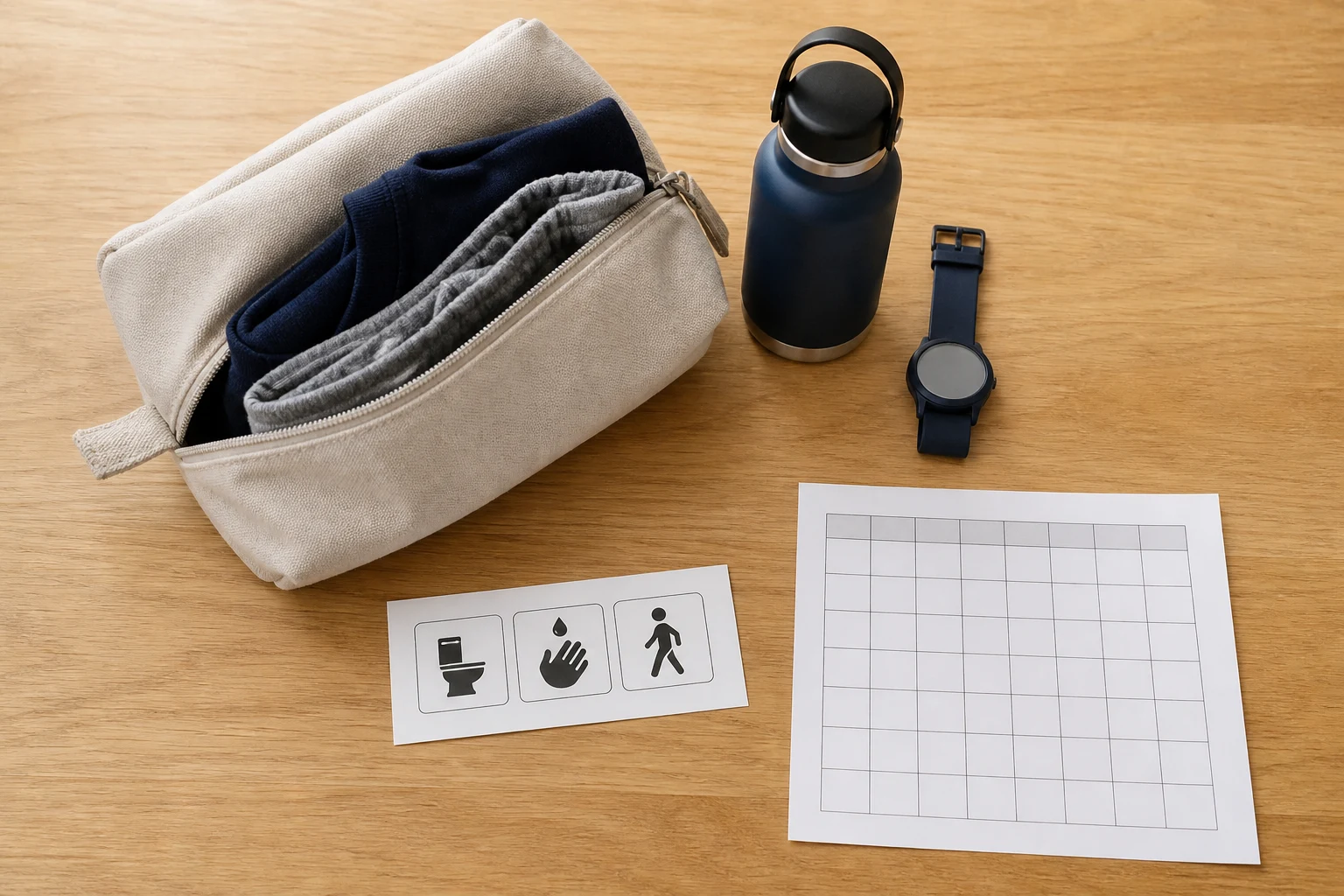
A private school support kit
Preparation should protect dignity and help a child return to the school day without making an accident the main event.
Nighttime wetting: What’s normal and when to seek help
Nighttime wetting is common in young school-age children and usually improves with time. According to NICE, about 10% of 7-year-olds experience bedwetting, and most outgrow it by their early teens. The key is to avoid adding pressure while supporting your child’s sense of control.
If nighttime wetting persists beyond age 7 or starts after a long period of dryness, it may be worth discussing with a healthcare provider. They can rule out underlying issues like constipation, urinary tract infections, or sleep disorders.
Assess, do not blame
Bedwetting is not a deliberate behavior. Rewards should recognize actions a child can control, such as following the agreed routine, rather than the outcome of staying dry.
Constipation and bowel control: The hidden link
Constipation is a common but often overlooked cause of both daytime and nighttime accidents. When a child holds stool, it can stretch the rectum and put pressure on the bladder, making it harder to hold urine. Diet, fluids, and routine all play a role in preventing constipation.
Encourage your child to eat fiber-rich foods like fruits, vegetables, and whole grains. Pair this with regular water intake and a consistent bathroom routine. If constipation is severe or doesn’t improve with diet changes, consult a healthcare provider for guidance.
A calm four-step response
Separate the pattern first, then build a small plan that preserves privacy at home and school.
-
Separate
Track nighttime wetting, daytime accidents and stool leakage as different patterns.
-
Observe
Briefly note drinks, toilet visits, bowel movements and accidents without judgment.
-
Support
Offer regular toilet opportunities, private school access and an opaque spare-clothes pouch.
-
Escalate
Seek clinical advice for pain, fever, unusual thirst, a weak stream or recurrence after a long dry period.
When to talk to a doctor
Most accidents at age 7 are normal, but certain signs warrant a professional evaluation. According to the American Academy of Pediatrics, seek help if your child experiences:
- Pain or burning during urination
- Fever or strong-smelling urine
- Blood in urine or stool
- Sudden return of accidents after months of dryness
- Frequent daytime accidents that disrupt school or social life
These could indicate an underlying issue like a urinary tract infection, constipation, or even stress. A healthcare provider can assess the situation and recommend next steps, which may include further testing or a referral to a specialist.
Building confidence without pressure
The most important thing you can do is keep the conversation positive. Focus on routines, not outcomes. Celebrate small wins—like remembering to ask to use the bathroom—rather than waiting for a dry night or accident-free day.
According to the American Academy of Pediatrics, children thrive when parents provide consistent support without tying rewards to specific results like dry nights.
If accidents continue to worry you, consider keeping a simple log of bathroom visits, fluids, and bowel movements. This can help you spot patterns and share accurate information with your child’s healthcare provider. Remember, progress isn’t linear, and setbacks are part of the process.
For more guidance, explore these resources: Potty training FAQs or support for developmental milestones.
A school plan should be practical and private. Ask the child which trusted adult feels easiest to approach, where spare clothes can be stored and what quiet signal can be used. Share only the information staff need to help; classmates do not need an explanation. Review the plan after a week and change one obstacle at a time. This protects dignity while giving the family and clinician clearer information about when accidents happen.
"Health Disclaimer: This content is provided for general informational purposes only and does not constitute personal medical advice, diagnosis, or treatment. Always seek the advice of a qualified health professional with any questions you may have regarding your health or your child's health."
Was this article helpful?
Fast Summary
- Accidents at 7 are common and rarely mean laziness or poor parenting.
- Focus on routines, not rewards tied to outcomes like dry nights.
- Track fluids, bathroom visits, and bowel movements to spot patterns.
- Seek help if accidents come with pain, fever, or disrupt daily life.
Tools for this Age
Checklist
Popular Topics
Frequently Asked Questions
- 1
Show 3 moreCollapse
- 2
- 3
- 4
Expert Note
This article is for informational purposes only. Always consult a healthcare professional for personalized advice about your child’s health.
Neşe Aslan
Child Development