
 lumiya.com.tr
Calm nights, gentle mornings
Naps at Ages 1-3: A Family Plan That Protects Night Sleep
Read nap timing, duration and your toddler's daytime signals together; move toward one nap gradually and keep the whole 24-hour sleep pattern in balance.
General Information: General information only; it may vary from child to child. Talk to your doctor or a specialist before making decisions.
In short
- Nap needs vary even among toddlers of the same age, so there is no single correct clock time.
- Judge a nap within total 24-hour sleep, daytime function and the child's evening pattern.
- Move toward one nap through a week of observation and small changes, not one difficult day.
- Seek health care for breathing pauses, persistent heavy snoring, unusual sleepiness or functional decline.
Lumiya Editorial TeamBased on 4 sourcesOur editorial standards
Our tool for this topic
Between the first and third birthdays, naps can reorganize the entire family day. A young toddler may begin with a morning and afternoon sleep, then shift toward one midday nap; closer to age three, some children nap only on certain days and others still need it reliably. Neither “if they refuse, they have outgrown it” nor “every three-year-old must nap” is a safe universal rule. A nap belongs to a full 24-hour pattern that includes night sleep, morning wake time, activity, child-care routines and how the child functions while awake.
First 30 seconds: a daytime nap does not automatically disrupt bedtime; duration, timing and your child’s need for rest need to be considered together. For three days, note sleep start and end times and evening settling, then test one small change.
Use the plan with the broader sleep guide and notes on nap transitions.
Balancing rest across the day
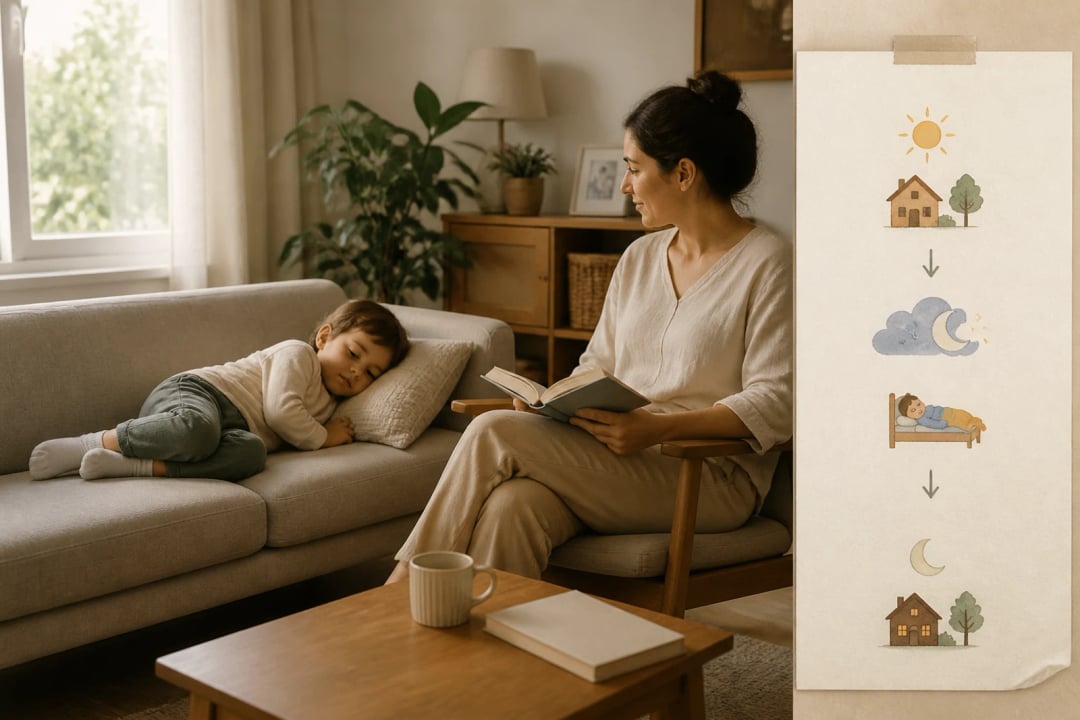
Evidence context
For healthy development, sleep is one balanced part of a young child’s day alongside movement and sedentary time.
A three-day nap experiment
Observe the same rhythm briefly rather than making a large change all at once.
-
Record the time
Note when sleep starts and ends.
-
Observe the evening
Briefly note energy, restlessness and settling before bed.
-
Make one adjustment
If needed, adjust timing or duration in a small step; ask a health professional if difficulty continues.
The World Health Organization recommends 11-14 hours of good-quality sleep in 24 hours, including naps, for children aged one to two, and about 10-13 hours at age three. These are reference ranges, not performance targets. One child may thrive with a long night and brief nap while another divides sleep differently. The useful question is not whether a schedule matches a social-media chart, but whether the child has enough opportunity to sleep and is generally alert, engaged and able to regulate through the day.
Map the whole day for one week before changing it
For seven days, record wake time, when the nap actually begins and ends, bedtime, approximate time to fall asleep and major night wakings. Add context: child-care days, a car snooze, illness, travel, an unusually early morning or a very active outing. A simple line such as “slept 1:20-2:45 p.m.; cheerful after waking; still talking at 9:15” is more useful than a perfect minute-by-minute app.
Note behavior on both nap and no-nap days. Does the child wake refreshed, or remain groggy and distressed after a very long sleep? Without a nap, is late afternoon marked by falls, frantic activity, tearfulness or falling asleep during dinner? Overtired toddlers do not always look sleepy; they may become louder, faster and less able to handle ordinary limits. That functional information prevents a decision based only on whether the child closed their eyes.

A useful nap is measured not only by minutes asleep, but by how the child carries the afternoon, evening and following morning.
Move from two naps to one through small steps
A transition may be emerging when the morning nap drifts later, the second nap repeatedly fails, or two naps push bedtime far beyond the usual window. One refusal is not enough evidence. Teething, a cold, a visitor or an early wake can disrupt several days. Look for a pattern across at least a week, then move the first sleep toward midday by roughly 15-20 minutes every few days. An earlier lunch and outdoor activity before the new nap window can make the shift easier.
Mixed days are normal during a transition. A child may need two short sleeps after an unusually early morning but manage one nap on another day. Forcing an exhausted toddler awake to protect a rigid clock can backfire at night; allowing a long late-morning sleep can make the second nap and bedtime impossible. Change one variable at a time. If nap number, bedtime, sleep location and parent response all change together, the family cannot tell which adjustment helped.
| Pattern you see | Context to check | First measured step |
|---|---|---|
| Second nap is repeatedly refused | Is the morning nap late or long? | Move the first nap gradually toward midday |
| Happy and awake for a long time at bedtime | Did the nap end late? | Bring the end 15-20 minutes earlier for several days |
| Evening collapse on no-nap days | The transition may not be complete | Use earlier bedtime or an occasional brief rescue nap |
| Naps at care but refuses at home | Activity and group cues differ | Offer quiet rest in a similar time window |
| Very difficult to wake from naps | Check duration, illness and night sleep | Log the whole pattern; seek advice if persistent |
Build a short nap routine that travels
A nap routine can be a smaller daytime version of bedtime: diaper or toilet, curtains softened, one short book, the same phrase and into the sleep space. The room does not need to become nighttime-dark, but direct bright light, television and rough play make the transition harder. “Your body has a chance to rest now” creates less conflict than promising or demanding sleep. If sleep does not come, a short period of calm in the safe sleep space can still preserve the rhythm.
The plan should work for more than one caregiver. A routine that requires a long car ride, a video or one particular adult may not transfer to child care or relatives. Share the actual sequence, not only “nap at one.” For children who have not yet reached their first birthday, safe-sleep rules apply to every nap: place them on their back on a firm, flat surface with an empty sleep area. Do not plan routine sleep on a sofa or leave a sleeping child in a sitting device when a safe surface is available.

A nap routine cannot guarantee sleep; it consistently tells the child's body and relationship that active play is changing into rest.
Keep quiet rest when sleep does not happen
If a child remains calm and awake after about 20-30 minutes, avoid turning the nap into a long contest. Open the curtains and continue with a lower-key afternoon. As age three approaches, a predictable quiet-rest period with books, soft music or a limited quiet toy can replace sleep on some days. Quiet rest is not biologically identical to sleep, but it protects a pause in the day and reduces repeated battles.
Bedtime may need to move 30-60 minutes earlier after a no-nap day. Present that as responsive care, not punishment. Record stroller or car sleep too; even a short late snooze can delay bedtime for some toddlers. At weekends, aim for a workable range rather than shifting wake, nap and bedtime by several hours. Family life does not need military precision, but large daily swings make patterns harder to interpret.
Recheck night balance and know the red flags
After one week with a small change, review three outcomes: is daytime regulation steadier, is bedtime easier, and are night sleep and morning mood at least as good? Do not celebrate an earlier bedtime if the child now wakes more often and struggles all day; the total may have become too low. If a long late nap delays sleep by hours every night, timing still needs adjustment. Use direction of change rather than expecting a perfect week.
Habitual loud snoring, pauses in breathing, blue or pale color, difficult waking, significant pain, fever, unusual thirst or urination, or unexpected sleep episodes should not be explained away by the schedule. Share the written pattern with a pediatrician or primary care clinician when sleepiness or behavior problems persist for weeks despite adequate opportunity, or when family functioning is no longer safe. Do not use sleep medicine, melatonin or herbal products for a nap problem without professional evaluation.
General Information: This content offers general information based on expert sources. Every child, family and situation is different, so what is described here may vary from person to person. Talk to your doctor or a qualified specialist before making decisions about your child.
Was this article helpful?
This topic at other agesSleep & Rest
Tools for this Age
- Baby and child sleep scheduleHow much should your child sleep in 24 hours, and when should bedtime be? Calculate it from official guidance and compare it with your own log.
- Baby percentile calculatorWhere does your child's weight and height sit among children the same age? See it in seconds on the WHO growth curves.
- Potty training chartWhen to start and how to prepare? A roadmap by age, a daily routine and a printable reward chart.
- Baby milestones by monthCheck off what most children your child's age can do, and talk about the rest with your doctor.
- Baby vaccine schedulePick your country, enter the birth date, and see the official schedule as your own dates.
- Baby teething chart: order and timelineEnter the date of birth to see the typical eruption window of all 20 baby teeth, the next tooth and the teeth already through — on one screen.
Checklist
Popular Topics
Frequently Asked Questions
- 1
- 2
- 3
- 4
References & Further Reading
Editorial Note
This guide provides general parent education, not diagnosis or an individualized treatment plan. Contact a pediatrician or primary care clinician for loud habitual snoring, breathing pauses, color change, difficult waking, significant pain, fever, unexpected daytime sleep episodes or persistent impairment. Do not give sleep medicines, melatonin or herbal products without professional advice.
Other situations in this topic
Dealing with a different side of the same topic? Each situation has its own guide.
- How many naps and how long?Naps step down as babies grow. Find your baby's month in one chart: the usual number of naps, how long each one lasts and when the next transition tends to arrive.1 items
- When do kids stop napping?Learn how to spot readiness signs when your toddler is dropping naps, tell a nap strike apart from true readiness, and build a peaceful quiet time routine.1 items