
 lumiya.com.tr
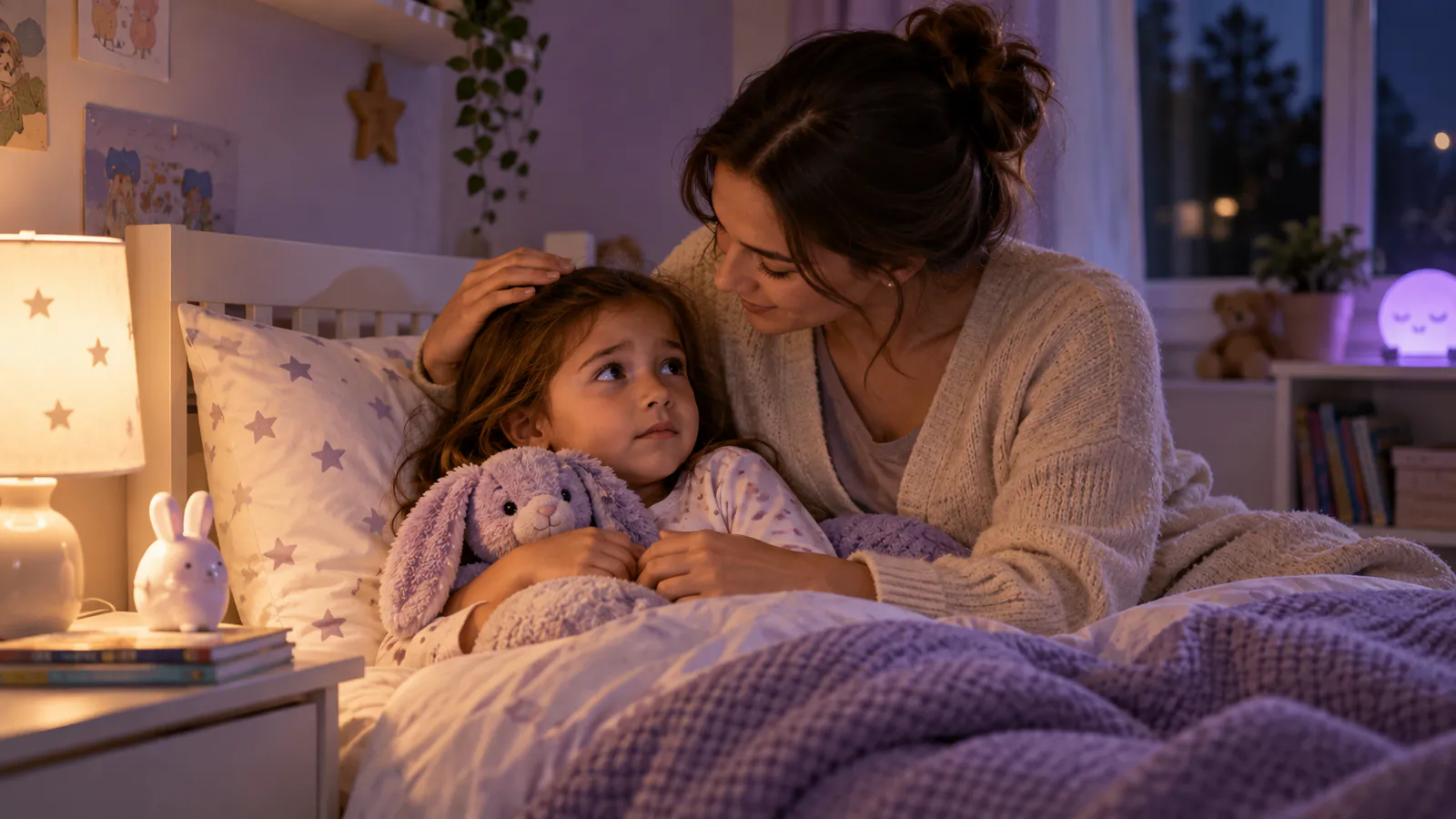
Understanding feelings builds trust
Child afraid of the dark: a calm bedtime plan that works
Fear of the dark is common between ages 2 and 7. Here is what actually helps: a predictable bedtime routine, small brave steps, and the signs that call for a pediatrician.
General Information: General information only; it may vary from child to child. Talk to your doctor or a specialist before making decisions.
In short
- Fear of the dark is a normal developmental stage between ages 2 and 7 for most children.
- Dismissing the fear or forcing a child to stay in a dark room makes it stronger.
- A 20-30 minute bedtime routine that runs in the same order every night does most of the work.
- A dim night light and a door left ajar are fine; bright overhead light is not.
Lumiya Editorial TeamBased on 3 sourcesOur editorial standards
Being afraid of the dark is common in children between ages 2 and 7, and it usually eases on its own. What helps is not talking your child out of it. It is making the evening predictable, checking the room together once, and stretching the time your child spends alone in the dark in small steps.
Why the fear shows up at this age
Somewhere after the second birthday, imagination takes off. A child can now picture something that is not in the room, while the ability to tell imagination from reality is still catching up.
Darkness removes visual information, and the brain fills the gap with an image of its own. That is why a coat on a chair, a curtain moving or the hum of a radiator turns into a something.
Separation sits underneath all of it. Bedtime is the moment of the day when a child is left alone. Very often the real message is not "the dark is bad" but "stay with me."

Fear of the dark is not a disorder; it is a stage. It grows out of the gap between a fast-developing imagination and a slower-developing reality check, and it shrinks as that gap closes. The content changes with age too: toddlers fear being alone, preschoolers fear imaginary creatures, and school-age children start to fear real dangers such as burglars or fires.
Do not belittle or ridicule your child's fears.
The American Academy of Pediatrics is clear about what does not help. Pressure and teasing both backfire, and they leave a child less willing to say what is going on the next night.
What the fear looks like at each age
How nighttime fear changes from toddler to school age
-
Being left alone
The fear is usually about the room being empty, not about darkness itself. Short goodbyes and the same closing words each night help most.
-
Shadows and sounds
A shadow can read as a real creature. Naming the source out loud, together, takes the charge out of it.
-
Monsters and ghosts
Imaginary figures arrive. The goal is not to shut the imagination down but to give the story a different ending.
-
Real dangers
Burglars, fire, something happening to a parent. At this age concrete safety facts are more reassuring than reassurance alone.

A bedtime plan that makes the evening predictable
The strongest tool here is repetition, not explanation. A 20-30 minute bedtime routine that runs in the same order every night gives a child the one thing darkness takes away: knowing what comes next.
Five steps to a calmer evening
-
Turn screens off early
Stop screens at least an hour before bed. Fast-paced or frightening content sets the tone for the rest of the evening.
-
Bring the lights down in stages
Switch off overhead lights and move to lamps. Falling light is the body's signal that sleep is starting.
-
Walk the room once, together
Check the curtain, the closet and under the bed once. Do not let it become a long nightly search.
-
Use the same closing every night
Two books, one song, and the same sentence: "I'll be in the kitchen, the door stays open." Unchanged words build trust.
-
Keep the goodbye short and confident
Long goodbyes make leaving harder. A calm good night, a door left ajar, and one check-back a few minutes later is enough.
On lighting, the rule is simple: a dim, warm night light does not disrupt sleep, while bright white overhead light does. Leaving the door open with a small hallway light is enough for many children, and you can dim it over the following weeks.
If your child wakes and comes to find you
Walk your child back quietly, settle them in two sentences, and repeat the same line every time: "You're here, you're safe, I'm in the kitchen." Long explanations, negotiations and a rule that changes every night all stretch the fear out.
An answer that never changes shortens the nights within a few weeks. You may have to do it five times in one night, and that is normal.
Courage also comes in steps. In week one sit beside the bed, in week two sit by the door, in week three answer from the hallway. Do not move to the next step until your child is comfortable on the current one, and treat going back a step during an illness or a hard week as part of the plan.

Handling a child's fear every night is exhausting, and losing patience at three in the morning does not make you a bad parent. There will be nights when the routine falls apart. What matters is going back to the same order the next evening, and splitting bedtime duty with another adult when you can.
What does not work
| Myth | Reality |
|---|---|
| Saying "there's nothing to be scared of" ends the fear | Your child hears that the fear is not taken seriously and stops reporting it |
| Leaving a child alone in the dark builds courage | Force reinforces fear; courage grows through small steps the child chooses |
| Spraying "monster spray" solves it | It confirms the monster exists; the game is short, the fear stays |
| Night lights create a habit, so never use one | A dim light is a reasonable bridge and can be reduced over time |
A child who can describe the fear settles faster. If naming feelings is hard, the writing under emotions and behaviour helps, and related worries are gathered under fears and anxiety. For age-specific guidance, see the 3-6 years section.
When to see a doctor
Most fear of the dark resolves without treatment. Talk to your pediatrician if:
- The fear has lasted for months without easing, or is getting worse
- Your child's night sleep is regularly broken because they cannot sleep alone
- The fear stops your child from going to preschool, school or a friend's house
- Morning stomach aches, headaches or nausea keep coming back
- Skills go backwards, such as bedwetting starting again
- The fear began after a frightening event, such as a fire or an accident
The American Academy of Pediatrics advises seeing a child psychiatrist or psychologist when a fear becomes extreme, persistent and starts interfering with daily activities. In an emergency in the United States, call 911.
General Information: This content offers general information based on expert sources. Every child, family and situation is different, so what is described here may vary from person to person. Talk to your doctor or a qualified specialist before making decisions about your child.
Was this article helpful?
Tools for this Age
- Baby percentile calculatorWhere does your child's weight and height sit among children the same age? See it in seconds on the WHO growth curves.
- Baby and child sleep scheduleHow much should your child sleep in 24 hours, and when should bedtime be? Calculate it from official guidance and compare it with your own log.
- Potty training chartWhen to start and how to prepare? A roadmap by age, a daily routine and a printable reward chart.
- Baby milestones by monthCheck off what most children your child's age can do, and talk about the rest with your doctor.
- Baby vaccine schedulePick your country, enter the birth date, and see the official schedule as your own dates.
- Baby teething chart: order and timelineEnter the date of birth to see the typical eruption window of all 20 baby teeth, the next tooth and the teeth already through — on one screen.
Checklist
Popular Topics
Frequently Asked Questions
- 1
- 2
- 3
- 4
- 5
References & Further Reading
Editorial Note
This article is general information. Every child's temperament, sleep pattern and history are different, so talk to your pediatrician or a qualified child mental health professional about decisions for your own child.