 lumiya.com.tr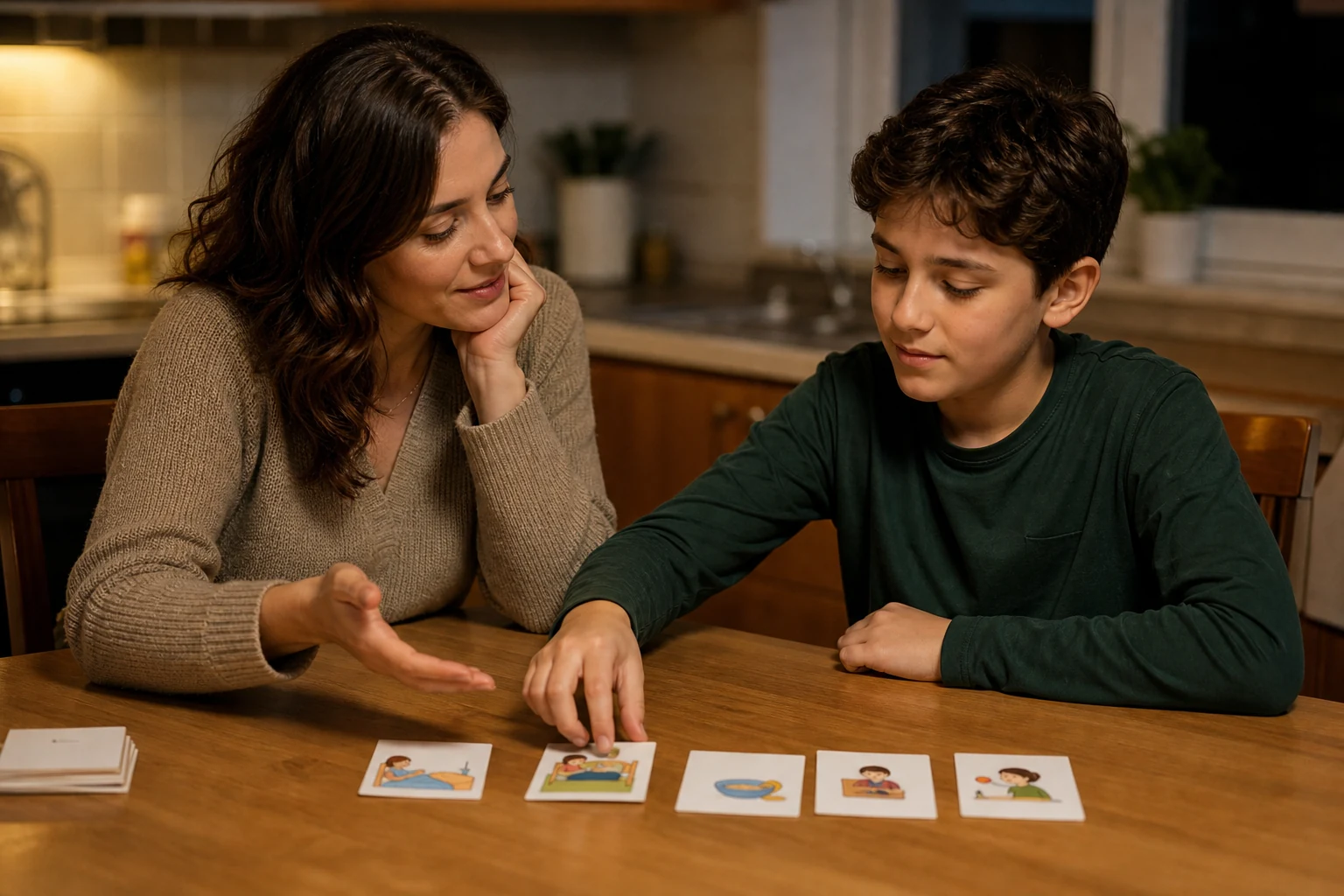
9-12 Years Behavior: A Parent’s Practical Guide
Learn how to decode everyday behavior in kids aged 9-12, set clear expectations, and build skills for independence while keeping dignity and connection at the center.
Why behavior changes as kids grow
Between ages 9 and 12, children are building new skills while facing bigger expectations at school, in friendships, and at home. Their behavior often reflects what they’re learning—or struggling with—not who they are.

Behavior is information. It tells us about skills, expectations, stress, and context—not about a child’s character.
Kids this age are also more aware of how others see them. They care about fairness, privacy, and being treated with respect. When routines feel unclear or adults react with frustration, they may push back to regain control.
Mapping behavior to skills and support
To guide your child effectively, notice what happens before the behavior, the action itself, its immediate consequence, and how your child explains it. This map helps you focus on skills to practice—not on punishment.
For example, if your child leaves their soccer cleats at school the night before a game, ask yourself:
- Context: Was there a last-minute change in routine?
- Action: Forgot the cleats.
- Consequence: Can’t play in the game.
- Child’s explanation: 'I was in a hurry and didn’t check.'
This approach shifts the focus from blame to problem-solving. It also teaches your child to reflect on their actions and plan ahead.
A week in the life: tracking patterns
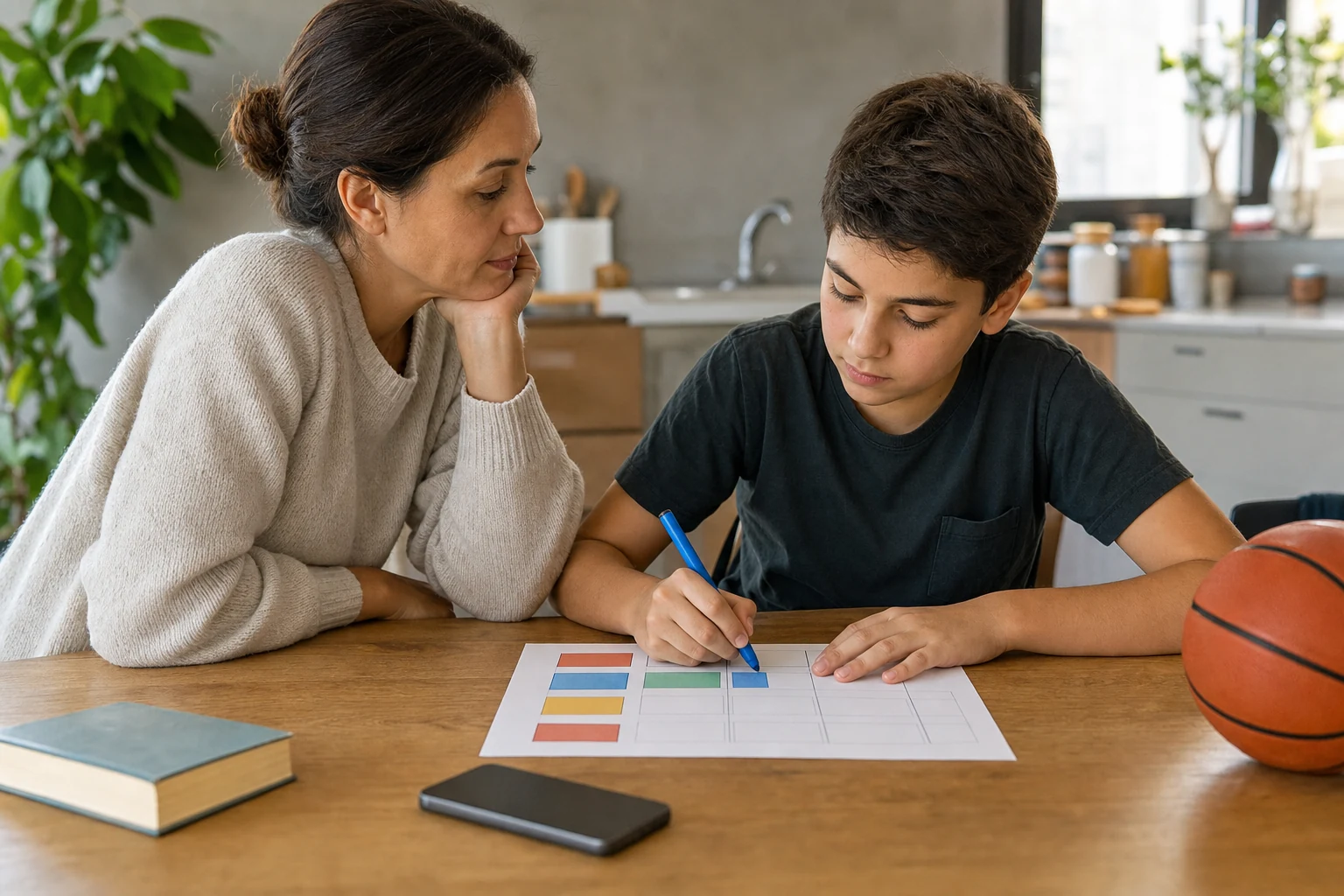
Use this table to spot recurring triggers and test small adjustments. Keep it simple—write down one or two key moments each day.
| Context | Trigger | Child response | Adult response | Outcome | Planned adjustment |
|---|---|---|---|---|---|
| After school, before homework | Frustration with a hard math problem | Slams book shut, says 'I can’t do this' | 'I see this is tough. Let’s take a 5-minute break and try again.' | Returns to work, asks for help | Set a timer for breaks and keep a 'help list' of topics to ask the teacher about |
| Weekend morning | Sibling grabs last pancake | Yells 'That’s mine!' | 'I know it’s frustrating. Ask nicely next time.' | Shares pancakes after apology | Practice polite requests at a calm time |
| Bedtime routine | Wants to stay up later | Argues about bedtime | 'Bedtime is at 8:30. You can choose pajamas or story first.' | Follows routine with less fuss | Use a visual schedule with choices |
| Homework time | Distracted by phone notifications | Keeps checking phone | 'Phones go in the basket during homework.' | Finishes assignment faster | Agree on phone-free times with rewards |
Setting expectations that stick
Clear, limited expectations work better than long lists of rules. Focus on what matters most—safety, respect, and responsibility—and repeat them in ways your child can remember. For example:
- Homework: Complete one section before screen time.
- Chores: Set the table before dinner.
- Devices: No phones during meals or before bedtime.
Use positive language: 'You can play after your 30 minutes of reading' instead of 'Don’t start playing until you finish.' This frames expectations as opportunities, not restrictions.
Give meaningful choices
Kids this age want control over their routines. Offer small, realistic choices to build cooperation:
- 'Do you want to do math or reading first?'
- 'Should we tidy the living room before or after snack?'
Choices help them feel respected while keeping boundaries clear. Avoid overwhelming them with too many options—two or three is plenty.
Use advance notice
Transitions are tough.
Handling common friction points
Homework and school demands
Homework struggles often stem from unclear instructions, fatigue, or feeling stuck. Start by asking, 'What part feels hardest?' Listen without jumping to fix it. Then, break the task into smaller steps or agree on a 10-minute work sprint followed by a break.
Sibling conflicts
Siblings this age often argue over fairness, space, or shared items. Teach them to use 'I' statements: 'I feel upset when you take my things without asking.' Set family rules like 'ask before borrowing' and 'no name-calling.' When conflicts happen, stay neutral.
Devices and screen time
Screen time can feel like a constant battle. Instead of fighting over minutes, agree on times when devices are off—meals, bedtime routines, and family time. Use a shared family calendar or app to track limits.
Honesty and mistakes
When your child lies or hides a mistake, respond with curiosity, not anger. Say, 'I noticed the permission slip isn’t signed.
Teaching accountability without shame
Accountability means taking responsibility and making things right—not feeling guilty or punished. When your child forgets a chore, ask, 'What’s your plan to finish it?' If they break something, guide them to help fix it or apologize sincerely.
Private correction works best
Public corrections—like scolding in front of friends or siblings—can feel humiliating. Pull your child aside for a quiet conversation. Say, 'Let’s talk about what happened. What could you do differently next time?' This preserves their dignity and keeps the focus on learning.
Encourage specific effort
Instead of vague praise like 'Good job,' try specifics: 'I noticed you kept working even when it was hard. That shows persistence.' This helps your child connect effort to outcomes and builds confidence in their abilities.
Building routines that last
Routines reduce friction by making expectations predictable. Start with one or two key times—morning, after school, or bedtime—and add steps gradually. Use visuals like charts or apps to make routines clear. For example:
- Morning: Wake up, make bed, eat breakfast, pack backpack.
- After school: Snack, homework, 30 minutes of free time.
Review routines weekly and adjust as needed. If a routine isn’t working, ask your child for input: 'What part feels hardest? How can we make it easier?'
Collaborative problem-solving
When a recurring issue comes up, hold a family meeting.
Home and school: working as a team
Teachers see a different side of your child—how they handle group work, follow instructions, and manage stress. Share your observations with the teacher and ask for theirs. If your child struggles with organization, ask if the school can provide tools like planners or checklists.
When your child knows you and their teacher are on the same team, they feel supported—not criticized.
When to seek extra support
Most behavior changes in 9–12-year-olds are part of growing up. But if you notice sudden shifts—like losing interest in friends, avoiding school, or extreme mood swings—it may signal something deeper. Trust your instincts.

Sudden or severe changes, persistent impairment, or safety concerns warrant timely support from educators, health professionals, or community resources.
Small steps, big impact
Parenting a 9–12-year-old isn’t about perfection—it’s about connection and growth. Focus on one or two areas to improve each week, like setting clearer expectations or using advance notice for transitions. Celebrate progress, not just results.
Start small. Stay consistent. And remember: behavior is information, not a verdict.
"Health Disclaimer: This content is provided for general informational purposes only and does not constitute personal medical advice, diagnosis, or treatment. Always seek the advice of a qualified health professional with any questions you may have regarding your health or your child's health."
Was this article helpful?
Fast Summary
- Behavior is information, not a judgment of character—use it to understand skills and needs.
- Focus on collaboration, clear expectations, and problem-solving to reduce friction.
- Teach accountability through repair and encouragement, not shame or punishment.
- Keep routines consistent and communicate in advance to support growing independence.
Tools for this Age
Checklist
Popular Topics
This topic at other ages· Behavior
Frequently Asked Questions
- 1
Show 3 moreCollapse
- 2
- 3
- 4
References & Further Reading
Editorial Note
If behavior changes are sudden, severe, or persist across settings, or if you notice sleep, eating, or safety concerns, contact your child’s school, pediatrician, or a trusted mental-health professional promptly.