 lumiya.com.tr
3–6 Years Sleep Routine: A Flexible Guide for Caregivers
Learn how to build a flexible, adaptable sleep routine for children ages 3–6 that fits real family life, not a rigid schedule. Discover practical cues, transitions, and adjustments for different households.
Why a flexible sleep routine matters for ages 3–6
A sleep routine isn’t about hitting a specific bedtime or following a minute-by-minute script.

Routines reduce bedtime resistance by giving children a sense of control within safe boundaries. The cues act as signals, not commands, so your child learns to expect calm after play, not obedience after a countdown.
Research from the CDC and the American Academy of Pediatrics emphasizes that predictable routines support emotional regulation and sleep quality in preschoolers.
The core sequence: From play to rest in five steps
A practical routine for ages 3–6 typically includes five flexible steps, each designed to shift energy downward and signal that sleep is coming.
Calm the play: End high-energy activities like running or roughhousing at least 30 minutes before the routine starts. Swap screens for quieter alternatives like puzzles, coloring, or building with blocks.
Toileting and washing: Include a bathroom visit and a quick wash (hands, face, or a wipe-down) as part of the routine. This isn’t about perfection—it’s about creating a habit that reduces nighttime disruptions.
Clothing and room prep: Let your child choose between two age-appropriate options (e.g., pajamas with dinosaurs or stripes).
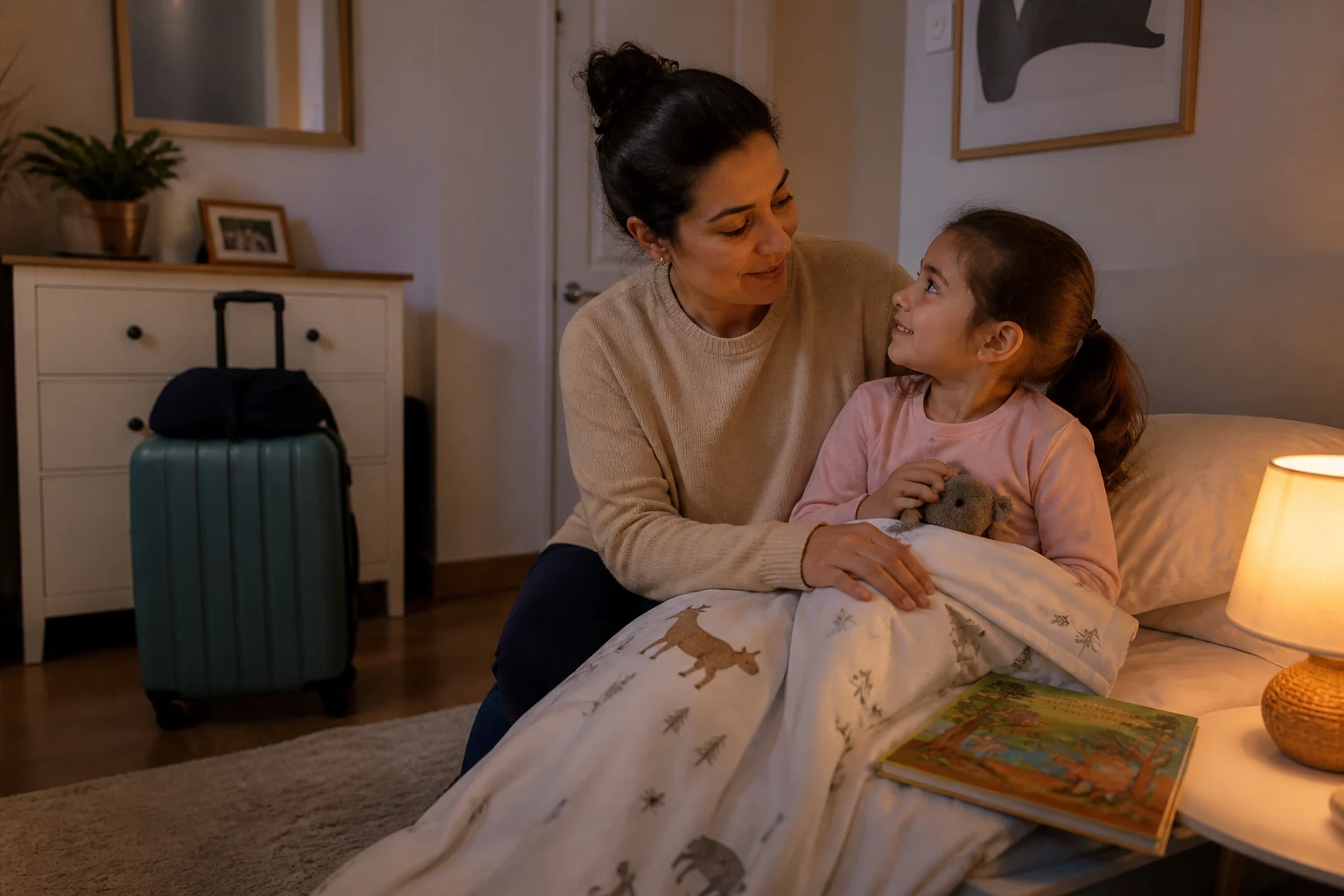
One connection activity: Offer a single, low-key activity that feels special, like a short story, a lullaby, or a back rub. Limit choices to avoid overstimulation—one book, one song, or one minute of quiet talk.
Ending cue: Choose a consistent signal to mark the transition to sleep, such as a specific phrase, a dimmed nightlight, or a gentle hand on the back. The cue should feel predictable but not forced.

The routine isn’t about perfection—it’s about repetition. If your child asks for “one more story” or “five more minutes,” respond calmly but firmly with the same cue each time. The consistency matters more than the exact wording.
Adapting the routine for real-life challenges
Families come in many shapes, and so do sleep routines. The same five steps can flex to fit different households, from multigenerational care to separated parents to shift-working caregivers.
Nap transitions and preschool days
When your child stops napping, the routine shifts earlier in the day. Start by moving the sequence 15–30 minutes sooner and replacing the nap with a quiet activity like reading or soft music.
Shared rooms and siblings
If your child shares a room, use visual cues to signal quiet time for both children. Dim the lights or introduce a shared storybook to create a collective calm.
Multigenerational households and cultural practices
In households with grandparents or extended family, align the routine with the child’s primary caregiver but incorporate cultural or religious evening practices if they feel natural.
Separated households and shift work
When parents live separately or work non-traditional hours, coordinate with the other caregiver to maintain the core cues. Use written notes or a shared app to keep the sequence consistent, even if timing shifts.
Travel and unfamiliar environments
On the road, focus on the essentials: toileting, a quick calming activity, and the ending cue. The goal is to preserve the familiar sequence, even if it’s condensed.
A seven-day routine table for ages 3–6
| Day | Daytime Context / Nap | First Calming Cue | Child Choice | Sequence Completed | Settling Pattern | Waking | Morning Function | Small Adjustment |
|---|---|---|---|---|---|---|---|---|
| Mon | Preschool, no nap | Quiet play (puzzles) | Pajama color | Toileting, wash, story, lullaby | 20 min to settle | 6:30 AM | Independent play | Start routine 10 min earlier |
| Tue | Weekend, no nap | Drawing at table | Stuffed animal | Toileting, wash, back rub, dim light | 15 min to settle | 7:00 AM | Breakfast routine | Shorten story to one book |
| Wed | Preschool, no nap | Building blocks | Pajama top | Toileting, wash, song, blanket | 25 min to settle | 6:45 AM | Dressing help | Add extra wash step |
| Thu | Weekend, nap at 1:00 PM | Coloring books | Pillow placement | Toileting, wash, story, lullaby | 18 min to settle | 7:15 AM | Free play | Move nap 15 min later |
| Fri | Preschool, no nap | Sticker activity | Pajama bottoms | Toileting, wash, back rub, dim light | 22 min to settle | 6:30 AM | Independent play | Shorten back rub to 1 min |
| Sat | Weekend, no nap | Playdough shaping | Stuffed animal | Toileting, wash, song, blanket | 30 min to settle | 7:30 AM | Breakfast routine | Start routine 20 min later |
| Sun | Preschool, no nap | Quiet play (blocks) | Pajama color | Toileting, wash, story, lullaby | 17 min to settle | 6:45 AM | Dressing help | Add extra story if needed |
The table isn’t a schedule to follow exactly—it’s a snapshot of how the routine can flex. Notice how the core cues (toileting, washing, one connection activity, ending cue) stay consistent, even when timing or activities shift.
When nights get tough: Shorten, don’t abandon
Even with a flexible routine, some nights will feel harder than others. Instead of abandoning the routine entirely, shorten it to the essentials: toileting, a quick calming activity, and the ending cue.
If your child is overtired, start the routine earlier. If they’re resisting, offer limited choices (e.g., “Do you want the blue pajamas or the green ones?”) to give them a sense of control.
Keeping the cues consistent, even when everything else changes
The power of a sleep routine lies in its predictability, not its rigidity. You can use the same few cues without identical words or exact timing. For example:
- Calm the play: Swap “time to wind down” for “let’s do something quiet” or “pick a calm activity.”
- Toileting and washing: Use “time for our sleep steps” or “let’s get ready for rest.”
- Ending cue: Try “night-night time” or “let’s close our eyes” instead of a specific phrase.
The consistency comes from the type of cue, not the exact words. This flexibility helps the routine survive real family life—whether it’s a late dinner, a guest visit, or a caregiver’s shift change.
When to seek extra support
Most sleep challenges in ages 3–6 are ordinary—delay tactics, occasional waking, or requests for “one more story.” These usually resolve with a consistent routine and patience.
- Persistent loud snoring, breathing pauses, or gasping during sleep
- Unusual movements, severe pain, or breathing difficulty
- Blue or unusually pale skin, reduced responsiveness, or injury
- Marked daytime sleepiness, sustained preschool or family impairment
- Major loss of previously used skills or caregiver fear of losing control
If any of these occur, contact your local child-health provider or emergency support immediately. They can help rule out underlying issues like sleep apnea or anxiety.
Final takeaways for caregivers
A sleep routine for ages 3–6 is a tool, not a test.
"Health Disclaimer: This content is provided for general informational purposes only and does not constitute personal medical advice, diagnosis, or treatment. Always seek the advice of a qualified health professional with any questions you may have regarding your health or your child's health."
Was this article helpful?
Fast Summary
- A sleep routine is a short sequence of cues, not a rigid clock schedule.
- Focus on transitions from play and screens to calmer activities, toileting, and room conditions.
- Adapt the routine for nap transitions, shared rooms, siblings, and multigenerational care.
- Shorten the routine on difficult nights instead of abandoning it entirely.
Tools for this Age
Checklist
Popular Topics
This topic at other ages· Sleep
Frequently Asked Questions
- 1
Show 3 moreCollapse
- 2
- 3
- 4
References & Further Reading
Editorial Note
If your child shows persistent loud snoring, breathing pauses, unusual movements, severe pain, breathing difficulty, blue or unusually pale skin, reduced responsiveness, injury, marked daytime sleepiness, or sustained impairment, contact your local child-health provider or emergency support immediately.