 lumiya.com.tr
Cyberbullying at Ages 6-9: A Calm Family Response
Recognise possible cyberbullying, listen without blame, preserve useful evidence, and coordinate a child-centred response with the school and platform.
For a child aged six to nine, online friendship may happen inside a multiplayer game, a class chat, a shared tablet app, or a stream of short messages. Repeated insults, deliberate exclusion, humiliating images, impersonation, and threats can all be forms of cyberbullying. UNICEF describes cyberbullying as repeated behaviour through digital technologies intended to scare, anger, or shame the person targeted. A child does not have to prove that a formal definition applies before receiving help. If an interaction hurts, frightens, or makes the child avoid school or an online space, it is worth bringing to a trusted adult.
The online incident may overlap with school life, so a useful response is broader than changing a device setting. Emotional safety, preserved evidence, school involvement, platform reporting, and recovery belong in one plan. The first family task is not a courtroom-style investigation; it is to stop the harm and help the child keep talking.
Tell the difference without making the child prove it
Friends sometimes argue, and a single unkind comment still needs a response. Bullying is more likely when harmful behaviour repeats and the targeted child struggles to make it stop because of a power difference—such as a group against one child, popularity, anonymity, or greater technical skill. One post can also create repeated harm when it is viewed, copied, or shared many times. Saying “it was only a joke” does not erase the impact when the other child is hurt and the behaviour continues after a request to stop.
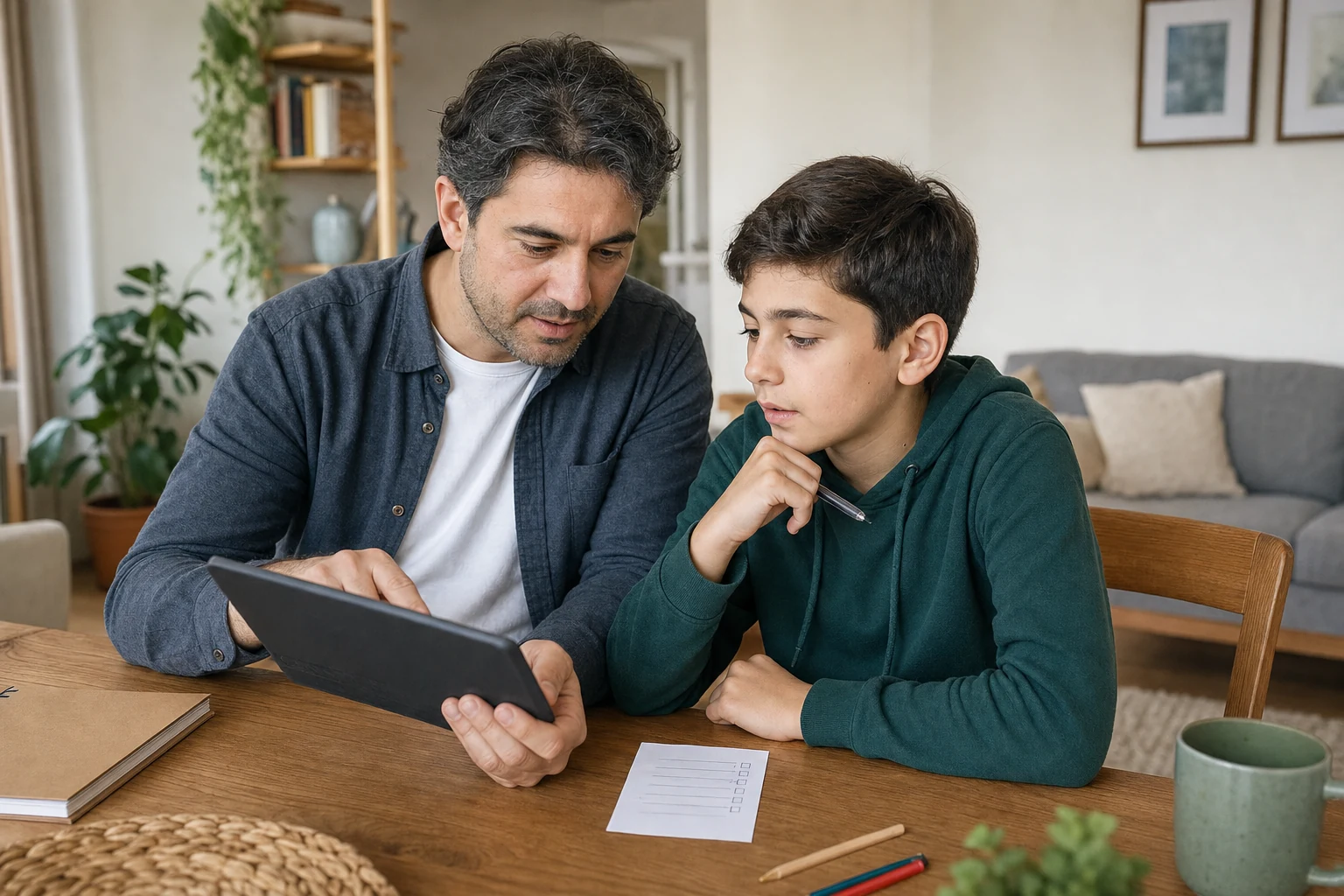
Begin with open questions rather than blame: “What happened on the screen?”, “Has this happened before?”, and “Do you feel safe right now?” Do not insist that the child name the behaviour as bullying. If talking to a parent feels difficult, help them choose another trusted adult.

A child does not need the perfect label. “This made me feel bad and it did not stop” is enough reason to ask for help.
Use warning signs as invitations, not diagnoses
Children respond in different ways. One child may avoid a device, while another checks it constantly because they fear the next message. Distress after notifications, sleep changes, headaches or stomach aches, reluctance to attend school, loss of friends, sudden anger, secrecy, or closing an account can be clues. None proves cyberbullying on its own. Family change, school pressure, illness, or another concern can look similar, so use a change as a gentle opening rather than evidence for a secret search.
Try: “I noticed you look tense when messages arrive. I am here if you want to show me or tell me about it.” Respect privacy as far as safety allows. Explain before sharing information with the school or another adult and include the child in decisions. Do not promise complete secrecy if there is a physical threat, exposed address, sexual content, blackmail, or talk of self-harm. In those cases, explain that adults must bring in qualified help to keep everyone safe.
Listen first, then preserve useful evidence
When a child tells you, begin with: “Thank you for telling me. You did the right thing.” Reassure them that the mistreatment is not their fault and that you will work together. Grabbing the device, announcing the incident to other parents, or sending an angry message to the other child can increase fear. Check immediate safety first, then ask the child what outcome they hope for and describe the next steps in plain language.
Save evidence without spreading the harmful content. A useful screenshot includes the account name, date, time, URL where possible, and enough conversation context to understand the incident. Keep it in a restricted adult-controlled location. Do not forward an embarrassing image to a parent chat in an attempt to identify the sender. Ask the child not to reply or retaliate. Once evidence is captured, use the platform's reporting tool, then block, mute, or restrict the account and review privacy and location settings.
| What happened | Child's first step | Adult's next step |
|---|---|---|
| Repeated cruel messages | Do not reply; show an adult | Save dated evidence |
| Embarrassing image shared | Do not forward it | Report for removal |
| Deliberate exclusion from class chat | Describe the pattern and impact | Contact the school |
| Fake profile or impersonation | Do not interact | Report the profile; secure accounts |
| Threat or exposed address | Go to a safe adult immediately | Escalate to school and local authorities |
Coordinate school, platform, and family action
If classmates or school relationships are involved, provide the teacher, safeguarding lead, counsellor, or principal with a concise written record: dates, platform, known accounts, what was said or shared, and how it is affecting the child. Ask who will coordinate the response, what protections begin now, and when you will review progress. Public Safety Canada advises against confronting another parent impulsively when you do not already have a safe relationship; a structured school response can reduce escalation and support all children involved.
Platform reporting has a different purpose: it seeks restriction or removal of abusive content or accounts. Follow the service's child-safety or harassment pathway. If an account was compromised, change its password from a trusted device, sign out other sessions, and enable two-factor authentication. Preserve evidence and seek local official advice for threats, stalking, exposed identifying information, blackmail, or illegal content. If the child shows persistent fear, sleep or school disruption, withdrawal, or any sign of self-harm, contact a qualified child mental-health professional or urgent service appropriate to your country.

The goal is not to remove the child's whole online life. It is to stop harmful contact while preserving safe friendships, learning, and support.
If your child caused harm, teach repair rather than identity
Parents may discover that their child sent the cruel message, reposted an image, laughed along, or excluded someone from a group. Denial does not help, but neither does declaring “you are a bully.” Stop the behaviour immediately, remove harmful content where possible, and hear the full context. A child who hurt someone may also have been pressured or hurt elsewhere; that context guides support but does not excuse the behaviour.
Repair is more than a forced apology. The child should be able to name what was harmful, stop forwarding the content, step away from group pressure, and—only when safe and wanted by the affected child—offer an apology that does not demand forgiveness. Let the school coordinate contact and protect the child who was targeted. For a period, supervise online communication openly, explaining what you are checking and why instead of relying on secret surveillance.
Create a brief family agreement: do not share another person's image without permission; do not like or forward content that humiliates someone; tell a trusted adult when a group targets a child; pause before sending while angry; and never punish a child simply for reporting a problem. A two-minute weekly question—“What felt good or uncomfortable online this week?”—is usually more effective than a long lecture after a crisis. The strongest protection is a family relationship in which a child knows that asking for help will bring calm support, not shame or automatic loss of connection.
"Health Disclaimer: This content is provided for general informational purposes only and does not constitute personal medical advice, diagnosis, or treatment. Always seek the advice of a qualified health professional with any questions you may have regarding your health or your child's health."
Was this article helpful?
Fast Summary
- Cyberbullying can appear in games, messages, class chats, and shared images.
- A child does not need to prove a definition before asking for help.
- Listen first, preserve evidence, then report and block with the child involved.
- Escalate threats, exposed personal data, or severe distress to qualified local help.
Tools for this Age
Checklist
Popular Topics
This topic at other ages· Digital Safety
Frequently Asked Questions
- 1
Show 3 moreCollapse
- 2
- 3
- 4
Editorial Note
This guide provides general digital-safety and parenting information. If there is immediate danger, a physical threat, exposed identifying information, or a risk of self-harm, contact local emergency, law-enforcement, and qualified health services without delay.
Health Information
The content and guidance in this article are prepared solely to inform parents, based on current medical literature and scientific research. The information provided here does not, in any way, replace direct medical diagnosis, treatment, or professional medical advice. If you have any concerns or doubts about your baby's health or development, please consult a pediatrician or your healthcare provider without delay.